Denon Prawiraatmadja Elected to Lead ITS Indonesia for 2026–2029
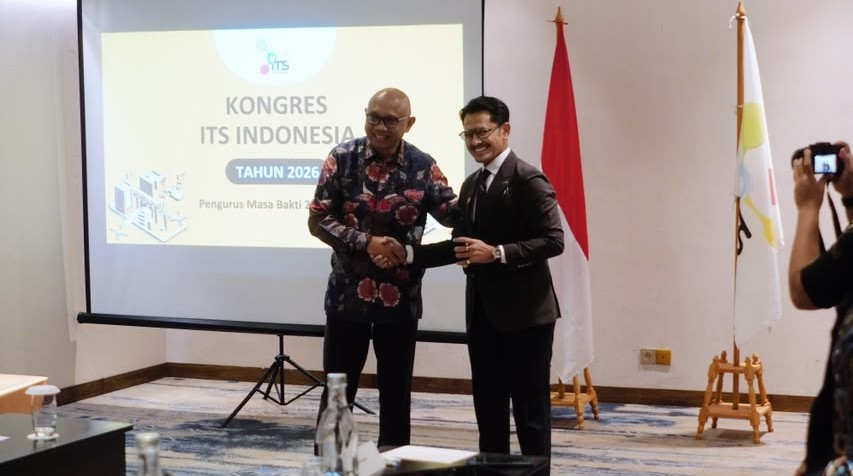
JAKARTA, JakartaWeekly.com – Denon Prawiraatmadja has been elected President of Intelligent Transport System (ITS) Indonesia for the 2026–2029 term. The election took place at the 2026 ITS Indonesia Congress at ARTOTEL Senayan, Jakarta, on Saturday (Nov. 28, 2026).
Denon is the CEO and founder of Whitesky Group and the General Chair of the Indonesia National Air Carriers Association (INACA). He also serves as Chair of Infrastructure Affairs at the Indonesian Employers’ Association (APINDO).
In his remarks, Denon emphasized the relationships among the parties involved in developing intelligent transport. “Government, industry, and international partners play complementary roles,” Denon said.
He will lead ITS Indonesia at a time when stronger cooperation is needed among the government, industry, and international partners. That cooperation relates to the development of intelligent transport systems.
Government Implementation of ITS
The government, through the Ministry of Transportation, continues to develop the implementation of Intelligent Transport Systems. The effort is intended to support the modernization of national transportation.
One of the initiatives is the Indonesia Mass Transit Project (MASTRAN). The project covers the development of intelligent transport systems for mass public transportation in the metropolitan areas of Medan and Bandung.
The development shows that transportation transformation does not depend on infrastructure construction alone. It also requires management systems, technology integration, and institutional readiness.
The Role of Industry Players
For their part, industry players have a role in providing innovation, investment, and technical capabilities. Together, these can support policy implementation on the ground.
Denon brings an industry perspective drawn from his experience leading Whitesky Group and INACA, as well as his position at APINDO. He applies that perspective to the importance of collaboration among stakeholders.
According to Denon, developing national transportation requires mutually supportive relationships. These relationships span government policy, industry readiness, and international technological advances.
“What matters is how this cooperation can produce innovation, strengthen national capacity, and deliver real benefits to the public,” Denon said.
This approach also involves expanding cooperation in skills development. In addition, the cooperation covers knowledge exchange and improving the capabilities of domestic industry.
The ITS Asia-Pacific Network
ITS Indonesia is part of the ITS Asia-Pacific network. The network brings together governments, industry, and transport technology communities from various countries.
Indonesia previously hosted the 19th ITS Asia Pacific Forum on May 28–30, 2024, in Jakarta. The forum brought together international stakeholders to discuss innovation and the development of sustainable mobility.
That involvement has become one of the foundations for Indonesia to expand international partnerships. Indonesia can also take part in discussions on the direction of transport technology development.
Global cooperation is not only about access to new technology. Strengthening human resources, developing technical capabilities, and involving domestic industry are also needed so that Indonesia can gain long-term benefits from international innovation.
Indonesia is an archipelagic country, so the need to develop national connectivity is also a concern. That need also creates an opportunity to build transport solutions relevant to regions facing similar geographic challenges.
Discover more