European Vehicles to Benefit from 50% Tariff Elimination Under IEU-CEPA
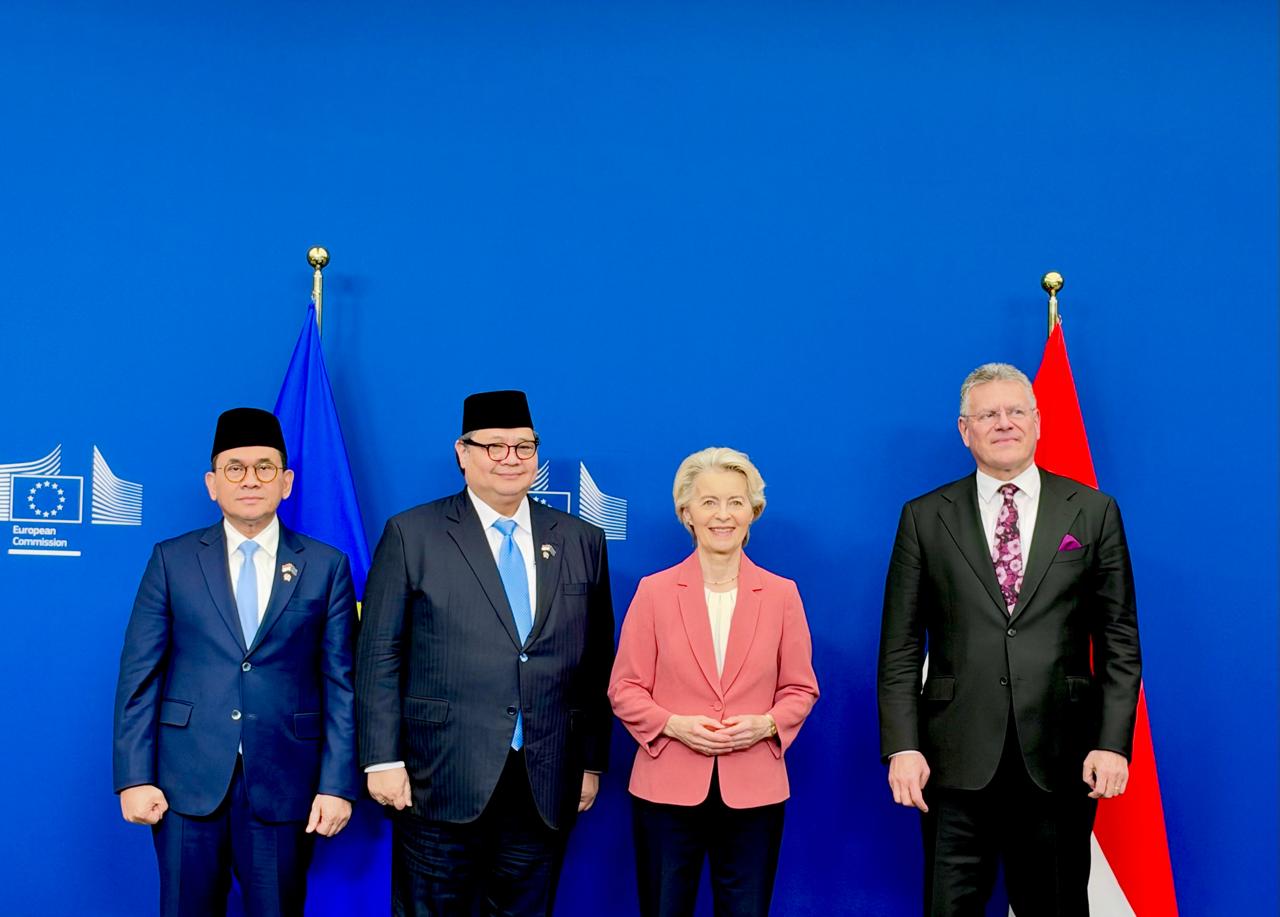
JAKARTA, JakartaWeekly.com— The Indonesia-European Union Comprehensive Economic Partnership Agreement (IEU-CEPA) is set to expand market access for European vehicles in Indonesia through the gradual elimination of import duties on 50% of vehicle tariff lines over a five-year period.
Coordinating Minister for Economic Affairs Airlangga Hartarto said the tariff reductions form part of a broader trade agreement covering more than 90% of goods traded between Indonesia and the European Union (EU).
“Overall, IEU-CEPA will eliminate import duties on more than 90% of goods traded between the two parties and is expected to generate annual trade cost savings of up to EUR600 million,” he said.
Under the agreement, Indonesia will gradually eliminate import duties on 50% of tariff lines covering vehicles originating from the European Union over five years. The measure forms part of broader efforts to expand market access for goods traded between Indonesia and Europe.
The tariff elimination will provide a framework for reducing import duties on European vehicles entering the Indonesian market. However, implementation will take place gradually over the agreed five-year period.
Airlangga explained that IEU-CEPA is designed to broaden market access for both parties. In addition to vehicles, the agreement covers a range of industrial, agricultural, and manufactured products.
Indonesia-EU Trade Tariffs Set for Reduction
In the interview, Airlangga explained that IEU-CEPA will eliminate import duties on more than 90% of goods traded between Indonesia and the European Union.
The agreement is also expected to generate annual trade cost savings of up to EUR600 million.
Currently, several Indonesian products entering the EU market face import duties ranging from around 7% to 12%. Under IEU-CEPA, these tariffs will be reduced to 0%.
Products expected to benefit from the tariff reductions include textiles, food products, footwear, ready-made garments, crude palm oil (CPO), and other agricultural commodities.
Meanwhile, Indonesia will also gradually eliminate import duties on various EU products, including vehicles. The tariff elimination covering 50% of vehicle tariff lines will be implemented over five years.
In bilateral trade, the EU’s main exports to Indonesia include non-electrical machinery, chemicals, and agricultural products. In return, the EU imports agricultural products, mechanical and electrical equipment, and various manufactured goods from Indonesia, including footwear.
IEU-CEPA Targeted to Take Effect in January 2027
The Indonesian government is targeting January 1, 2027, for IEU-CEPA to enter into force, subject to the completion of ratification procedures by both parties.
Airlangga explained that accelerating the ratification process is important because Indonesia’s preferential tariff facilities under the Generalised Scheme of Preferences (GSP) are due to expire at the end of 2026.
Any delay in ratification could result in a gap in preferential tariff facilities before IEU-CEPA takes effect.
To address this risk, the European Union proposed signing the agreement on a Saturday so that the documents could be submitted for the EU’s internal procedures as early as the following Monday.
In Indonesia, the government has held consultations with the House of Representatives (DPR). Ratification can be carried out through a Presidential Regulation.
Agreement Also Covers Investment Protection
Beyond trade in goods, IEU-CEPA includes provisions for bilateral investment protection. These cover legal protection for investors, interstate dispute settlement mechanisms, voluntary mediation between investors and states, and a framework for future negotiations.
On environmental and sustainability issues, Airlangga explained that Indonesia had implemented a deforestation moratorium policy several years ago.
Indonesia had also submitted a number of concerns regarding the European Union Deforestation Regulation (EUDR), the implementation of which was subsequently postponed by the EU for two years. According to Airlangga, Indonesia is ready to supply products that meet the sustainability standards agreed upon by both parties.
In the mining sector, Indonesia applies Good Mining Practice standards. Compliance with these standards is mandatory as part of mining audits and must be included in companies’ financial reports.
Airlangga said these practices had been in place for years and were followed by international mining companies operating in Indonesia, including Freeport-McMoRan and Vale.
Airlangga added that US tariff policies had also influenced the dynamics of global trade negotiations. Nevertheless, Indonesia continues to pursue trade negotiations with various partners in parallel.
Following the signing of a reciprocal trade agreement with the United States and IEU-CEPA with the European Union, Indonesia is expected to strengthen its economic ties and expand trade opportunities with both partners.
Discover more