Indonesia Scrambles to Protect Creative Gig Workers After Videographer Swept into Corruption Probe
JAKARTA, Indonesia (JakartaWeekly.com) – Indonesia’s Ministry of Creative Economy is moving to fix a gaping hole in its procurement laws that essentially classifies creative labor—including editing, dubbing, and conceptualization—as having “zero value.”
The move follows a controversial legal case in North Sumatra that saw a local videographer, Amsal Christy Sitepu, embroiled in a corruption investigation. The crux of the case hinges on an audit by the Karo Regency Inspectorate, which argued that services such as microphone usage, cutting, editing, and voice-overs should be provided for free (Rp0) in government projects.
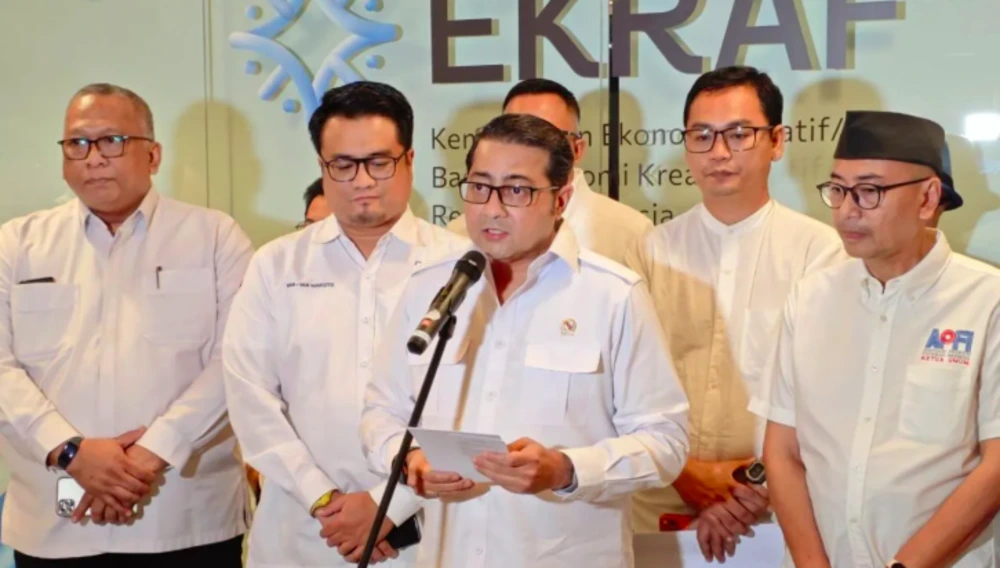
Teuku Riefky Harsya, Minister of Creative Economy, announced on Monday that the government is now fast-tracking a new set of procurement guidelines specifically for the creative services sector to ensure such “absurd” valuations do not lead to further criminalization of creators.
The Amsal Sitepu Precedent
The videographer at the center of the storm was accused of contributing to state losses totaling Rp202 million (US$12,700) across 20 village profile projects between 2020 and 2022. Auditors argued that because these specific creative “steps” were not explicitly listed as billable items in standard government price tags, any payment for them constituted a loss to the state.
“The government cannot walk alone on this,” Minister Teuku said during a press conference in Jakarta. “We are finalizing these guidelines by involving stakeholders, associations, and communities to ensure this acts as a reference to prevent similar issues in the future.”
A “Digital Age” Upgrade for Bureaucrats
The current struggle lies in the rigid nature of the Ministry of Finance’s “Standard Input Costs” (SBM), which kementerian and local agencies use to build budgets. While these standards cover physical goods and basic services, they have failed to keep pace with the digital economy’s nuances, often failing to account for intellectual property, seniority, or the technical complexity of modern media production.
Teuku emphasized that the new guidelines will not be a “one-size-fits-all” rigid table. Instead, they will introduce variables that allow for:
- Seniority and Experience: Adjusting rates based on the provider’s track record.
- Regional Pricing: Accounting for the varying costs of living and production across the archipelago.
- Intangible Labor: Explicitly valuing “ideation,” “editing,” and “post-production” to protect creators from being labeled as “corrupt” for charging for their time.
Inter-Ministerial Hurdles
The challenge for Teuku’s ministry is that the authority over state spending is often fragmented. While he can issue a Ministerial Regulation (Permen), some changes will require cross-ministerial coordination with the Ministry of Finance and the Ministry of Home Affairs to ensure local auditors at the regency level are on the same page.
The Minister expects the new regulations to be completed within the next few months. For Indonesia’s massive community of freelancers and creative agencies, the stakes are high. If the government fails to define the market value of a “cut” or a “concept,” thousands of creative workers serving public projects could find themselves—like Amsal Sitepu—in the crosshairs of auditors who believe that in the eyes of the state, creative labor is worth nothing at all.
Discover more