When the Rupiah Slips, Art Moves: Sales Surge at ArtMoments Jakarta 2026

JAKARTA, Jakartaweekly.com—Like two sides of a coin, the weakening of the Indonesian rupiah against the US dollar brings a dual impact on the art market. On one hand, Indonesian artworks become relatively more affordable for foreign collectors, thereby encouraging increased purchases. On the other hand, this economic condition also shapes new perspectives on art within the country amid uncertainty.
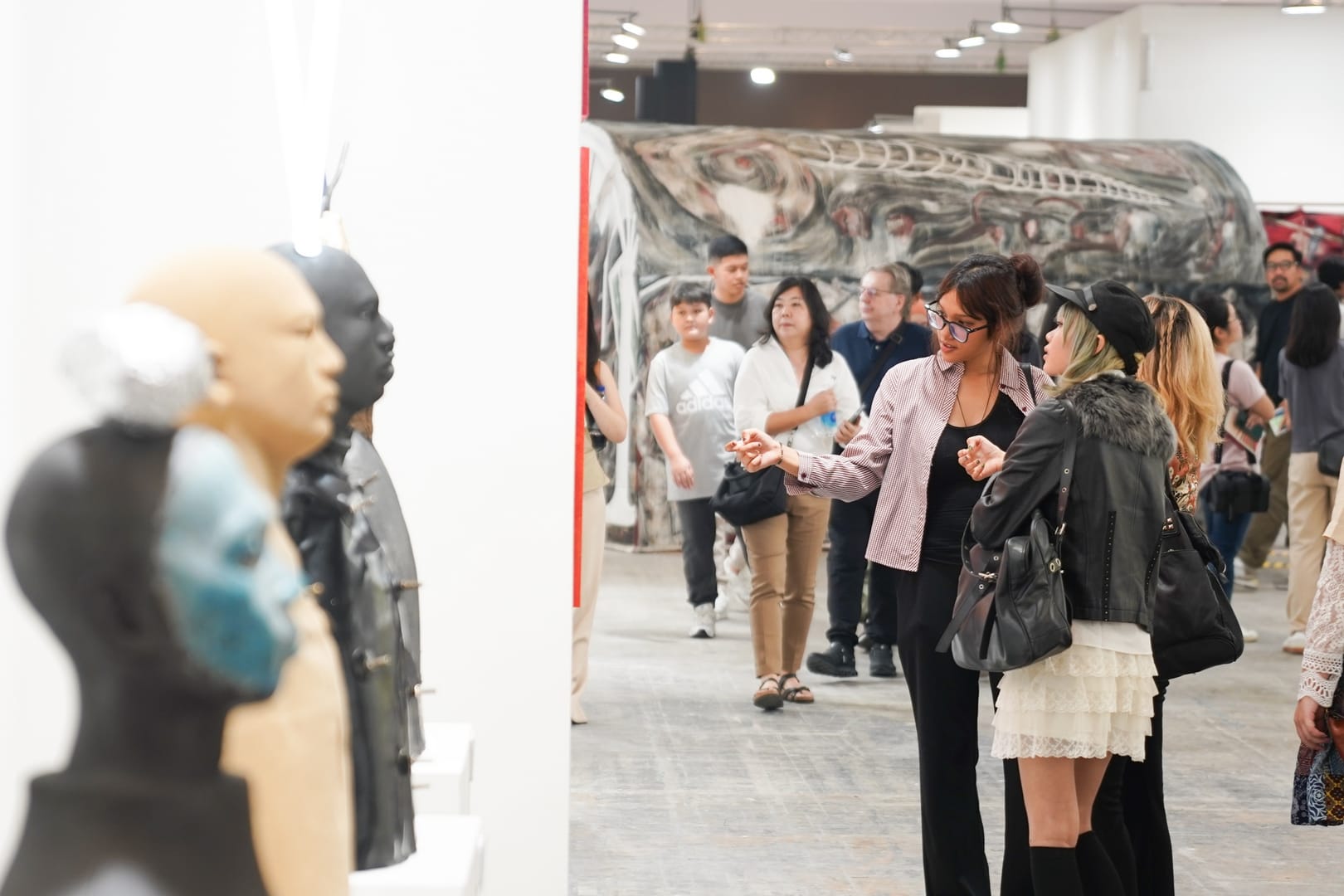
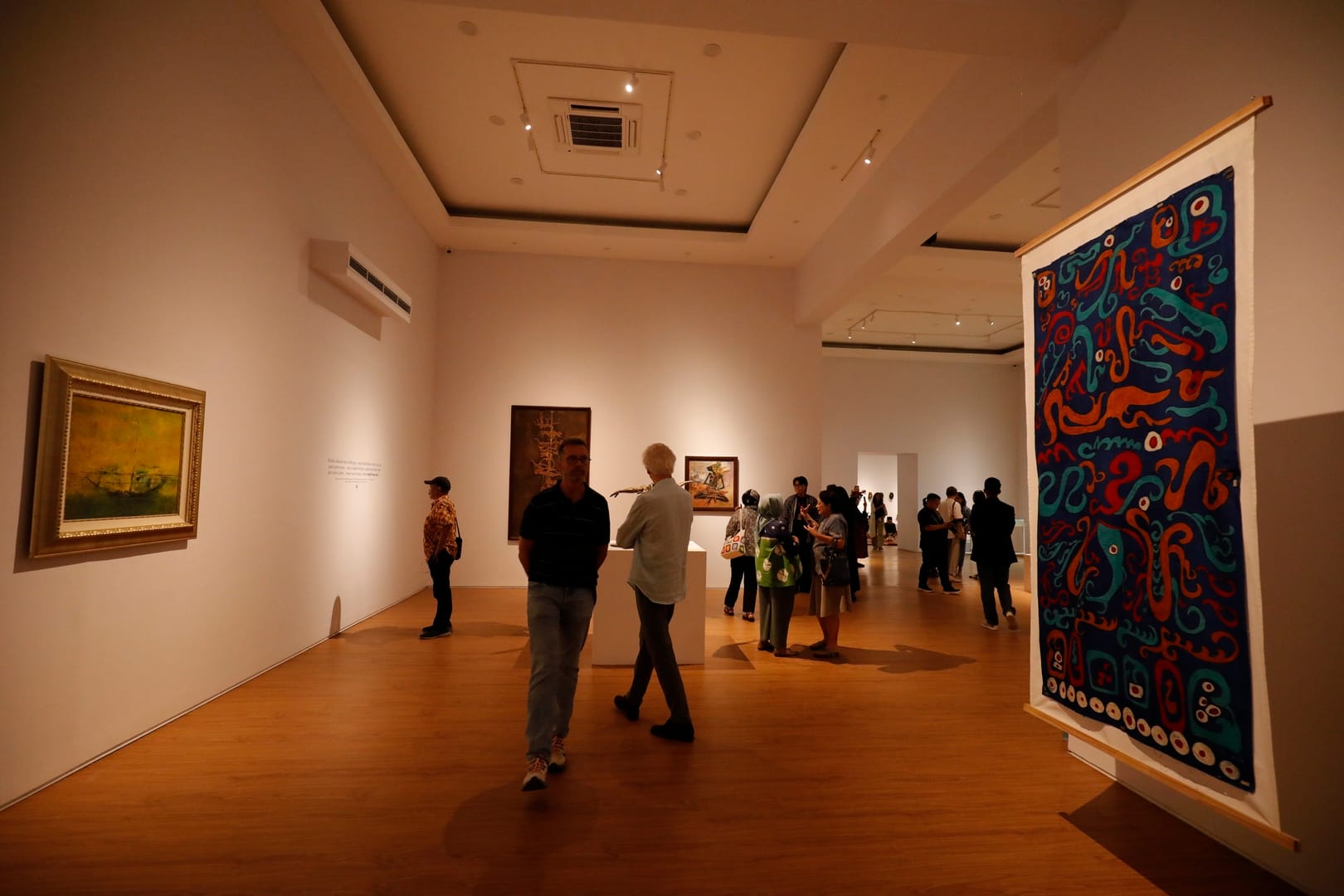
This momentum was visible at ArtMoments Jakarta, which took place on 4–7 June 2026. A number of artworks were recorded as having changed hands, marked by special tags placed on pieces that had been sold within the exhibition area.
One of them was Going Up by Rujiman, measuring 150 x 75 centimeters and created using mixed media on canvas, presented by Gudang Gambar. The painting depicts koi fish swimming upward through a golden current, symbolizing growth, perseverance, and a journey toward better possibilities.
In another section, Santai Dulu, Menang Belakangan by artist Wenas Heriyanto was also sold at the same event. The work, part of the Sumo Series, measures 100 x 120 centimeters and uses acrylic on canvas. It presents the world of sumo not only as an arena of physical strength, but also as a space of self-control.
In the artwork, a wrestler is depicted enjoying a cup of tea amid a competition, symbolizing a pause and reflection. The message emphasizes that victory is not always determined by the speed of attack, but by patience, balance, and the ability to read timing.
Both works are part of hundreds of pieces that changed hands during the exhibition.
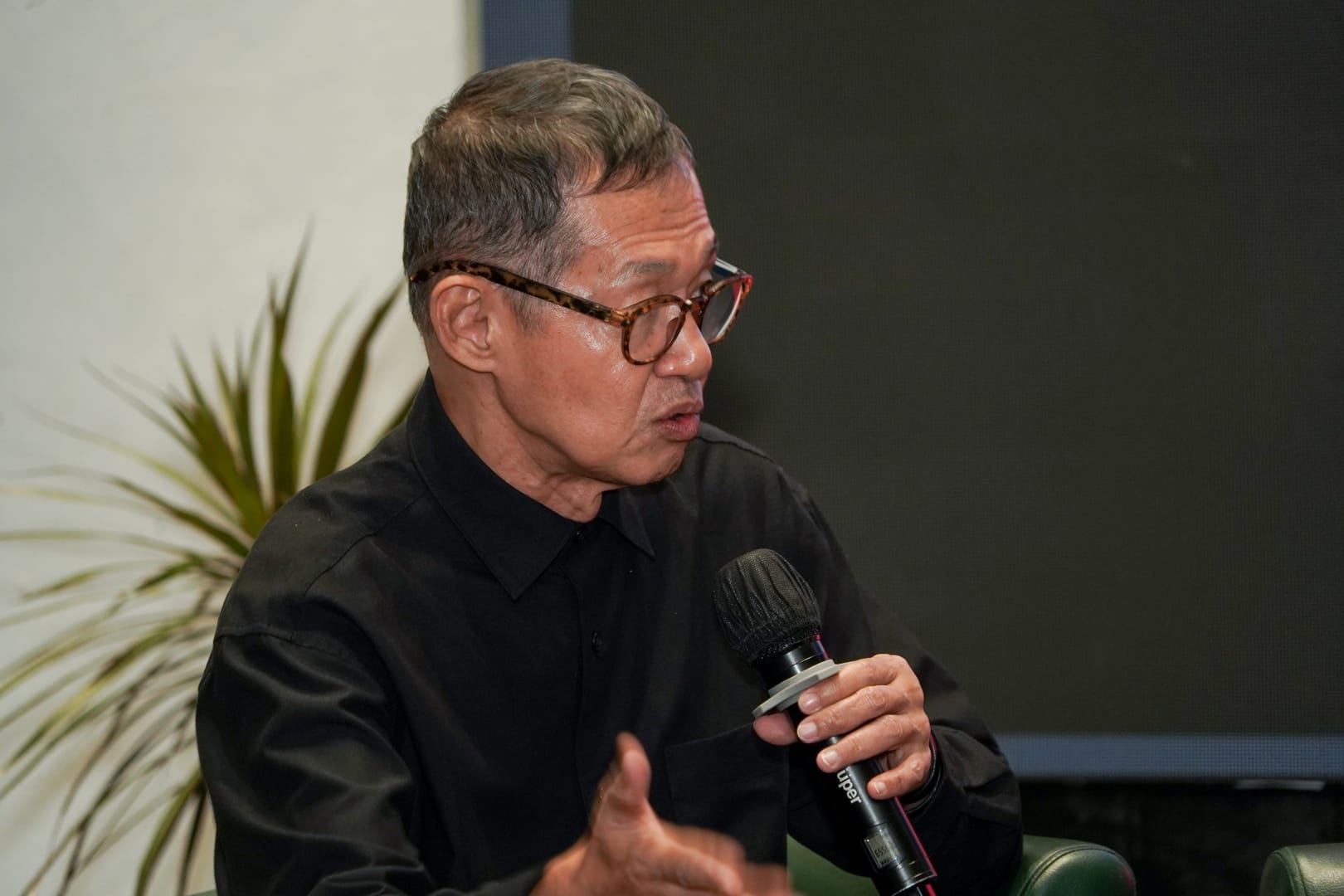
Co-Founder and Fair Director of ArtMoments Jakarta, Sendy Widjaja, said that purchasing enthusiasm in the 2026 edition was quite high, even higher than the previous year.
“[The indication is] many were sold,” he told Jakarta Weekly.
He explained that the weakening of the rupiah against the US dollar was one of the factors driving purchases, particularly among international collectors. With a weaker exchange rate, Indonesian artworks became relatively more competitive in the eyes of foreign buyers.
In this situation, ArtMoments Jakarta also served as an active meeting space for collectors transacting in US dollars.
However, purchasing momentum did not only come from abroad. Domestically, conditions of economic uncertainty have led some visitors to view art as both a form of “escape” and an alternative store of value.
“People would rather buy artworks than hold rupiah, because later they might not be able to afford them anymore. As long as it is still within reach, people tend to choose to buy now,” he said.
Although he did not specify the total transaction value, Sendy noted that more than 600 artworks were taken home by collectors during the exhibition. He also recorded visitor growth that exceeded targets, especially during the first two days, which were already up by as much as 50 percent.
He added that collectors’ behavior in purchasing artworks often resembles investment patterns, with some choosing “blue-chip” works and others hunting for more affordable pieces. However, art purchases are not always driven by investment considerations.
“Many also buy because they genuinely want to enjoy them, as part of recreation,” he said.
On the other hand, Nawa Tunggal, one of the exhibitors, assessed that this year’s ArtMoments Jakarta was quite lively. A work by artist Dwi Putro Mulyono Jati, included in the exhibition, also received attention from collectors.
One of the works, priced at around Rp500,000, was recorded as the best-selling piece, with affordability being the main factor behind visitor interest.
Discover more