KAI Logistik’s Container Rail Freight Reaches 1.19 Million Tons Through May 2026
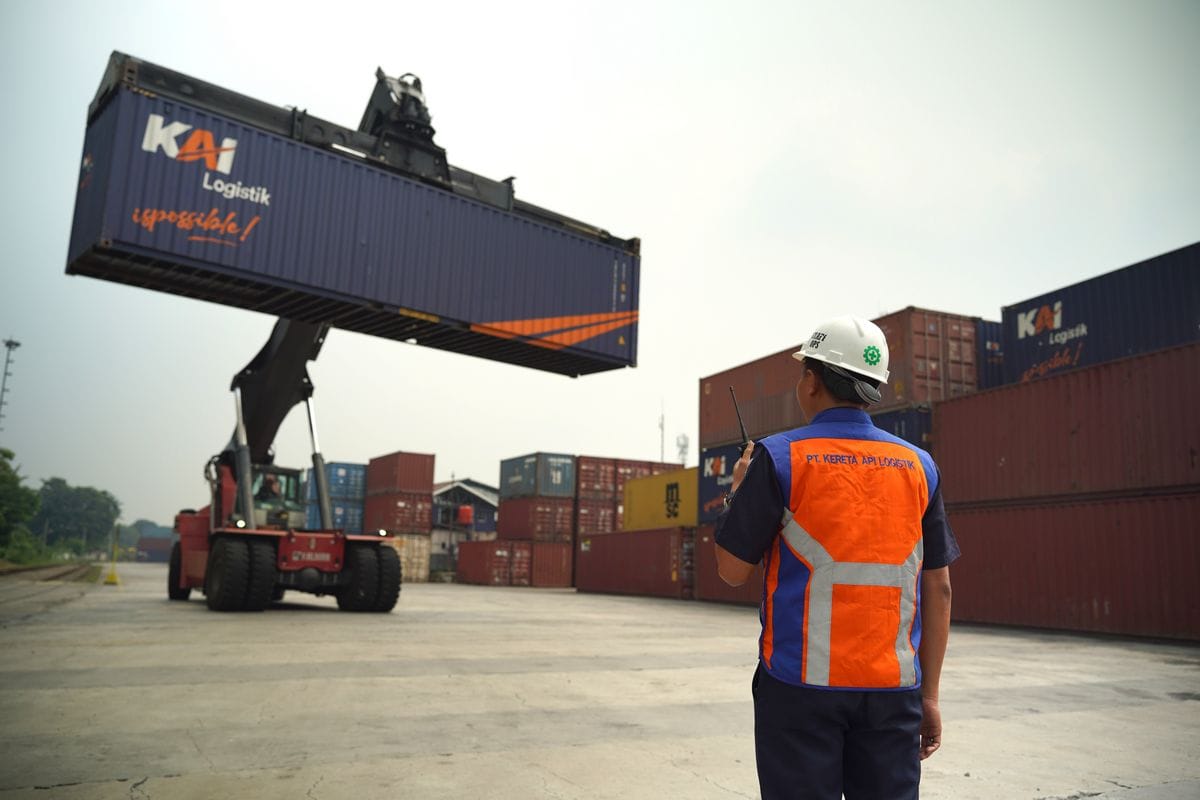
JAKARTA, Jakartaweekly.com — KAI Logistik recorded growth in freight transportation in May 2026, driven by the increasing use of railways as a logistics distribution mode. During the January–May 2026 period, the company’s container rail service transported 1.19 million tons of cargo, equivalent to nearly 60,000 truck trips.
President Director Yuskal Setiawan said the container rail service has become one of the main drivers of the company’s business growth. Throughout 2025, container freight volume increased by 8 percent compared with the previous year.
“In 2026, we are targeting even stronger growth through the enhancement of container rail services and transportation capacity. This initiative is part of the company’s efforts to provide logistics solutions that are not only efficient but also support industrial competitiveness and sustainable logistics development,” Yuskal said in Jakarta on Friday, June 12, 2026.
He noted that the increase in freight volume became more evident in the second quarter of 2026. In May alone, container rail freight volume reached 267,390 tons, up 20 percent compared with the beginning of the year.
To anticipate rising demand, KAI Logistik has added two container train sets. The additional capacity is intended to meet the needs of industrial customers while supporting more efficient and environmentally friendly logistics practices.
According to Yuskal, the transformation of Indonesia’s national logistics system depends not only on expanding distribution capacity but also on the ability to provide efficient, low-emission transportation modes.
He emphasized that railways hold a strategic position as the backbone of high-capacity freight transportation, strengthening interregional connectivity and enhancing the competitiveness of national industries.
“The shift of a portion of freight transportation to rail is a long-term investment for the national economy, as it improves supply chain efficiency, reduces external costs caused by traffic congestion and road damage, and supports Indonesia’s low-carbon development goals,” he said.
In addition to improving distribution efficiency, shifting freight transportation from roads to railways is also expected to reduce pressure on road infrastructure and enhance transportation safety.
Based on 2024 data, Indonesia recorded 150,906 traffic accidents, resulting in 26,839 fatalities. Approximately 10.5 percent of these accidents involved freight vehicles. Meanwhile, losses caused by damage to national roads from overloaded and oversized vehicles reached Rp10.21 trillion.
Yuskal added that KAI Logistik plans to further expand the use of rail transportation through capacity enhancement, service network development, and collaboration with various industry stakeholders.
These efforts, he said, are expected to encourage a greater shift of cargo distribution to rail transport, creating a logistics system that is more efficient, safer, and sustainable.
Discover more