Fed Holds Interest Rates at 3.75%-4% as Inflation Remains Above Target
JAKARTA, JakartaWeekly.com–The Federal Reserve (Fed) decided to hold its benchmark interest rate at 3.75%-4%, citing inflation that remains above its 2% target and continued strength in the US economy.
In its latest statement, the Fed noted that annual inflation stood at 3.7% in September 2026. The central bank also said economic activity was expanding at a strong pace, supported by resilient domestic spending, strong productivity growth, and robust capital investment.
Meanwhile, job gains have kept pace with the workforce, while the unemployment rate has changed little.
Fed’s Next Move Remains Uncertain
Nafan Aji Gusta, Senior Analyst at Mirae Asset Sekuritas, said market participants responded positively to the Fed’s decision to keep interest rates unchanged, in line with market expectations.
“The strengthening of stock markets reflects investors’ relatively optimistic stance, although they remain cautious because the Fed’s decision has not provided certainty about the direction of monetary policy going forward,” he said on Thursday, October 29, 2026.
However, the outlook for the Fed’s next policy move remains uncertain as investors continue to monitor US inflation, which has yet to return to the central bank’s 2% target.
The possibility of further monetary tightening at the Fed’s next meeting in December remains open, with the probability of a 25-basis-point rate hike standing at 83.26%. The prospect of further tightening is also underscored by the latest Federal Open Market Committee (FOMC) meeting, in which two members dissented from the decision to hold rates and instead favored a 25-basis-point increase.
The dissent from the two FOMC members has become an important signal for investors, highlighting concerns over persistent inflation. The decision to hold rates at the October meeting should therefore not be interpreted as a definitive end to the tightening cycle. Instead, it gives the Fed more time to assess incoming economic data before determining its next policy move.
“With no new economic projections, or dot plot, released at this meeting, market participants are now focusing on signals from Fed leadership, as well as the release of third-quarter gross domestic product (GDP) data and the personal consumption expenditures (PCE) inflation indicator, which is important in determining the Fed’s next policy direction,” Nafan said.
Fed to Set Aside Meetings for Broader Policy Discussions
Meanwhile, Phintraco Sekuritas’ research team said in its daily report that the Fed had opted to postpone further interest rate changes while awaiting more economic data, with the next policy decision scheduled for after the US midterm elections on November 3, 2026.
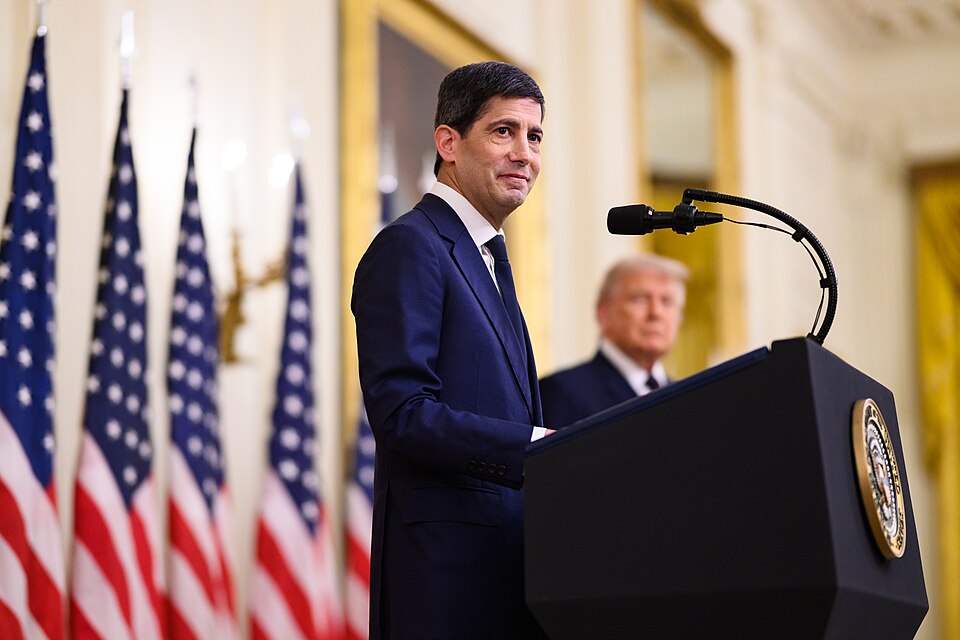
The research team also highlighted changes to the Fed’s meeting format starting in 2027. Under the plan announced by Fed Chair Kevin Warsh, one of the central bank’s eight regularly scheduled meetings in 2027 will be dedicated exclusively to broader monetary policy strategy, without a rate decision or policy statement. In 2028, two meetings will be devoted to strategic discussions, leaving six meetings for monetary policy decisions.
Phintraco Sekuritas’ research team also noted that investors would next focus on US economic growth data. The US economy is projected to grow by 3.2% in the third quarter of 2026, accelerating from 2.2% in the second quarter.
Discover more