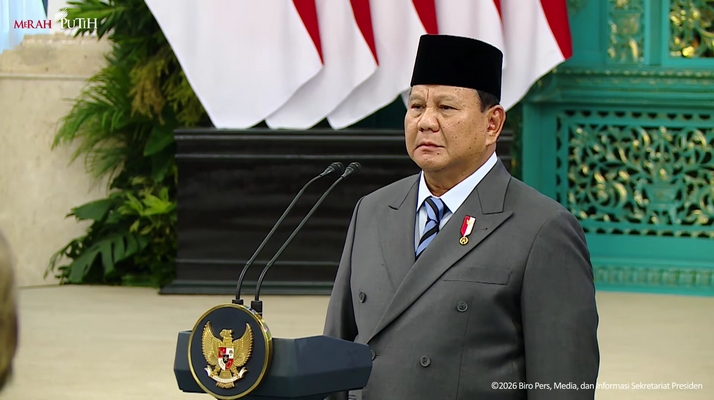
Conflicting Statements Emerge Over Prabowo’s Advice to Gibran on Diploma Case
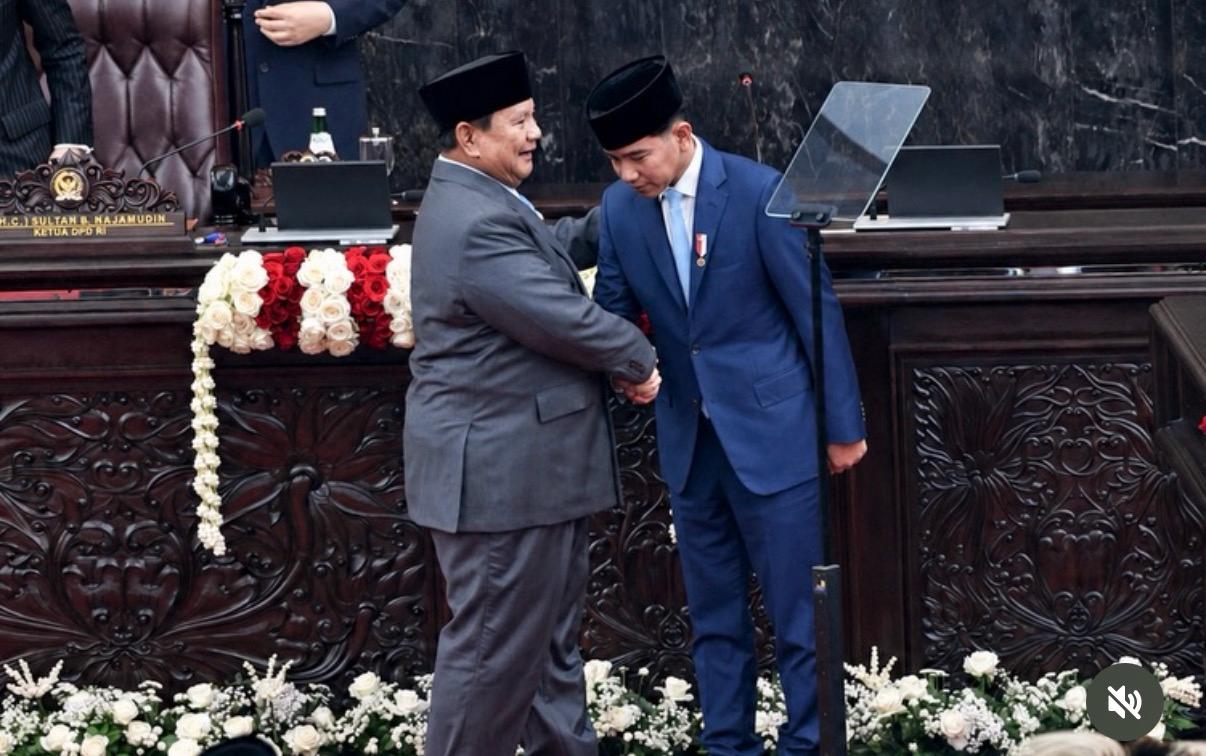
JAKARTA, JakartaWeekly.com — Conflicting statements have emerged over President Prabowo Subianto’s alleged advice to Vice President Gibran Rakabuming Raka regarding his diploma controversy. Gibrain said Prabowo had advised him to continue pursuing legal action to prove the validity of his educational credentials. However, the Presidential Communication Agency (Bakom) later denied that the President had given such advice.
Indonesian Vice President Gibran Rakabuming Raka confirmed that he met with President Prabowo Subianto on the morning of Tuesday, November 10, 2026. During the meeting, Gibran said Prabowo advised him to continue proving the validity of his educational credentials through the State Administrative Court (PTUN) and to file a judicial review (PK) with the Supreme Court (MA), together with the Minister of Primary and Secondary Education.
“He gave me a lot of advice and input regarding the current developments. One of his suggestions was that I continue to fight the case at the State Administrative Court by presenting all my documents, from elementary school through my undergraduate degree. He also suggested coordinating with the Ministry of Primary and Secondary Education to file a judicial review with the Supreme Court. That’s all. Thank you,” Gibran told reporters at his office on Tuesday afternoon, November 10, 2026.
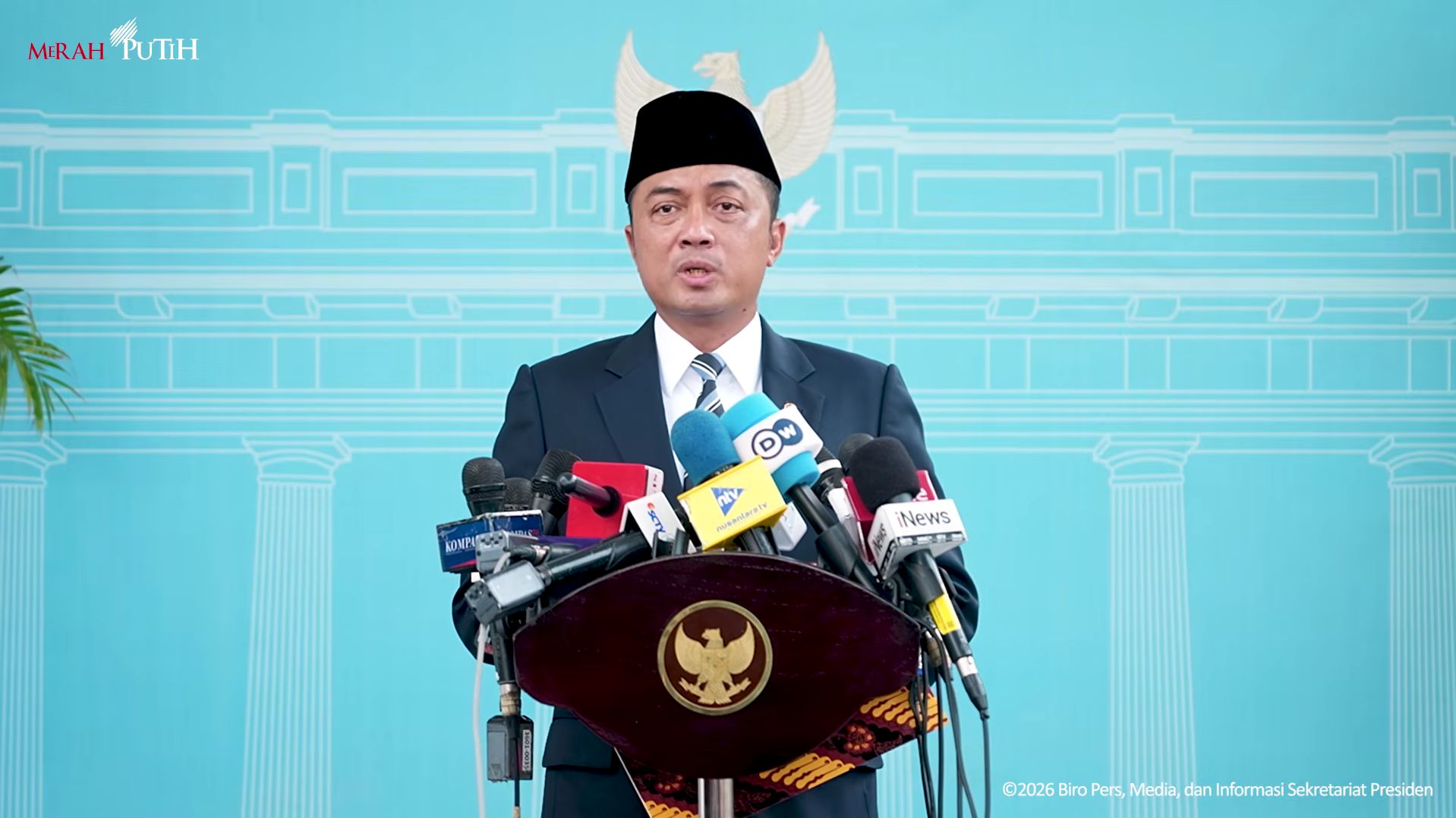
However, according to various media reports, the Head of the Presidential Communications Agency (Bakom) on Wednesday, November 11, denied reports that the President had given Gibran such advice. Bakom Head Syahganda Nainggolan explained that the President’s advice was actually in line with the statement made by Coordinating Minister for Legal Affairs Yusril Ihza Mahendra.
Meanwhile, Yusril told reporters at the Presidential Palace on Tuesday, November 10, that the rulings issued by the Supreme Court (MA) and the Constitutional Court (MK) were final. He also said that the Ministry of Primary and Secondary Education would not file a judicial review.
Furthermore, Yusril explained that Gibran currently had no further legal remedies available because the defendant in the Supreme Court case was the Director General of the Ministry of Primary and Secondary Education. Gibran had not joined the proceedings as an intervening defendant and therefore could not file an appeal.
“The Constitutional Court’s ruling is final. The only possible legal remedy against the Supreme Court’s ruling is a judicial review, but who would file it? The Ministry of Primary and Secondary Education will not file a judicial review. In fact, it will implement the ruling. Meanwhile, the Vice President himself did not join the case as an intervening defendant,” Yusril said.
For context, the Constitutional Court ruled that there was no convincing evidence that Gibran held a foreign diploma, certificate, or degree equivalent to a senior high school qualification, as required under the Election Law. The foreign educational documents Gibran submitted for equivalency recognition consisted only of a certificate of attendance and an academic transcript, which the court deemed insufficient proof of graduation. However, the Constitutional Court ruled that it did not have the authority to disqualify Gibran from his position as Vice President.
Meanwhile, the Supreme Court found that the Ministry of Primary and Secondary Education had violated the principle of formal due diligence when issuing the equivalency certificate. The equivalency recognition was not supported by formal proof of graduation but only by a certificate of attendance, rendering the substantive basis of the decision procedurally flawed. As a result, Gibran’s senior high school diploma equivalency certificate was declared invalid and null and void by law.
Yusril also explained the procedure for a vice president’s resignation. A vice president who wishes to resign must submit an official letter to the People’s Consultative Assembly (MPR). The MPR would then hold a session to discuss the vice president’s written resignation statement, after which it would send a formal letter to the President notifying him of the vacancy in the vice presidency.
In the same letter, the MPR would ask the President to nominate two vice presidential candidates, together with the required supporting documents. Once the President submits the two candidates, the MPR would hold an election within 60 days of receiving the President’s letter.
However, if the Vice President does not resign, the House of Representatives (DPR) may initiate impeachment proceedings by exercising its right to express an opinion. The outcome of this process would then be submitted to the Constitutional Court. If the court grants the request, the DPR would proceed by forwarding the Constitutional Court’s ruling to the MPR. The MPR would subsequently convene a session and make the final decision on whether to reject or accept the DPR’s proposal.
Discover more