IHSG Performance and Outlook
Indonesia’s Capital Market and Rupiah Face Pressure Amid Rising Oil Prices
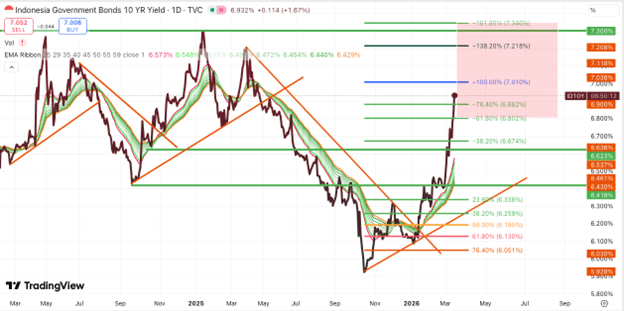
Jakartaweekly.com – Amid escalating tensions involving Iran, the United States, and Israel—now entering its third week—Indonesia’s capital markets and the rupiah are facing growing pressure.
Investors are increasingly concerned about both the direct and indirect impacts of the conflict on the global economy.
The direct impact includes the risk of rising domestic fuel prices and potential disruptions to Indonesia’s fuel supply. Certain sectors that are directly exposed to energy costs are also expected to face operational challenges.
Meanwhile, the indirect impact is more far-reaching. These include:
- A potential surge in global oil prices, particularly Brent and WTI crude, which could exceed US$100 per barrel
- Rising inflationary pressures in the United States, potentially pushing inflation above 4%, which could delay or even cancel expected interest rate cuts by the Federal Reserve
As a result of these developments, investors are becoming more cautious—leading to profit-taking and a reassessment of valuations in both domestic equities and bonds.
Worst-Case Scenario: Regional Escalation and Hormuz Disruption
In a worst-case scenario, where the conflict expands regionally and disrupts key global shipping routes such as the Strait of Hormuz, oil prices could surge to between US$100 and US$140 per barrel.
Sustained increases in oil prices—particularly if WTI crude remains above US$100—could add an estimated 0.62 percentage points to the United States’ core Personal Consumption Expenditures (PCE) inflation.
Higher energy costs may force consumers to cut spending, increasing the risk of stagflation, a condition marked by high inflation and slowing economic growth.
If US inflation rises again above 4%, the Federal Reserve may be forced to tighten monetary policy further, increasing the risk of a broader economic slowdown or even recession.
Global and Domestic Implications
Structurally, prolonged conflict could disrupt global trade routes, leading to supply shortages and higher logistics costs.
For example, every US$10 increase in oil prices could raise annual household expenses in the United States by around US$450.
For Indonesia, the impact could be significant.
Higher global energy and logistics costs are likely to push up domestic prices, including food, contributing to cost-push inflation.
As a net oil importer, Indonesia also faces increasing fiscal pressure. Rising global oil prices would increase the burden of energy subsidies in the state budget, potentially widening the fiscal deficit if high prices persist.
Opinion By: Founder and CEO Finvesol Consulting, Fendi Susiyanto

Discover more