BI Launched KKI, Could Strengthen Indonesia’s Domestic Payment System, Expert Says
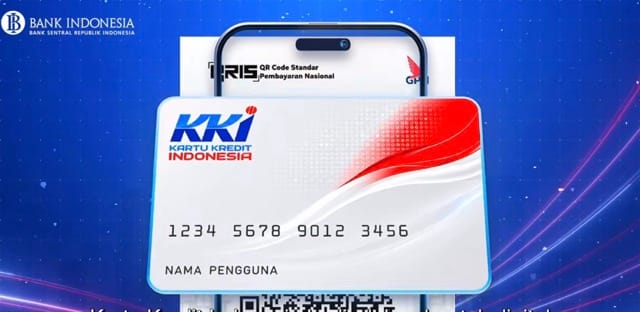
JAKARTA, Jakartaweekly.com — The launch of Kartu Kredit Indonesia (KKI), Indonesia’s domestic credit card scheme, is seen as having the potential to strengthen the country’s independence in its domestic payment system. However, the success of the domestic payment instrument will depend largely on the economic benefits it offers to consumers and businesses.
Permata Bank Chief Economist Josua Pardede said the strategic benefits of KKI go beyond reducing reliance on foreign payment networks. They also include greater Indonesian control over technical standards, service continuity, transaction data management, innovation, and system resilience in the event of external disruptions.
“The greater the volume of credit transactions processed through domestic systems, the greater Indonesia’s control over these aspects. This will strengthen the bargaining position of the domestic payment industry,” Josua told Jakarta Weekly on Tuesday, Aug. 18, 2026.
However, Josua said KKI’s contribution should be viewed proportionately. Bank Indonesia had previously estimated that existing credit card networks would continue to be used, particularly for high-value and overseas transactions.
“KKI has the potential to reduce Indonesia’s dependence on international payment networks for domestic transactions, but it will not completely eliminate the need for international networks,” he said.
According to Josua, the next important step is to expand cross-border QRIS connectivity so that greater independence in the domestic payment system can coexist with international connectivity.
From a user perspective, Josua said KKI has an advantage because it is integrated with QRIS. Initially, users do not need a physical card, as KKI can be used digitally as a funding source for QRIS payments, either through scanning or Tap.
“Through this approach, KKI can leverage the extensive QRIS merchant network without requiring each merchant to set up separate infrastructure to accept card payments. This is a significant structural advantage,” he said.
However, from the consumer perspective, payment-system independence alone may not be enough to persuade people to switch from credit cards they already use. Consumers will continue to consider practical factors such as interest rates and fees, ease of obtaining a card, credit limits, installment facilities, promotions, transaction rewards, security, ease of refunds, and acceptance across as many locations as possible.
“There is currently no information indicating that KKI offers interest rates, annual fees, or rewards that are definitively lower or better than those offered by conventional credit cards,” Josua said.
Therefore, he said, the next challenge lies with banks as KKI issuers.
“If KKI only provides credit financing through QRIS while offering economic benefits that are equal to or worse than those of existing cards, adoption will be slow. Nationalism may encourage people to try it once, but economic benefits will determine whether they continue using it,” he said.
In the short term, Josua believes KKI is more likely to develop as an alternative for certain consumer segments rather than immediately becoming a mass-market product. Interestingly, he said, QRIS acceptance is already widespread, while access to credit must remain selective based on customers’ ability to repay.
As a result, KKI could achieve mass adoption in terms of where it can be used, while remaining selective in terms of who can obtain it. Bank Indonesia sees opportunities particularly among increasingly digital consumers, including millennials and Generation Z. At the same time, demand for credit cards has yet to show a significant increase.
Josua said KKI’s medium-term prospects remain strong because the scheme is designed to evolve from QRIS transactions to online payments and eventually physical cards. If more issuers join, user experiences become standardized across banks, merchant acceptance expands, and the benefits offered become more competitive, KKI could become a mainstream product for domestic credit transactions.
Josua identified three key challenges for KKI: security, tangible benefits for consumers, and sustainability for merchants and banks.
Ultimately, he said, KKI can be viewed as a domestic credit layer that complements QRIS. Its rationale is strong in terms of payment-system sovereignty and resilience, but its commercial success will not happen automatically.
KKI has significant potential because it does not need to build a merchant network from scratch. However, to become a mass-market product, it must offer more than simply being a domestic alternative. It needs to provide greater convenience, stronger security, competitive costs, attractive benefits, broad acceptance, and fast dispute resolution.
KKI as an Innovation
Bank Indonesia launched KKI on Monday, Aug. 17, 2026 as an innovation in the domestic payment system industry. The launch is expected to strengthen the national digital financial ecosystem by improving transaction efficiency, expanding inclusivity among payment service providers and users, and enhancing business competitiveness.
Acting Governor of Bank Indonesia Destry Damayanti said the development of KKI represents an advancement in the payment system that should ultimately provide tangible benefits to the public while strengthening the resilience and competitiveness of the national economy.
KKI is an alternative payment instrument that provides deferred payment facilities processed domestically. As of Aug. 17, 2026, eight payment service providers had issued KKI: BCA, Mandiri, BNI, BRI, CIMB Niaga, Permata, Bank Mega, and BSI, which has developed a sharia-compliant financing option.
KKI is expected to continue expanding in terms of features and services as more issuers join the scheme and its use within the national digital payment ecosystem grows.
Previously, credit card transactions in Indonesia generally relied on international networks such as Visa and Mastercard. These networks connect card-issuing banks with merchant-side banks or payment service providers and facilitate transaction information, authorization, clearing, and settlement between the parties involved.
Discover more