Indonesia Revises 2026 Economic Growth Forecast to Around 5.4%
JAKARTA, JakartaWeekly.com—Indonesian Finance Minister Suahasil Nazara said Indonesia economic growth in 2026 is projected to exceed 5.4% year-on-year (yoy), taking into account the lates developments. The revised projection is lower than the previous forecast of 5.6-6%.
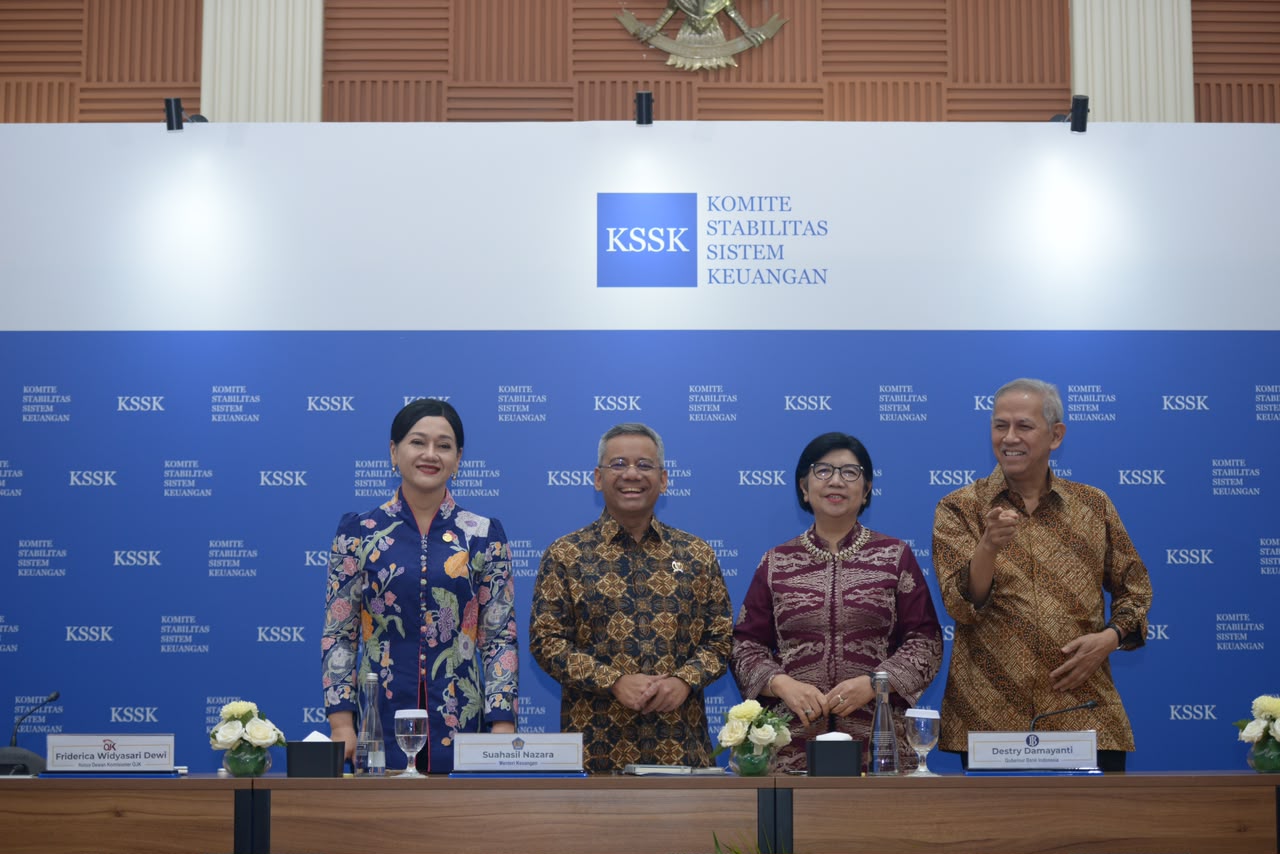
Speaking at a press conference following the Financial System Stability Committee (KKSK) meeting, Suahasil said the downward revision was driven by escalating geopolitical conflicts, which have pushed up global energy prices, as well as tighter global monetary policies.
Domestically, tighter liquidity, mounting pressure on the Rupiah amid increased capital outflows from stock market, and pressures on the equity market following MSCI’s announcement have also weighed on the outlook.
Nevertheless, Suahasil emphasized that Indonesia’s economic fundamentals and adaptive policy responses would help maintain financial system stability.
He also said that Indonesia’s economic growth in the third quarter of 2026 was expected to remain solid despite global pressures.
“Economic growth continues to be supported by domestic demand and positive export performance,” Suahasil said in a KSSK press release on Tuesday, November 3, 2026.
Household consumption is supported by the continuation of various government fiscal stimulus measures. The State Budget (APBN) continues to serve as a shock absorber through subsidies, compensation, social protection programs, food price stabilization, and job creation.
Investment is also expected to remain strong, supported by downstream industrialization projects and infrastructure development under the government’s priority programs. Meanwhile, government consumption is supported by accelerated spending and social assistance disbursement.
On the external front, non-oil and gas export performance has improved, with efforts to capitalize on higher commodity prices and stronger demand for export commodities. The government is also maintaining external resilience through its foreign exchange export proceeds (DHE) conversion policy.
Positive economic performance is also reflected in several indicators. Car and motorcycle sales grew by 28.1% yoy and 15.4% yoy, respectively, in September, while the Manufacturing Purchasing Managers’ Index (PMI) continued to expand, reaching 54.0 in October.
“To sustain the growth momentum, stronger policy coordination between the government and Bank Indonesia, as well as collaboration between the government and Danantara through the Two Arms of the State approach, will continue to be reinforced to maintain stability and promote high value-added growth,” he added.
Global Economic Outlook Remains Under Pressure
The global economic outlook remains under pressure amid escalating geopolitical conflicts. Persistent tensions in the Middle East have kept oil and other global commodity prices elevated.
Global monetary conditions have also tightened, with several major central banks, including the US Federal Reserve, the European Central Bank (ECB), and the Bank of Japan (BoJ) each raising interest rates by 25 basis points (bps) in September. Monetary tightening is also expected to continue for a longer period, reflecting a higher-for-longer environment.
Meanwhile, US Treasury yields remain elevated, reflecting stronger expectations regarding the future direction of monetary policy and the US government’s large budget deficit.
In global financial markets, investor appetite for portfolio assets in emerging markets remain limited. This has contributed to the continued strength of the US dollar index (DXY) against both developed and emerging market currencies.
These conditions could constrain capital inflows into emerging markets, including Indonesia, and the government will continue to mitigate their potential impacts.
In its October 2026 World Economic Outlook, the International Monetary Fund (IMF) projected global economic growth of 3.1% in 2026, slower than in 2025, while global inflation is expected to rise to 4.7%.
Against this backdrop, the government believes Indonesia’s external resilience needs to be further strengthened to mitigate spillover risks from heightened uncertainty in the global economy and financial markets.
Discover more