PELNI–Meratus Collaboration Aims to Improve Logistics Distribution in Eastern Indonesia
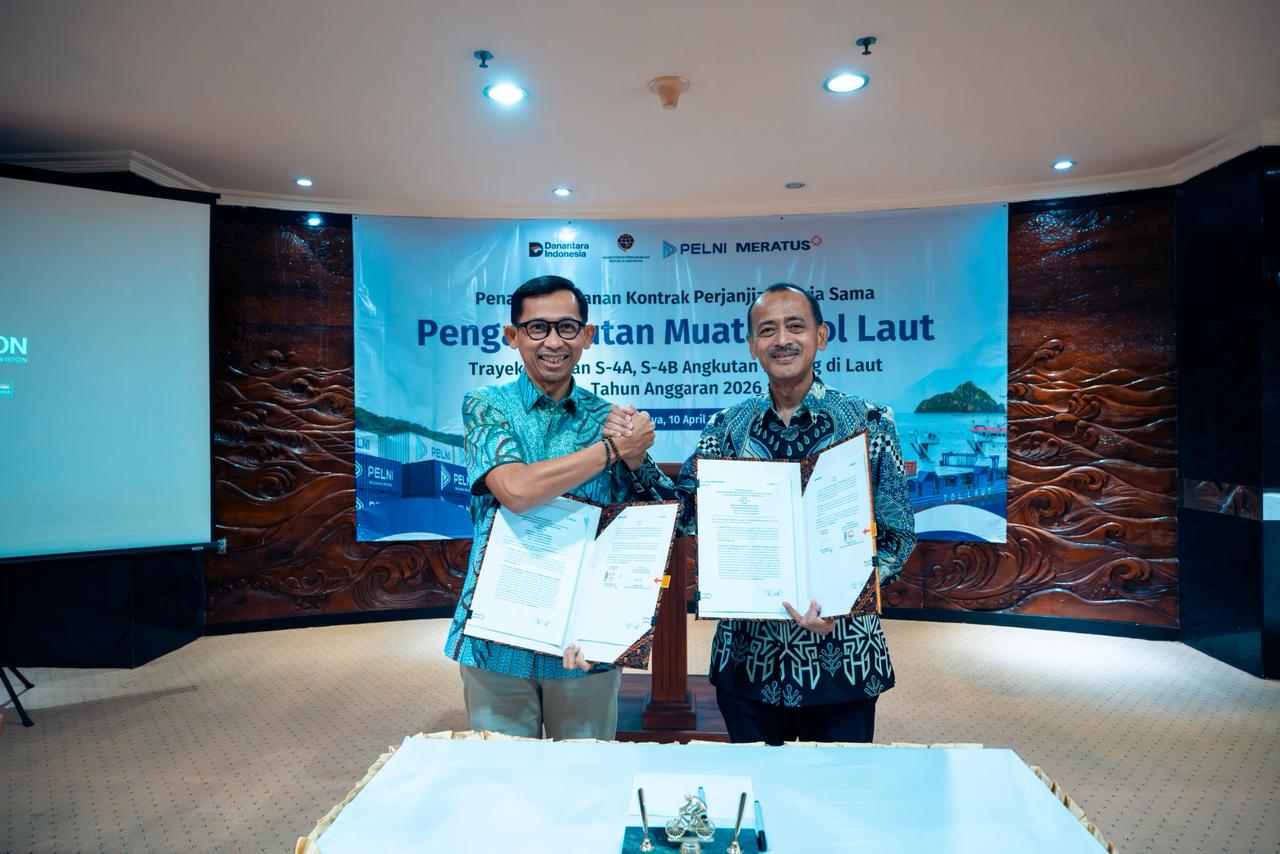
JAKARTA, Jakartaweekly.com – PT Pelayaran Nasional Indonesia (PELNI) and PT Meratus Line have signed a Cooperation Agreement (PKS) for cargo transportation under a Hub & Spoke scheme within the Sea Toll (Tol Laut) service on routes S4A and S4B.
PELNI’s Director of Cargo Transportation & Sea Toll Business, Kokok Susanto, stated that this collaboration is a strategic step to strengthen synergy among national shipping operators in supporting connectivity and improving logistics distribution efficiency through cargo optimization, fleet utilization, and the enhancement of the Hub & Spoke scheme on both Sea Toll routes.
“With synergy among operators, we can increase cargo utilization, reduce operational costs, and accelerate the flow of goods distribution from main ports (hubs) to end destinations (spokes) in eastern Indonesia,” Kokok said in a press statement on Wednesday, April 15, 2026.
He claimed that the partnership will improve transportation efficiency and strengthen national logistics resilience. PELNI and Meratus Line are committed to conducting regular monitoring and evaluation to ensure the optimal implementation of the cooperation.
In addition, the monitoring aims to provide tangible contributions to economic growth through faster and more reliable goods distribution.
The signing ceremony was also attended by President Director of PT Sarana Bandar Nasional Sukendra, PELNI’s Vice President of Non-Commercial Cargo Business Sauban Muksin, Head of PELNI Surabaya Branch Roni Abdullah, Line Manager of PT Meratus Line J. Castella Nostra, and Finance Manager of PT Meratus Line Tutuk Tri Hediayati.
For your information, route S4A is served by KM Kendhaga Nusantara 11, covering Kupang – Rote – Sabu – Kupang, while route S4B is operated by KM Kendhaga Nusantara 7, serving Kupang – Larantuka – Lembata (Lewoleba) – Kalabahi – Kupang.
Kokok said that the Sea Toll program had reduced price disparities in 3TP regions (underdeveloped, frontier, outermost, and border areas) by 20% to 40% In 2025. Outbound cargo is dominated by essential and staple goods, while return cargo consists of regional commodities such as charcoal, copra, seaweed, coffee, and frozen fish.
Discover more