Manufacturing Confidence Holds Strong Ahead of Ramadan
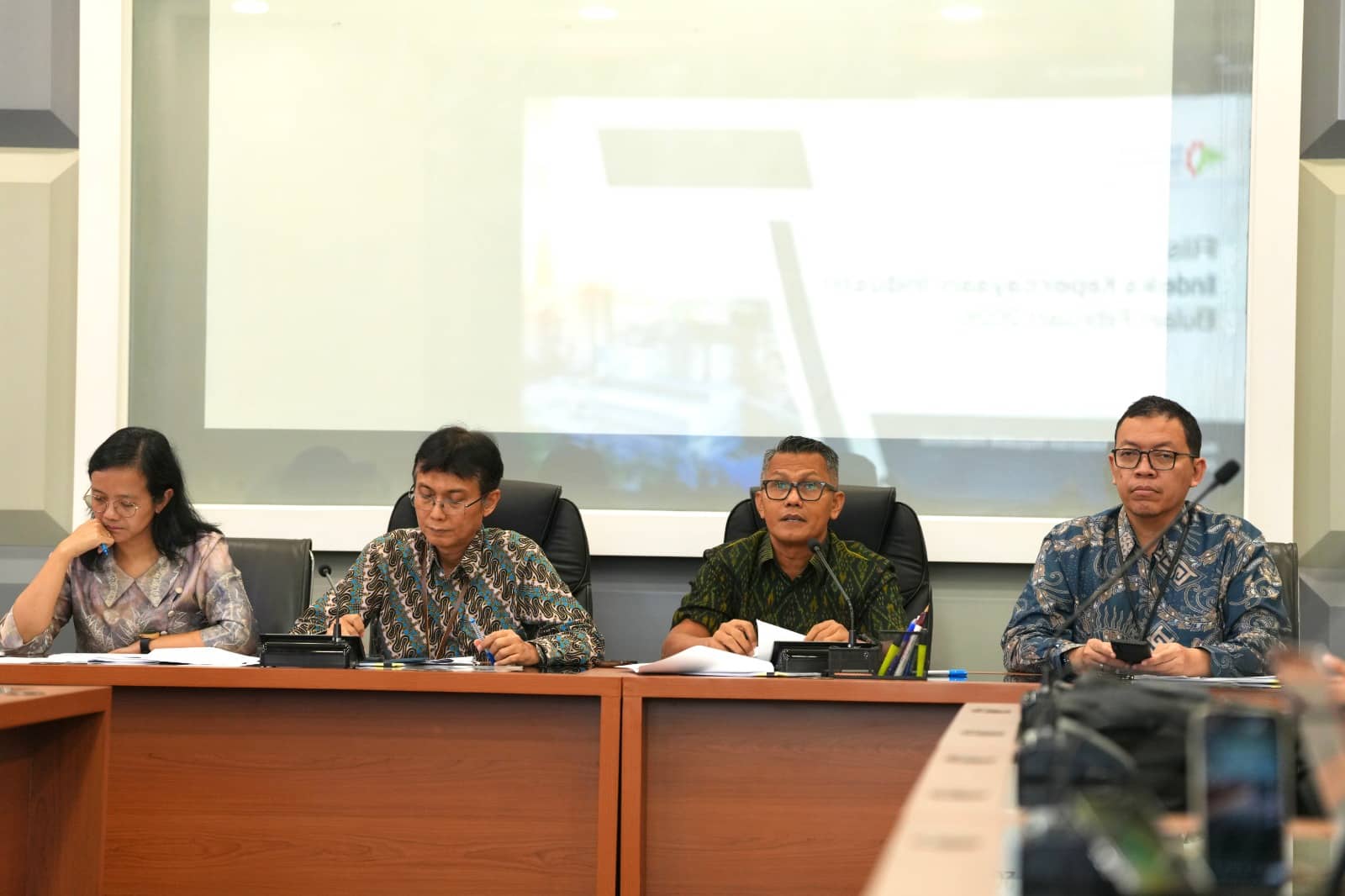
Jakartaweekly.com – Indonesia’s manufacturing sector stayed in expansion territory at the start of 2026, with the February Industrial Confidence Index (IKI) reaching 54.02, the second-highest level since its launch in November 2022.
Although the index slipped slightly by 0.10 points from January, it rose 0.87 points year-on-year, reflecting continued resilience in the non-oil and gas manufacturing sector.
Out of 23 manufacturing subsectors surveyed, 19 were in expansion, accounting for 92.9 percent of non-oil and gas manufacturing GDP. The strongest performers were the Printing and Reproduction of Recorded Media industry and the Other Transportation Equipment industry.
According to the Ministry of Industry (Kemenperin), expansion in these subsectors was driven by higher demand from food and beverage, textile, and footwear industries. Motorcycle sales also supported momentum, rising 3.11 percent year-on-year in January to 577,763 units.
Data from Statistics Indonesia (BPS) showed rising household consumption of apparel and footwear, with growth increasing from 2.73 percent in 2024 to 4.52 percent in 2025. However, the ministry noted that domestic-oriented apparel manufacturers remained in contraction, indicating that much of the additional demand was likely met by imported products.
Kemenperin said the increase in domestic consumption should be leveraged to strengthen local manufacturing and improve competitiveness in the domestic market.
Four subsectors recorded contraction: Wood and Wood Products (excluding furniture), Non-Metallic Mineral Products, Computers and Electronics, and Repair and Installation of Machinery.
The Non-Metallic Mineral Products industry faced weaker orders due to slower government procurement, as infrastructure projects have yet to ramp up at the start of the fiscal year and during Ramadan. Industry officials expect activity to pick up after Eid.
Meanwhile, the Computers and Electronics subsector saw declining export orders and continued semiconductor shortages, while wood-related industries were affected by global uncertainty and trade concerns.
Despite slight slowdowns, both export- and domestic-oriented IKI components remained in expansion. The export-oriented index stood at 54.61, while the domestic-oriented index was at 53.12.
Overall business sentiment remained positive. About 77.6 percent of respondents reported stable or improving conditions, while optimism rose to 73.5 percent. All core IKI components—orders, production, and inventories—stayed in expansion, with production recording its strongest growth since January 2025.
Discover more