Jakarta’s Blok M Reimagined Itself as the Capital’s Creative Ground Zero
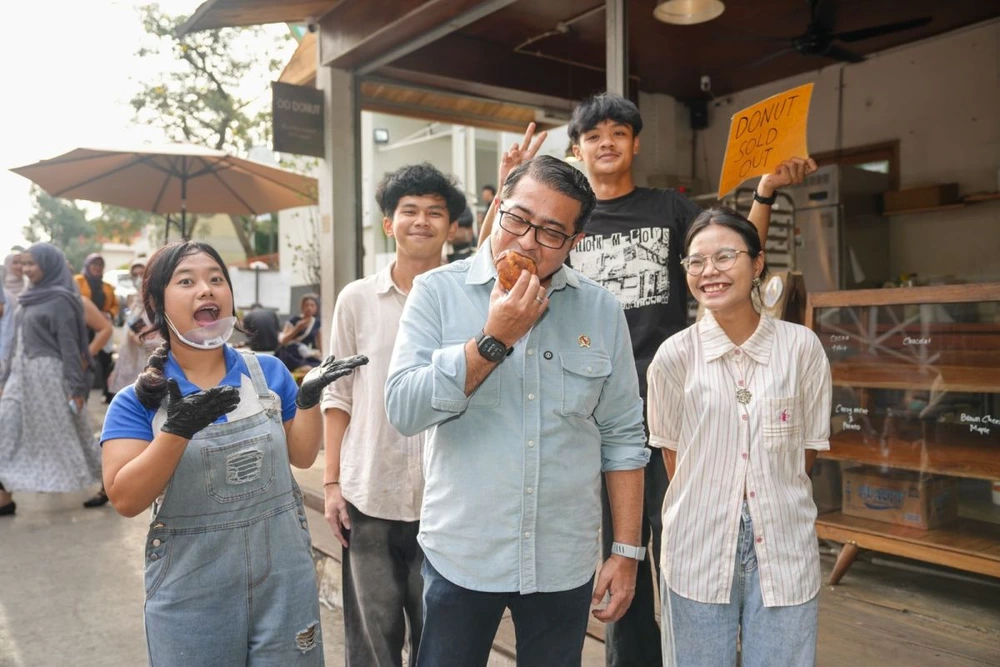
JAKARTA, Indonesia (JakartaWeekly.com) – Once a fading relic of 1980s retail, the Blok M district in South Jakarta has completed a radical metamorphosis. No longer just a shopping destination, the neighborhood has emerged as the definitive heartbeat of Indonesia’s creative economy, drawing high-level government praise for its role in the nation’s post-pandemic recovery.
Teuku Riefky Harsya, Minister of Creative Economy and Head of the Creative Economy Agency (Bekraf), toured the area on Friday to witness a surge in activity during the 2026 Idulfitri holiday season. His assessment was clear: Blok M has evolved into a strategic “hub of interaction” where public transport, youth culture, and culinary innovation collide.
A Masterclass in Urban Integration
The revival of Blok M is not an accident of history but a result of deliberate integration. The Minister highlighted how the seamless connection to the MRT Jakarta network—specifically the Blok M BCA bridge and the Blok M Hub—has lowered the barrier to entry for both creators and consumers.
“I have seen firsthand the dynamics of public activity, creative spaces, and the integration of the Blok M area as a center for community movement,” Riefky said in an official statement on Saturday. “Blok M has become a showcase for the ideas, products, and creative expressions of the younger generation because its location is strategic and easily accessible.”
The Culinary Catalyst
While the district houses various creative subsectors, it is the culinary scene that is currently acting as the primary economic engine. The Ministry, in collaboration with the Jakarta Provincial Government, has been working to activate these spaces, transforming old transit corridors into vibrant zones for local brands.
Metta Dharmasaputra, co-founder of Katadata Indonesia, who accompanied the Minister, noted that the presence of active communities in the area is creating a “sustainable collaboration” model. This ecosystem allows local “rising” brands to test their products in a high-traffic environment before scaling up.
Scaling Locally, Thinking Globally
The transformation of Blok M serves as a blueprint for the Ministry’s broader goal: strengthening local brands so they can “level up” to the global stage. By providing a physical space where Gen Z and creative entrepreneurs can express themselves, the government hopes to build a resilient creative ecosystem that can be replicated in other regions.
As the 2026 holiday crowds filled the district’s integrated creative spaces and culinary outlets, the message from the Ministry was one of long-term commitment. For Jakarta, the “new” Blok M represents a shift away from traditional enclosed malls toward open, community-driven business hubs that prioritize experience over simple transactions.
Discover more