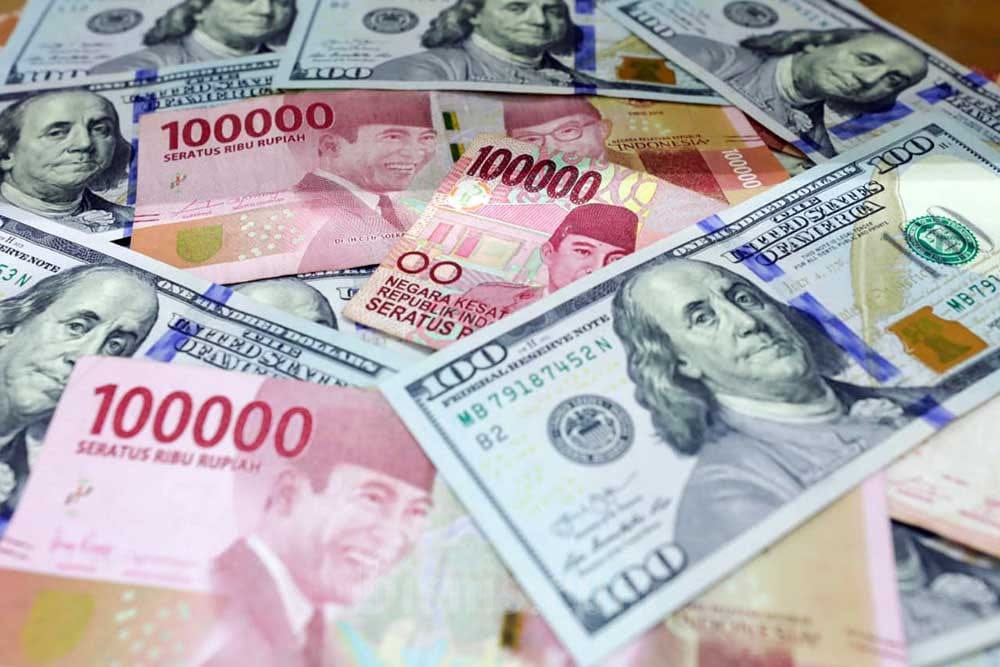
Rupiah Weakens to Rp17,243 per US Dollar at Tuesday Close, April 28, 2026

JAKARTA, Jakartaweekly.com — The rupiah depreciated against the US dollar in Tuesday’s trading session on April 28, 2026. The currency opened 27 points lower from the previous day’s close and extended its decline by another 5 points to Rp17,243 per US dollar.
Overall, the rupiah fell by 32 points compared to Monday’s closing level of Rp17,211.
Ibrahim Assuaibi, Director of PT Traze Andalan Futures and a currency and commodities analyst, said the weakening was driven by a stronger US dollar index, supported by escalating geopolitical tensions in the Middle East.
According to Ibrahim, efforts to resolve the conflict between the United States and Iran remain at an impasse, while disruptions persist along the strategic Strait of Hormuz shipping route, hindering global energy distribution from key oil-producing regions.
He noted that Iran’s latest proposal to reopen the route has yet to receive a positive response from the United States, as it does not address nuclear program issues. US President Donald Trump is also reportedly dissatisfied with the proposal, leaving negotiations without meaningful progress.
“This uncertainty is prolonging market pressure, given that the Strait of Hormuz is a critical route for around 20 percent of global oil and gas supply,” Ibrahim said in a statement on Tuesday, April 28, 2026.
Beyond geopolitical factors, markets are also awaiting the outcome of the US Federal Reserve (the Fed) meeting this week. Ibrahim expects the Fed to hold interest rates steady, although market participants remain focused on the future policy trajectory amid inflationary pressures and the impact of global conflicts.
On the domestic front, Ibrahim highlighted the recurring narrative from the government and Bank Indonesia that the rupiah is undervalued.
This narrative has been consistently reiterated across various conditions—during global volatility, the pandemic period, and even when market conditions are relatively stable. Notably, similar statements have resurfaced as the exchange rate approaches the Rp17,300 per US dollar level.
Since 2014, he added, the rupiah has weakened from around Rp12,000 per US dollar to the Rp17,000 range in recent years.
“We question the relevance of this narrative, given the rupiah’s long-term depreciation trend. This should prompt a more in-depth evaluation of what constitutes the rupiah’s fair value, rather than repeatedly relying on the same narrative,” he said.
He argued that the “undervalued rupiah” narrative has shifted from an economic assessment into a communication tool aimed at easing market panic and maintaining optimism. However, it risks becoming problematic if continuously repeated without tangible improvements in economic fundamentals. In his view, confidence in the currency cannot be built on narrative alone, but must be grounded in real structural strengthening.
On one hand, several of Indonesia’s macroeconomic indicators remain relatively solid, including controlled inflation, stable economic growth, and a resilient financial system. On the other hand, structural challenges persist, such as foreign exchange reserves partly supported by debt, incoming foreign investment flows offset by outflows in the form of dividends and interest payments, as well as signs of weakening economic structure, including premature deindustrialization.
He added that reliance on short-term foreign capital inflows also leaves the exchange rate vulnerable to external pressures.
(Read Jakartaweekly.com news on Google News)
Discover more