Why Indonesia’s Top Financial Leaders Are Stepping Down, Economists Explain
JAKARTA, Jakartaweekly.com—Economists say the recent leadership changes at Indonesia’s Ministry of Finance, Bank Indonesia (BI), the Financial Services Authority (OJK), the Indonesia Deposit Insurance Corporation (LPS), and the Indonesia Stock Exchange (IDX) within a relatively short period reflect simultaneous pressures facing the country’s financial institutions. At the same time, they emphasize that despite leadership or policy changes, these institutions must continue to preserve market confidence.
Center of Reform on Economics (CORE) economist Yusuf Rendy Manilet said Indonesia’s economy is currently facing mounting pressure from global economic volatility, fluctuations in domestic financial markets, and rising public expectations regarding the accountability of public officials.
Each resignation has a different context and should not be viewed as the same.
“Perry Warjiyo resigned for personal reasons after leading Bank Indonesia for nearly seven years. The leadership changes at OJK and the IDX followed stock market volatility triggered by the MSCI issue, while Sri Mulyani’s departure came after the unrest in August 2025. These developments indicate that accountability standards for public officials have become increasingly stringent,” Yusuf told Jakarta Weekly on Thursday (July 30).
According to him, public officials are now judged not only by their performance but also by their ability to maintain public trust during periods of significant pressure. However, Yusuf stressed that it would be misleading to interpret all of these leadership changes solely as a consequence of political pressure or public opinion.
He argued that many of the challenges are structural, including the rupiah’s depreciation due to global volatility, the stock market’s sensitivity to governance perceptions, and escalating social tensions affecting economic stability.
“So far, their successors are still in the transition phase and have not altered the country’s fundamental economic direction,” he added.
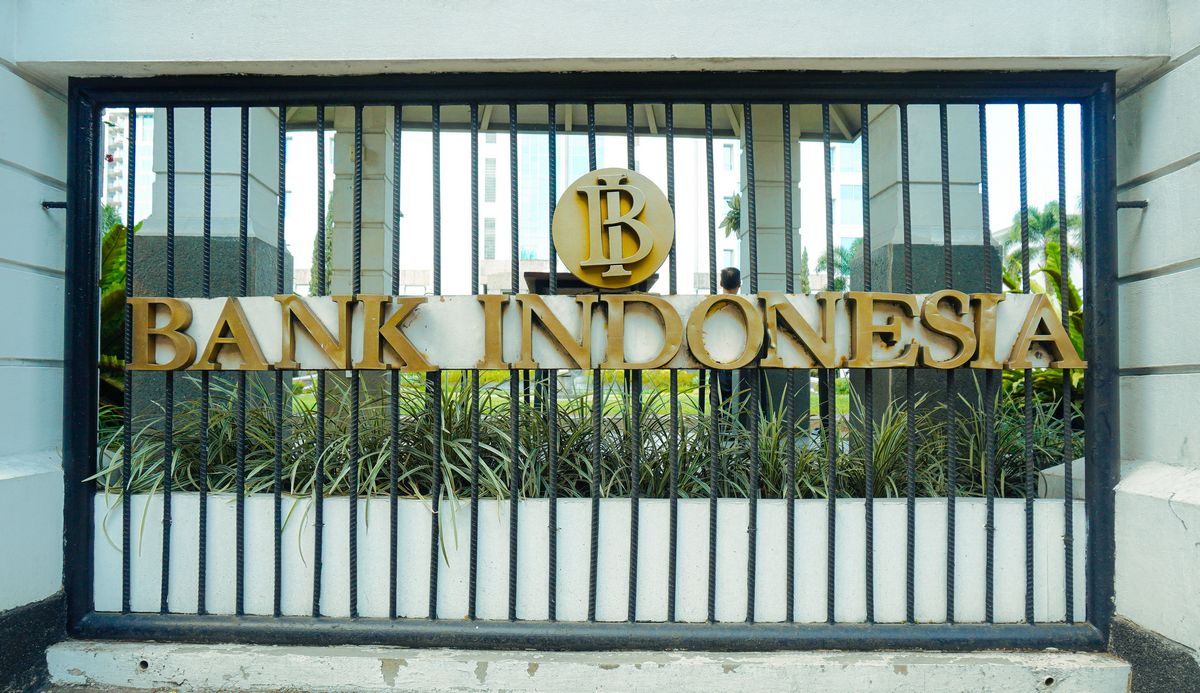
CORE Executive Director Mohammad Faisal said that beyond the official explanation for the BI Governor’s resignation, the market will inevitably question what actually happened. Therefore, Bank Indonesia needs to deliver clear and convincing messages to reassure investors and financial market participants.
According to Faisal, the primary concern among investors and the broader public is whether Perry Warjiyo’s resignation has any implications for the independence of Bank Indonesia.
“In that context, what needs to be demonstrated is that Bank Indonesia remains independent in safeguarding macroeconomic stability, particularly as reflected in the rupiah exchange rate and the Jakarta Composite Index (JCI). At the same time, the government must convince the market that there is no political interference in the monetary authority. This cannot rely solely on verbal assurances—it must be supported by concrete actions from both the government and the central bank,” Faisal explained.
Faisal noted that Perry Warjiyo’s resignation initially triggered market volatility, with the rupiah weakening beyond Rp18,000 per U.S. dollar and the JCI declining. However, he believes the turbulence will be temporary and that market conditions are expected to stabilize.
He added that markets naturally react whenever there are changes in leadership, management, or policy. Therefore, there is no need for excessive concern, provided each institution continues to safeguard the confidence of investors, businesses, and the public.
“Looking at the successor, Ms. Destry has the capability to maintain market confidence. What remains to be seen are the next policy steps, which require strong efforts from both Bank Indonesia and the government,” he said.
Weakening Rupiah and Political Pressure Seen as Possible Factors
Professor Dwi Hayu Agustini, a lecturer at the Faculty of Economics at Soegijapranata Catholic University, said the wave of resignations at Indonesia’s financial institutions can be viewed from two perspectives.
First, every individual undoubtedly has personal reasons and considerations behind their decision.
However, external factors that may have influenced those decisions cannot be ignored. Hayu believes the resignations of the leaders of the IDX and OJK occurred at an appropriate time—before conditions deteriorated further—allowing them to preserve their reputation and credibility.
“This could implicitly indicate the possibility of a continuing downward trend and worsening conditions,” she said.
In the case of Bank Indonesia, the weakening of the rupiah, with the exchange rate against the U.S. dollar projected to approach Rp20,000, could signal the central bank’s inability to stabilize the currency. This, she argued, could provide sufficient justification for calls for the BI Governor to step down, making a voluntary resignation before being asked to leave would be a more honorable option.
Hayu acknowledged that exchange rate pressures stem from numerous factors, not only economic but also political. These external influences may have contributed to the resignations.
From an external perspective, the resignations may also reflect pressure beyond the leaders’ control. Market disruptions driven by the actions of domestic or global elites that destabilize currency and stock markets are not solely based on economic considerations but may also be politically motivated.
“These are the most difficult factors to control and, under certain circumstances, become uncontrollable even for institutions whose responsibility is to maintain stability, such as the IDX, OJK, and Bank Indonesia. Non-economic factors lie beyond their authority, meaning they cannot use those factors to stabilize the markets,” Hayu explained.
Political pressure or interference from those in power, she added, could prevent financial institutions from functioning independently and neutrally. Bank Indonesia’s independence may be questioned if the monetary authority is used to advance the government’s political agenda.
She suggested that Perry Warjiyo’s resignation could represent opposition to such interference. Meanwhile, appointing individuals from the government’s inner circle may be viewed as an attempt to strengthen political influence over monetary policy, particularly amid speculation that Purbaya Yudhi Sadewa could simultaneously serve as both Finance Minister and BI Governor.
“The President’s immediate acceptance of Perry Warjiyo’s resignation request could be seen as reinforcing those speculations,” Hayu said.
Assessing the New Leadership
Yusuf explained that Finance Minister Purbaya Yudhi Sadewa has maintained fiscal discipline, supported by Indonesia’s 5.61% economic growth in the first quarter of 2026, strong government revenue, a low fiscal deficit, and a primary balance surplus. S&P Global Ratings’ decision to maintain Indonesia’s BBB sovereign credit rating with a stable outlook also reflects sustained fiscal credibility.
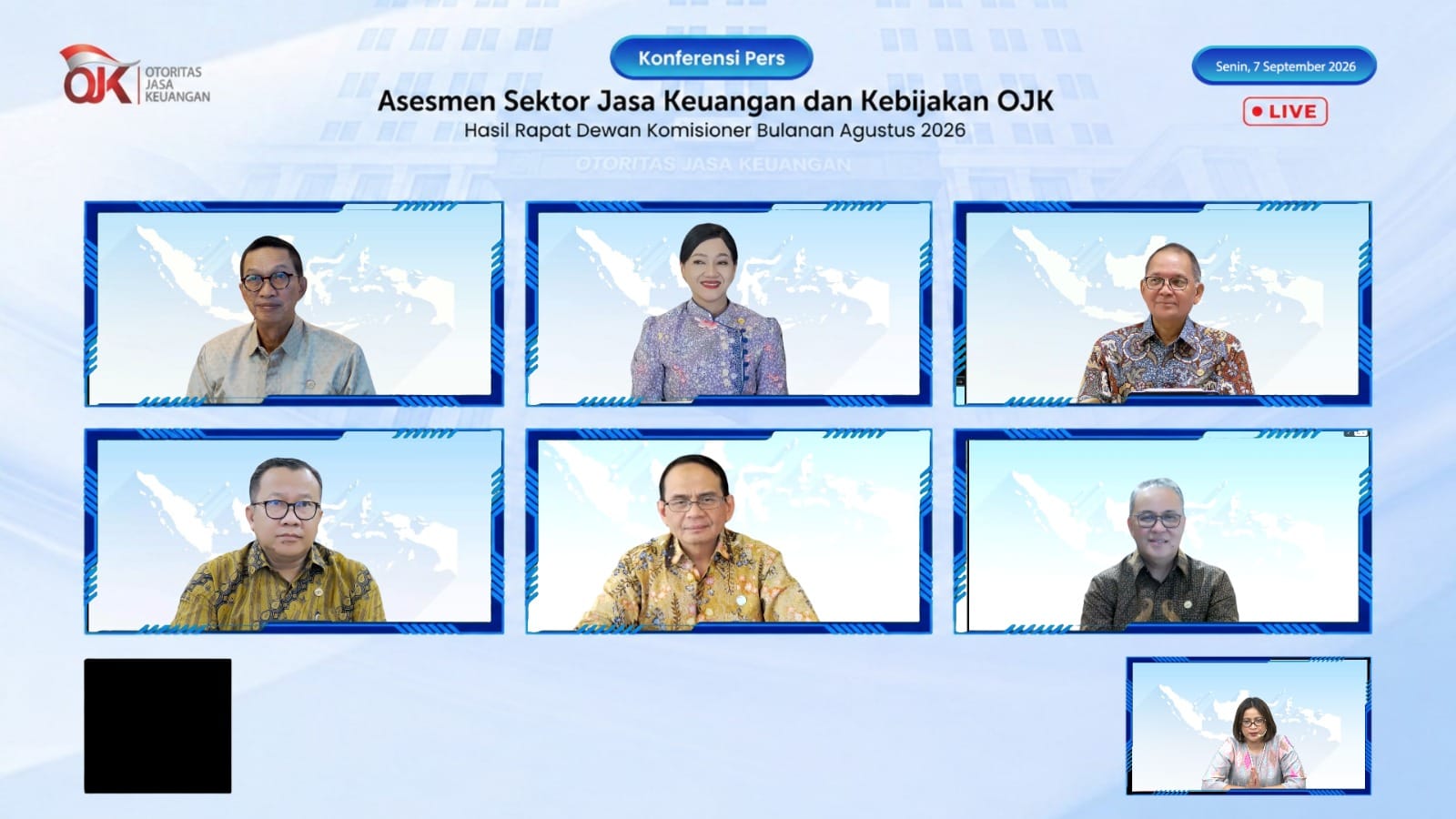
At OJK, Friderica Widyasari Dewi has strengthened market conduct supervision and consumer protection amid the recovery of Indonesia’s capital market following significant turbulence earlier this year.
Meanwhile, Jeffrey Hendrik, the new President Director of the Indonesia Stock Exchange, is still too new to evaluate comprehensively, although his commitment to improving transparency and deepening the capital market has sent positive signals.
At LPS, Anggito Abimanyu has continued to maintain the stability of Indonesia’s deposit insurance system while ensuring effective coordination within the Financial System Stability Committee (KSSK).
“As Acting Governor of Bank Indonesia, Destry Damayanti has reaffirmed that the central bank’s monetary policy direction remains unchanged, with a continued focus on maintaining rupiah stability through foreign exchange market intervention while supporting economic growth through macroprudential measures,” Yusuf said.
Hayu, however, believes that while Destry’s professional competence and experience as Acting BI Governor are unquestionable, they are not sufficient on their own to determine her long-term success. According to her, the central issue facing Bank Indonesia today is the preservation of its institutional independence.
She specifically highlighted Destry’s public support for President Prabowo’s proposal to include Danantara in the Financial System Stability Committee (KSSK).
The KSSK consists of the Finance Minister, the Governor of Bank Indonesia, the Chair of the OJK Board of Commissioners, and the Chair of the LPS Board of Commissioners. Its primary responsibility is coordinating policies and preventive measures to safeguard financial system stability. Danantara, on the other hand, operates as the government’s state investment management institution.
“If Danantara becomes a member of the KSSK, it would create a conflict of interest because KSSK policies could potentially benefit Danantara. Destry’s support for the proposal may therefore be interpreted as a pro-government signal that could undermine Bank Indonesia’s independence,” she said.
Hayu added that Jeffrey Hendrik’s position at the IDX currently appears relatively secure because the Jakarta Composite Index remains in positive territory. Meanwhile, it is still too early to assess the performance of OJK’s new leadership, as the institution remains in a transition period.
Looking ahead, she said the success of OJK’s leadership will also depend on Friderica Widyasari Dewi’s ability to coordinate and communicate effectively with the new Governor of Bank Indonesia.
“The credibility of these newly appointed leaders is now being tested by the market. Hopefully, each of them will maintain personal professionalism while safeguarding the independence of the institutions they lead,” Hayu concluded.
Bank IndonesiaDestry Damayantifinancial marketFinancial Services Authority (OJK)Indonesia Stock Exchange (IDX)Indonesian EconomyJakarta Composite Index (JCI)Perry WarjiyoPurbaya Yudhi SadewaRupiah
Discover more