Bentang Jawa: Beyond the Finish Line
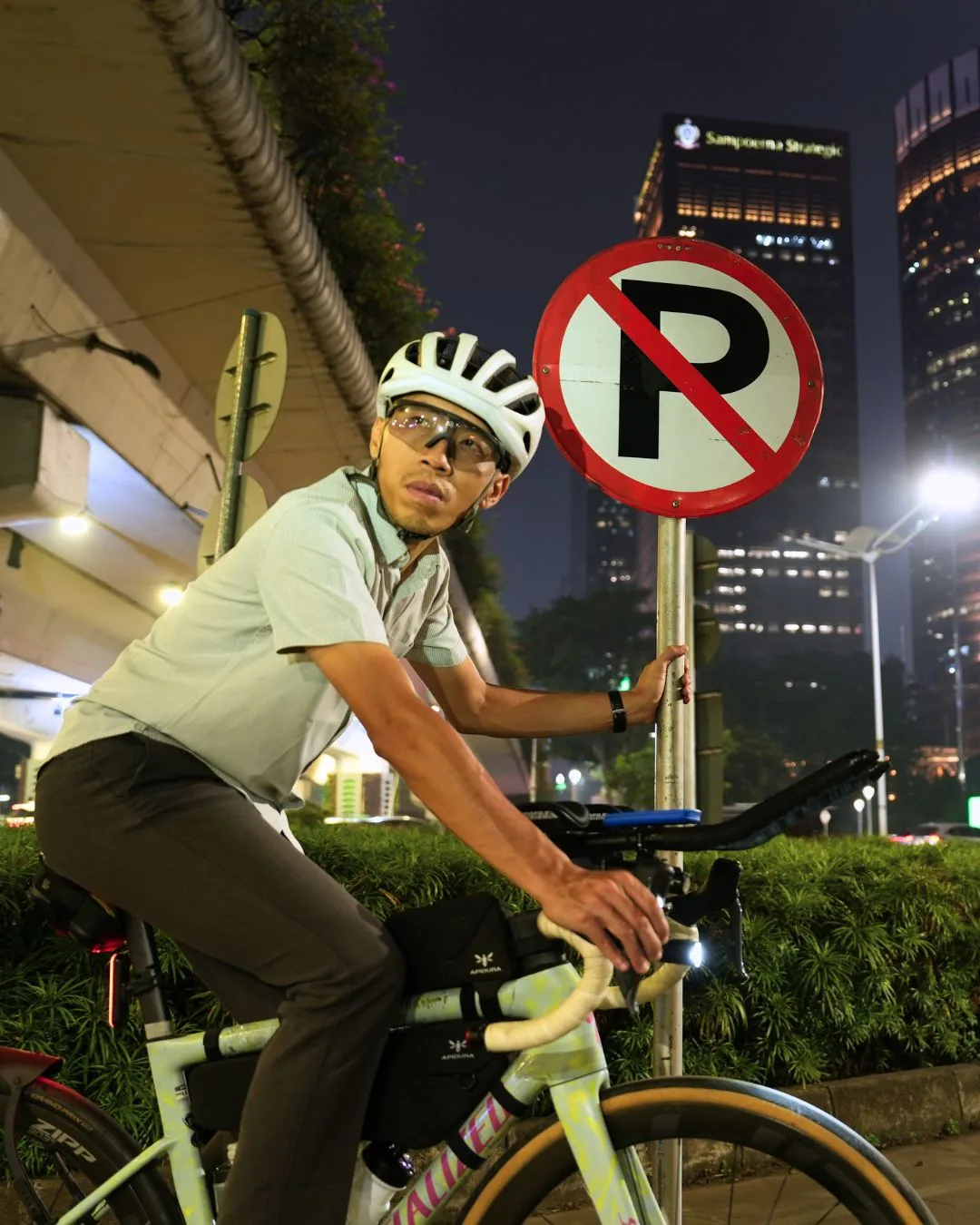
JAKARTA— Jakartaweekly.com. By weekday, Sonny Ardi works in the small cubicle in West Jakarta. This month, however, his office routine will give way to one of Indonesia’s most demanding endurance challenges: riding approximately 1,500 kilometers across Java, from Carita in Banten to Banyuwangi in East Java.
Sonny is among 200 confirmed riders taking part in Bentang Jawa 2026, the event’s largest start list to date. The field consists of 146 riders in the Solo category and 54 riders competing in pairs. It also includes 16 female riders and 29 international participants representing 13 nationalities, from Southeast Asia to Europe and North America
But for Sonny, the challenge is not about being part of the biggest field or chasing a place on the podium.
It is deeply personal.
“Last year I lost my mother. That’s not a sentence I expected to write, but it’s the truest starting line for this race,” Sonny says.
Her passing changed the way he understood solitude. That makes Bentang Jawa’s unsupported format particularly meaningful to him. Riders must navigate the route independently, without a support crew or conventional aid stations, while managing their own food, equipment, rest and mechanical problems.
Bentang Jawa’s official course spans approximately 1,500 kilometers and 16,000 meters of elevation gain, crossing Java from west to east. Riders have a maximum of 156 hours to complete the journey.
“Her passing taught me that life, at its core, is a journey taken alone—and alone is the spirit of Bentang Jawa itself,” Sonny says.
For him, every climb will become a prayer, while every descent represents a way of honoring the love his mother left behind.
“This isn’t about chasing a podium. It’s proof that I can carry the hardest chapter of my life and still finish with my head held high—under the cut-off time, on my own two wheels.”
Preparing the Body and Mind
Sonny’s path toward Bentang Jawa began with the 400-kilometer JUCC Audax through the highlands of West Java. The experience gave him a realistic understanding of what happens when a planned pace meets fatigue and limited recovery.
For his preparation this year, Sonny has worked with trainer Arfiana Khairunnisa, undertaking months of periodized physical training designed to prepare him for the distance, elevation and accumulated fatigue of ultra-cycling.
“Physically, months of periodized training by Fian,” he says.
Yet the physical preparation is only one part of his strategy.
“Mentally, the real preparation was learning to sit with solitude rather than fear it.”
For Sonny, being alone has become a form of training in itself. His experience over the past year has forced him to become more self-reliant, a quality that is essential when there is nobody following behind to solve problems or tell a rider when to stop.
The JUCC Audax also taught him to distinguish between projected performance and actual recovered power.
“I stopped trusting hope and started trusting data,” he says.
That philosophy will be tested when the race enters the early morning hours and fatigue begins to accumulate.
A Goal Measured by the Finish Line
Sonny’s objective is straightforward: finish within the official cut-off time.
He is not targeting a podium finish. Instead, he plans to maintain a moderate pace and manage his energy throughout the journey.
His strategy includes five planned hotel stops for sleep and recovery, while nutrition will be deliberately practical. Rather than relying solely on specialized cycling nutrition, he expects to refuel at local warungs and convenience stores, with familiar Indonesian staples such as Tegal food, bakmi, soto and bakso.
His bike setup is equally focused on endurance.
Sonny will ride an S-Works Tarmac SL8 fitted with a rest-bar setup for long-haul comfort, paired with a 1x GRX 827 Di2 groupset and Zipp 303S wheels, chosen to balance speed and durability across Java’s varied terrain.
When the Finish Line Is Home

For an unsupported ultra-race, mechanical problems and mental walls are almost inevitable. Sonny’s approach is to manage his body before it reaches breaking point.
“I eat before I’m hungry, rest before I’m broken, and keep turning the pedals,” he says.
But for Sonny, Banyuwangi is not the ultimate destination.
“Finishing in Banyuwangi is not the real one. Back safely home, meeting loved ones, is the true finish line.”
That sentiment captures something fundamental about ultra-cycling. The attraction is not simply the opportunity to ride farther or faster. It is the chance to test personal limits, experience a sense of freedom, explore places that cannot be fully appreciated from a conventional journey, and discover how much resilience can be found when there is no easy way out.
The growing field at Bentang Jawa reflects that appeal. What began as a niche endurance discipline has developed into a community where cyclists seek challenges that combine physical endurance, self-reliance, exploration and personal achievement. In 2026, Bentang Jawa’s 200-rider field includes participants from 13 nationalities, demonstrating how the appeal of unsupported ultra-cycling increasingly extends beyond Indonesia.
For Sonny, however, the appeal is ultimately simpler.
It is about continuing to move forward—alone when necessary, carrying memories along the way, and knowing that after 1,500 kilometers, the most meaningful finish line will be the one that leads him safely back home.
Discover more