Greenpeace: Climate Crisis Adds to Indonesia’s Cost-of-Living Pressures
JAKARTA — Jakartaweekly.com. Greenpeace Indonesia has called on the government to take stronger action on the climate crisis, arguing that extreme weather and environmental disasters are adding to the financial pressures faced by households across the country.
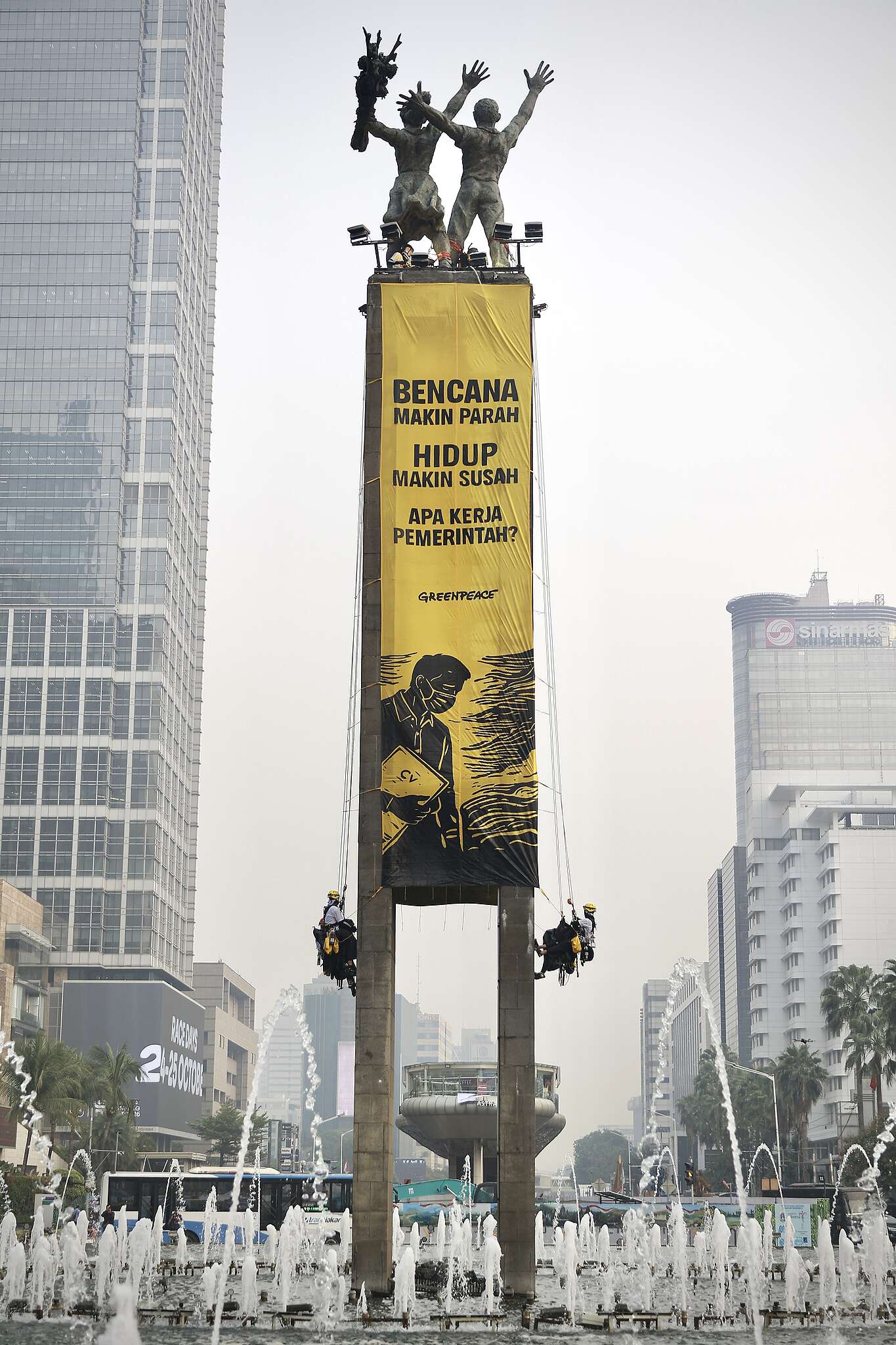
On Tuesday, October 20, the environmental organisation staged a peaceful protest at the Hotel Indonesia Roundabout in Central Jakarta, marking the second anniversary of President Prabowo Subianto and Vice President Gibran Rakabuming Raka’s administration.
Activists displayed two large banners from the Welcome Statue. One, facing the Presidential Palace, read “Address the Climate Crisis, Lower the Cost of Living.” Another, facing south, asked: “Disasters Are Getting Worse, Life Is Getting Harder, What Is the Government Doing?”
The action accompanied the release of Greenpeace Indonesia’s latest research, Besok Harga Naik! (“Prices Will Rise Tomorrow!”), which examines how climate change affects people’s livelihoods, household spending and purchasing power.
Food Costs and Income Among the Main Pressures
The report examines eight groups of people across three urban agglomerations on Java: Greater Jakarta, Greater Bandung and Greater Yogyakarta.
According to Greenpeace, 41% of respondents reported climate-related impacts on consumption patterns and food costs, while 39% experienced effects on productivity and income. Another 20% reported impacts involving housing access and transportation costs.
The findings suggest that climate-related pressures extend beyond environmental damage to affect household budgets and access to basic necessities.
“Extreme weather and ecological disasters not only threaten public safety and health, but also disrupt livelihoods, reduce incomes and push food prices higher,” said Jeanny Sirait, Climate Justice Campaigner at Greenpeace Indonesia.
Sirait said workers in economically vulnerable situations were particularly exposed to these pressures. Greenpeace identified fishers and gig workers, including online motorcycle taxi drivers and freelancers, among the groups facing significant impacts.
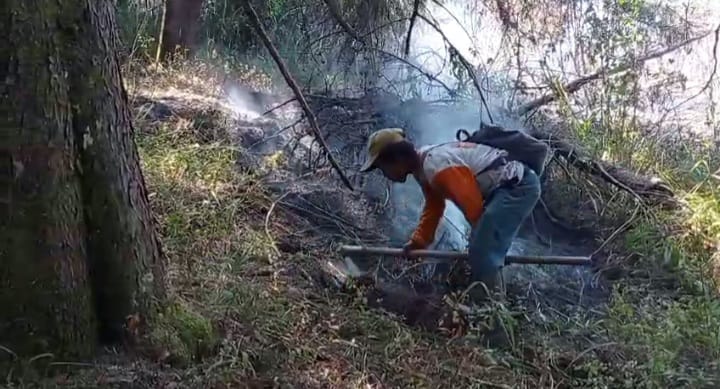
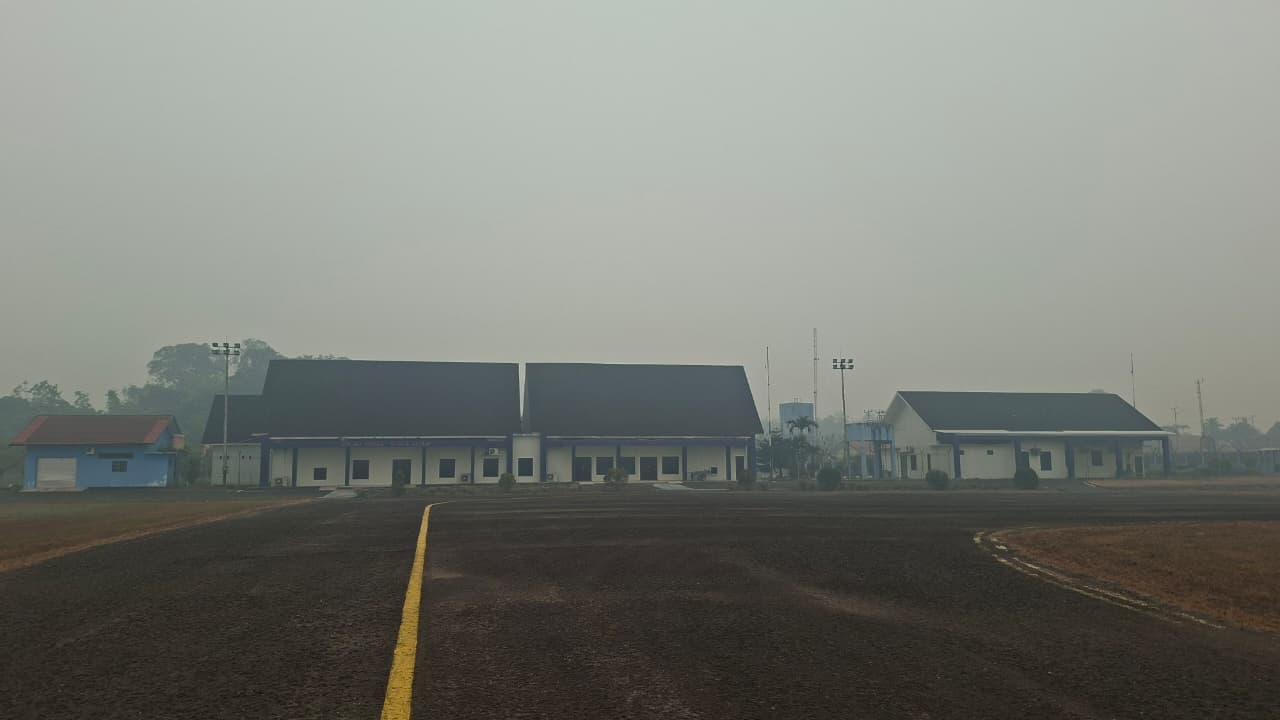
The organisation also pointed to prolonged haze from forest and land fires as an example of how environmental crises can affect health and everyday economic activity.
Households Turn to Cost-Cutting Measures
The report documents how respondents are adjusting their spending and seeking additional income to manage rising financial pressures.
According to Greenpeace, 57.34% of respondents said they had reduced non-essential consumption, saving an estimated Rp50,000 to Rp1 million per month.
Another 38.78% reported growing basic food items at home, with estimated monthly savings of Rp80,000 to Rp500,000.
To increase their earnings, 56.79% said they had taken on additional work or started new businesses, generating an estimated Rp500,000 to Rp2.5 million in extra monthly income. Meanwhile, 17.73% had expanded independent food production, such as growing vegetables or producing eggs and milk, with estimated returns of Rp5,000 to Rp500,000 per month.
Greenpeace said these responses demonstrate households’ efforts to adapt, while raising concerns that families are increasingly carrying the burden of coping with climate-related and economic pressures themselves.
For households affected directly by disasters, the organisation added, additional costs can include daily necessities, healthcare and access to education for children.
Greenpeace Questions the Benefits of Economic Growth
Atha Rasyadi, head of Greenpeace Indonesia’s Social and Economic Campaign Team, questioned whether Indonesia’s reported economic growth was translating into improved living conditions for ordinary residents.
He referred to President Prabowo’s statement during the 2026 annual session of the People’s Consultative Assembly and national legislature that the economy had grown by 5.45% in the first half of the year.
Rasyadi argued that headline growth figures did not necessarily reflect the financial pressures experienced by households, particularly when environmental degradation and climate-related disasters added to their expenses.
Greenpeace also criticised government spending priorities, raising concerns about disaster-management budget cuts and the potential effects of the Free Nutritious Meals programme on food prices. These claims reflect the organisation’s assessment of government policy.
The report, Greenpeace said, could inform policies designed to address climate impacts on household finances and livelihoods.
“The government cannot simply celebrate economic growth while people are still struggling to meet their basic needs and bear the impacts of the climate crisis themselves,” Sirait said.
Greenpeace is urging the government to adopt climate policies that better account for the economic consequences of extreme weather and environmental disasters, particularly for communities whose incomes and access to essential goods are vulnerable to disruption.
In response to the protest, joint personnel and officers from the Jakarta Fire and Rescue Service (Damkar) were deployed to the site to assist in evacuating the activists and bringing down the banners from the elevated structure at the Welcome Monument. The response took place as Greenpeace Indonesia activists called for stronger climate action and measures to ease the rising cost of living.
Discover more