Indonesia Protests Mark Two Years of Prabowo-Gibran Administration
JAKARTA — Jakartaweekly.com. Students and civil society groups staged demonstrations across Indonesia on Tuesday, October 20, criticising the first two years of President Prabowo Subianto and Vice President Gibran Rakabuming Raka’s administration. Forest and land fires, economic inequality, freedom of expression and the cost of public services featured among the issues raised.
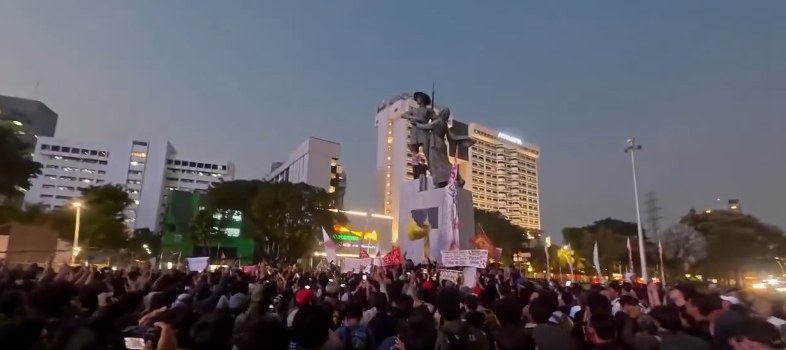
In Central Jakarta, hundreds of students and members of the public gathered around the Tugu Tani monument in Menteng. Participants included student executive bodies from Bogor Agricultural University (IPB) and the University of Indonesia (UI), civil society coalitions, the Islamic Students Association (HMI), the Indonesian National Student Movement (GMNI) and other groups.
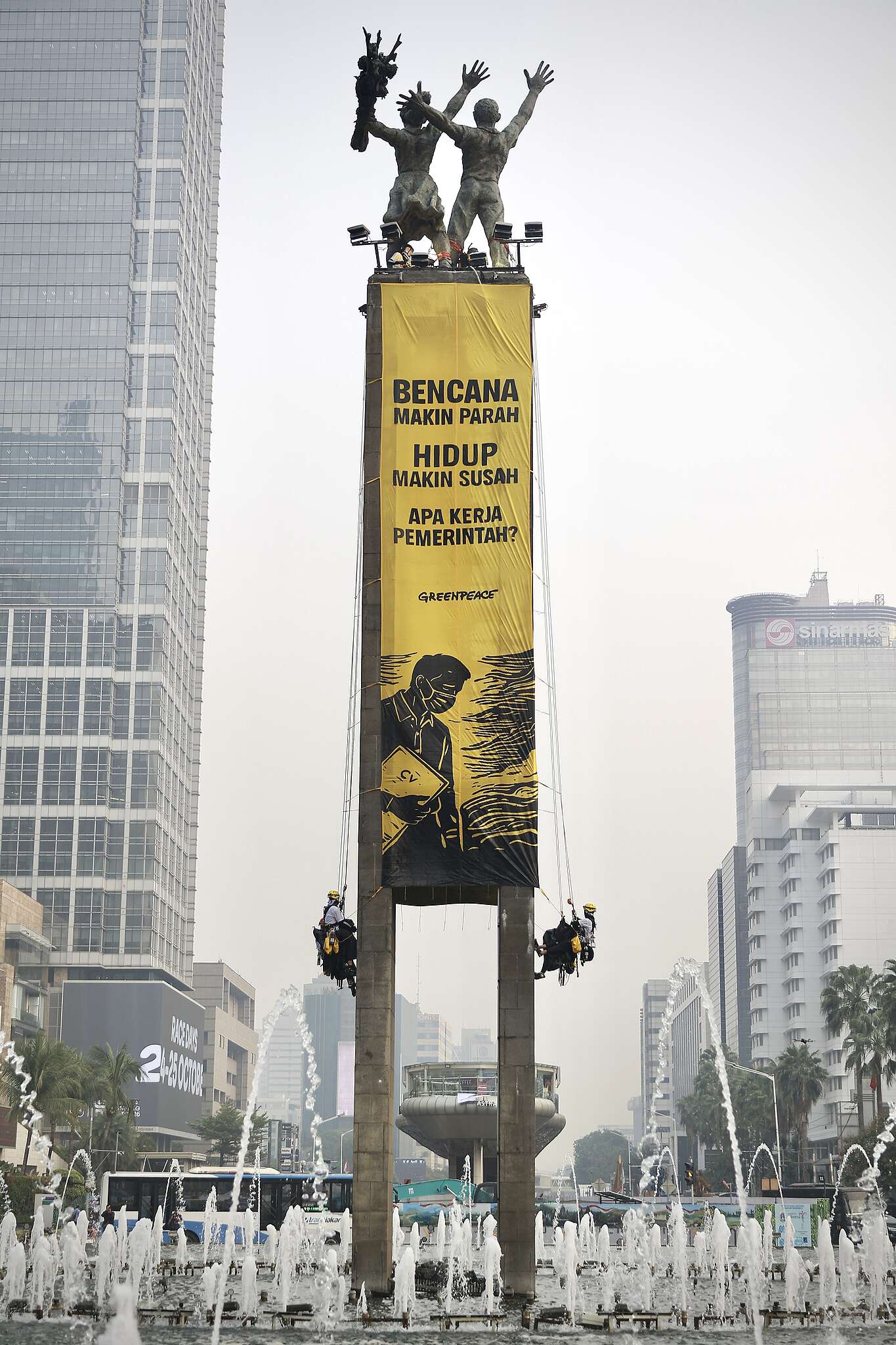
Some protesters climbed the monument and displayed a banner outlining five demands: declaring forest and land fires and floods national disasters, improving economic policymaking, protecting freedom of expression, eradicating corruption, and reducing the costs of education, healthcare and public services.
Police later arrived to take down the banner as protesters began dispersing. The crowd subsequently left the area without further reported confrontation. Protest representatives also announced plans for a larger action on October 28, Indonesia’s Youth Pledge Day.
Yogyakarta students highlight forest fires
In Yogyakarta, thousands of students from various universities gathered outside the Yogyakarta Special Region Provincial Legislative Council (DPRD DIY) building from around noon, according to a BBC report.
Participating groups included the UGM Student Union, UII Bergerak, Aliansi UMY Bergerak, BEM Nusantara DIY, HMI Yogyakarta and the National Student Front (FMN).
Students took turns delivering speeches and presenting their demands. Troy Amirul Ahmad of the Islamic University of Indonesia’s student association said around 1,000 students from his university had joined the demonstration.
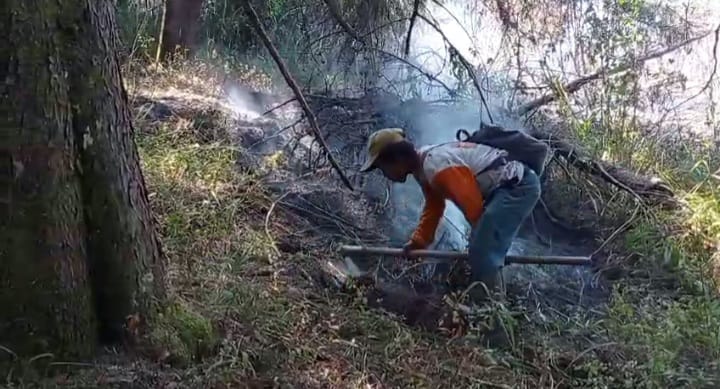
He identified forest and land fires in several parts of Indonesia as a major concern. Another UII student speaker, who said he was from Sumatra and had been affected by the fires, criticised the government and lawmakers over their response.
After delivering their speeches, the UII group continued its demonstration towards Kilometer Zero in Yogyakarta.
Makassar protesters demand investigation
In Makassar, dozens of students from Muhammadiyah University of Makassar demonstrated outside the South Sulawesi Public Works and Highways Office, which was serving as the temporary office of the provincial legislative council.
Organised under the Aliansi Muhammadiyah Satu, the protesters raised several issues, including forest and land fires. They also burned two used tyres near the entrance to the office complex.
Agung, the alliance’s field coordinator, called for an investigation into those responsible for the fires and an end to deforestation and land conversion, which he argued could worsen the problem.
As of 4.40 p.m. Central Indonesia Time, protesters remained outside the temporary legislative office, waiting for representatives. Other student demonstrations took place at several locations around Makassar, including beneath the Pettarani flyover, using the hashtag #2tahuntidakpatuh.
Bandung cyclists ride towards Jakarta
In Bandung, cyclists launched an action called “Mengayuh ke Istana” (“Pedalling to the Palace”), gathering outside Gedung Merdeka on Jalan Asia Afrika before beginning their journey towards Jakarta.
Four cyclists planned to ride to the capital, while others accompanied them to the Bandung-Cimahi boundary. Along the route, they planned to meet additional cyclists in Purwakarta, Karawang and Bekasi.
The group aimed to reach the State Palace on October 22 to deliver demands concerning forest and land fires.
Kidung Saujana, the action’s coordinator, said the group wanted the government to declare the fires a national-scale disaster, investigate the incidents and examine the business permits of companies found responsible.
The cyclists also called for changes to land-use classification procedures and demanded that burned areas retain their original designations. Protected forests, they argued, should remain protected forests, while conservation areas should not be converted for other uses.
Across the four cities, the actions highlighted concerns over environmental accountability and the government’s handling of issues affecting communities two years into the Prabowo-Gibran administration.
Discover more