INACA Urges Stakeholders to Strengthen Aviation Industry Amid Global Turmoil
JAKARTA, Jakartaweekly.com — The Indonesia National Air Carriers Association (INACA) has called on all stakeholders to strengthen the country’s aviation industry amid global geopolitical challenges affecting airline operations. The call was made during a ceremony marking INACA’s 56th anniversary at Cengkareng Heliport (CHP) Toos Sanitioso in Cengkareng, Tangerang, on Thursday (October 15, 2026).
INACA Chairman Denon Prawiraatmadja said the global and domestic aviation industries had continued to face challenges since the COVID-19 pandemic. These challenges stemmed from external factors, including geopolitical crises in various parts of the world, particularly the Russia-Ukraine conflict and tensions in the Middle East.
“As we know, since the COVID-19 pandemic, global and domestic airlines have continued to face challenges. The biggest challenges undoubtedly come from external factors affecting aviation, including geopolitical crises in various parts of the world, such as the Russia-Ukraine conflict and the situation in the Middle East,” Denon said.
He explained that these developments had affected the aviation industry in several ways, including higher aviation fuel prices, disruptions to aircraft spare parts supplies, the closure of certain flight routes, and the depreciation of the rupiah against the US dollar.
Despite these challenges, Denon said Indonesia’s aviation industry must continue to grow. He emphasized that air transportation was essential for Indonesia, an archipelagic nation.
“We do not know how the global geopolitical situation will evolve. However, we must not stop moving forward, because air transportation is an absolute necessity for Indonesia, an archipelagic nation, to support economic growth and improve people’s lives,” he said.
Denon called on all stakeholders to strengthen and develop the national aviation industry so that Indonesian airlines could become more resilient, more competitive, and better able to serve the public through improved air connectivity.
INACA also highlighted the role of scheduled, non-scheduled, and cargo airlines in supporting connectivity between islands. In addition to facilitating the movement of people, the aviation industry supports other sectors, including mining, fisheries, and plantations.
According to INACA, the development of advanced air mobility (AAM) could help address urban traffic congestion. Air ambulance services could also support public healthcare, while air cargo transportation plays a role in the growth of the e-commerce industry by enabling fast and secure deliveries.
Alongside strengthening connectivity, INACA urged stakeholders to develop alternative energy sources to support greener aviation. These efforts include the provision of sustainable aviation fuel (SAF) and non-fossil electricity for aircraft.
Denon said Indonesia had abundant resources that could be harnessed to support the development of alternative energy, including wind, solar power, and natural gas. The country also has a substantial pool of skilled human resources capable of supporting the growth of its aviation industry.
“We also have abundant, highly qualified human resources capable of developing the national aviation industry. We are confident that, through coordinated efforts by the government, the aviation industry, and airlines, we will be able to overcome these challenges and build greater resilience in the years ahead,” Denon said.
During its 56th anniversary celebration, INACA also expressed its appreciation to the government, airline operators, airport managers, AirNav Indonesia, ground handling service providers, Pertamina, Jasa Raharja, and other parties that have contributed to the development of Indonesia’s aviation industry.
The association also acknowledged its international partners, including aircraft manufacturers Boeing, Embraer, and Airbus, as well as aviation systems providers and related industry associations.
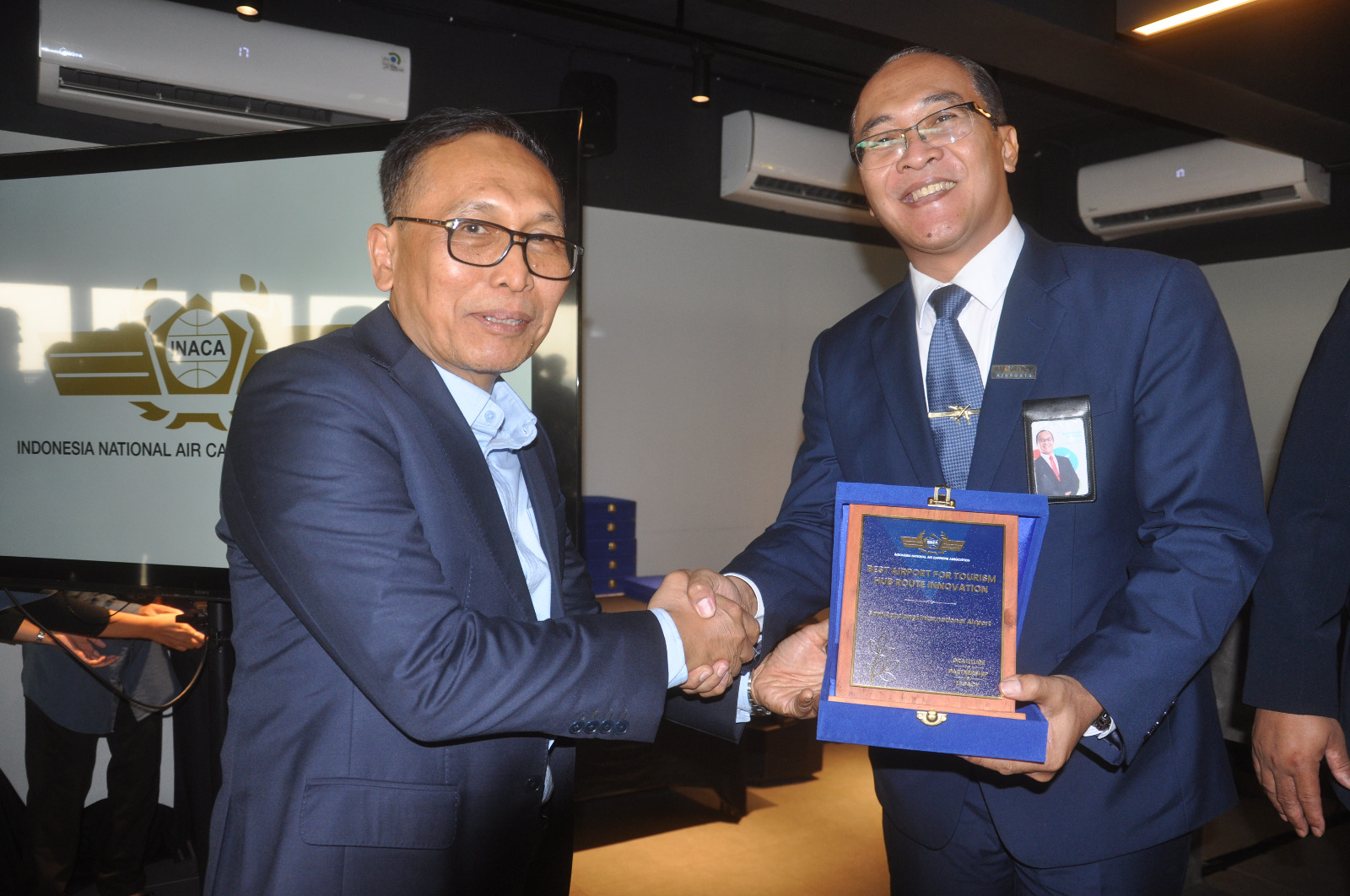
INACA Presents Awards to Five Airports
At the same event, INACA presented awards to five airports managed by PT Angkasa Pura Indonesia, which operates under the InJourney Airports brand.
The awards were based on the Customer Satisfaction Index (CSI) survey conducted annually by INACA at 33 airports between May and June.
The five award recipients in 2026 were Sam Ratulangi Airport in Manado, which received the Best Airport for Tourism Hub Route Innovation award; Adi Sutjipto Airport in Yogyakarta, which received the Airport Heritage & Legacy Award; and Sultan Aji Muhammad Sulaiman Sepinggan International Airport in Balikpapan, which received the Best Customer Experience Improvement award.
I Gusti Ngurah Rai International Airport in Denpasar received the Best Customer Experience for Tourism Hub award, while Jenderal Ahmad Yani Airport in Semarang received the Best Customer Experience for Local Culture award.
INACA expressed hope that the awards would encourage airport operators across Indonesia to continue improving service quality for passengers, airline station managers, concessionaires, flight crews, and air cargo customers.
Discover more