TMMIN Engages 290 Students to Develop Digital Talent for Automotive Industry
SURABAYA, JakartaWeekly.com— PT Toyota Motor Manufacturing Indonesia (TMMIN) has engaged 290 students from six public universities in East Java in the 2026 Toyota Indonesia Digital Innovation Challenge (TDIC). Held on November 17–18, 2026, at Institut Teknologi Sepuluh Nopember (ITS) in Surabaya, the program focuses on developing digital talent by introducing students to software engineering applications in the automotive industry.
TMMIN President Director Nandi Julyanto said developing digital talent reflects Toyota’s philosophy, “We Make People Before We Make Product,” which places human resource development at the foundation of building a sustainable and competitive industry.
“Through the Toyota Indonesia Digital Innovation Challenge, TMMIN is contributing to the preparation of human resources who can keep pace with technological developments and are ready to contribute to the future of Indonesia’s automotive industry,” Nandi said recently.
TDIC 2026 carries the theme “Driving Digital Transformation through Future Software Engineers.” The program builds on the inaugural event organized by TMMIN at Institut Teknologi Bandung (ITB) on December 10, 2025.
The first edition involved 303 participants from several universities in West Java. This year, the program has expanded to East Java, involving students from six public universities.
In addition to students from host institution ITS, TDIC 2026 participants come from Politeknik Elektronika Negeri Surabaya (PENS), Universitas Airlangga (UNAIR), Universitas Brawijaya (UB), Universitas Negeri Malang (UM), and Politeknik Negeri Malang (POLINEMA).
Through the program, TMMIN introduces students to the needs of the automotive industry, particularly the application of software engineering in manufacturing operations. It also provides an opportunity to identify potential digital talent while students are still pursuing higher education.
Digital Technology Applications in Manufacturing
Developing software engineering competencies is one of the areas of focus in the digital transformation of the automotive industry. The application of digital technology extends beyond vehicle development to include manufacturing processes in factories.
In its press release, TMMIN explained that digital technology is playing an increasingly important role in improving efficiency, integrating workflows, and facilitating operational monitoring.
The company also stated that the implementation of various Digital Transformation (DX) technologies at its manufacturing facilities has helped improve efficiency and make production processes easier to monitor.
These developments are among the reasons TMMIN is strengthening its engagement with universities. The industry’s demand for workers with software engineering skills needs to be matched by human resource competencies that align with developments in manufacturing technology.
TDIC is therefore designed to bridge industry requirements and the knowledge students acquire in higher education through a link-and-match approach.
Toyota Software Guest Lecture and Technology Exhibition
One of the activities in the TDIC 2026 program is the Toyota Software Guest Lecture. The initiative brings together industry practitioners to share their knowledge of software engineering applications in automotive business processes and manufacturing.
Through these sessions, students have the opportunity to learn about industry requirements, understand the challenges of implementing digital technology, and gain insights into ongoing digital transformation in the automotive sector.
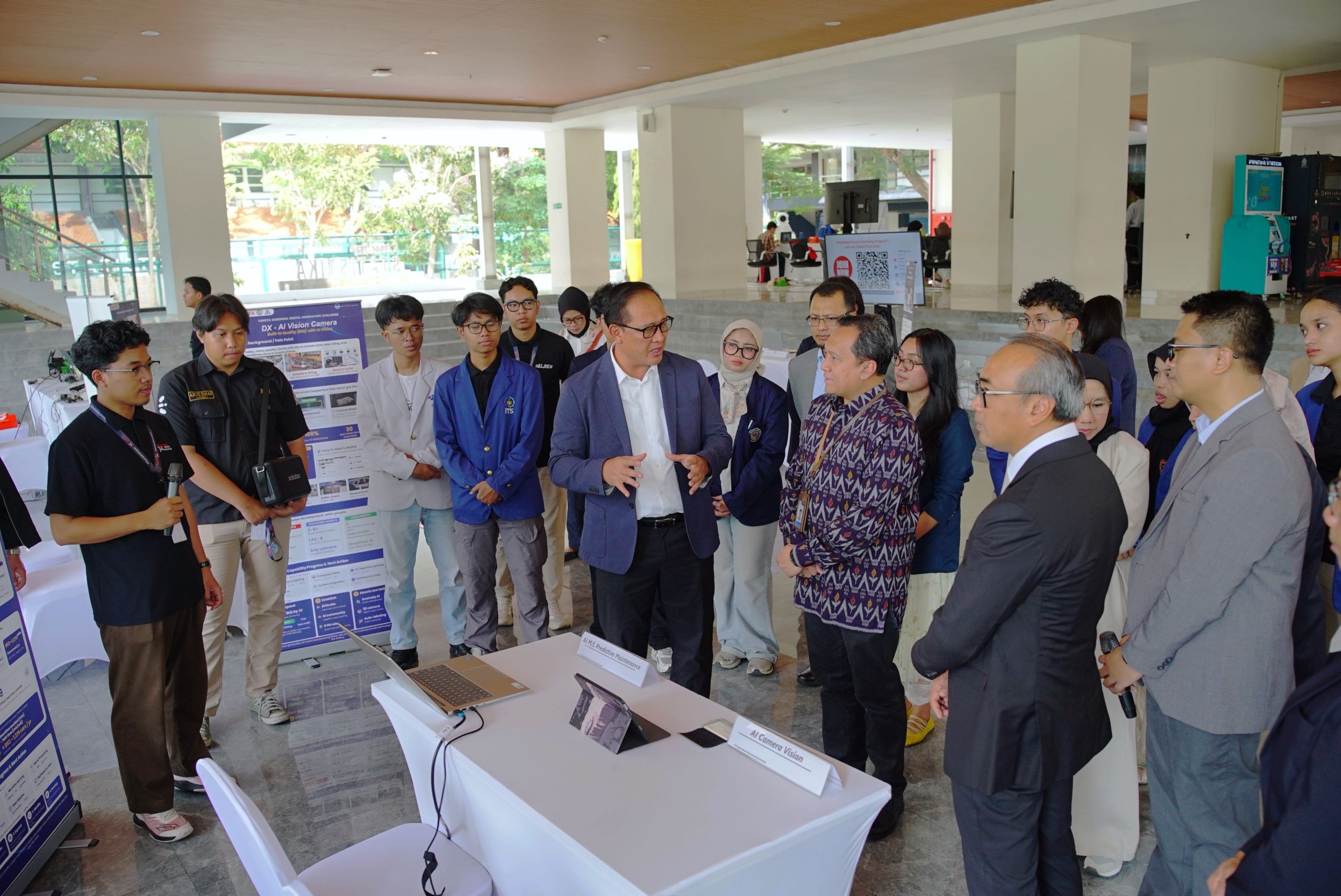
The Toyota Software Guest Lecture also features a mini exhibition showcasing technologies, projects, and innovations from TMMIN and ITS.
The exhibition gives students an opportunity to explore technologies and innovations developed by both institutions. It also provides a platform for connecting academic knowledge with its practical applications in the industrial workplace.
In addition, the mini exhibition creates opportunities for exchanging ideas and exploring innovation between industry practitioners and members of the academic community.
TMMIN Vice President Director I Nyoman Winaya said collaboration between industry and universities plays an important role in preparing human resources to face technological changes.
“Through the Toyota Software Guest Lecture, students can learn about industry requirements, broaden their perspectives, and understand how software engineering skills can be applied to address real-world challenges,” Nyoman said.
He expressed hope that the partnership would continue to create opportunities for talent development that benefit students, universities, and Indonesia’s manufacturing industry.
TMMIN and ITS Sign Memorandum of Understanding
As part of TDIC 2026, TMMIN and ITS also signed a Memorandum of Understanding (MoU) to establish a framework for cooperation between the two institutions.
The agreement covers talent development, knowledge exchange, and the organization of various joint activities.
The MoU signing forms part of efforts to strengthen ties between the automotive manufacturing industry and higher education institutions in developing human resources and knowledge in the field of technology.
On the same occasion, TMMIN management representatives and the leadership of the ITS Faculty of Engineering visited the ITS Lean Manufacturing Laboratory.
The visit was intended to provide an overview of the laboratory’s facilities and ongoing research activities. The two institutions also explored potential collaboration in digital technology.
Through TDIC, TMMIN is continuing its digital talent development initiatives by strengthening connections between education and industry. The program forms part of the company’s efforts to prepare Indonesian human resources to adapt to technological developments, support manufacturing transformation, and contribute to the competitiveness of the national automotive industry.
Discover more