
Perry Warjiyo Resigns, This is His Legacy as Governor of Bank Indonesia
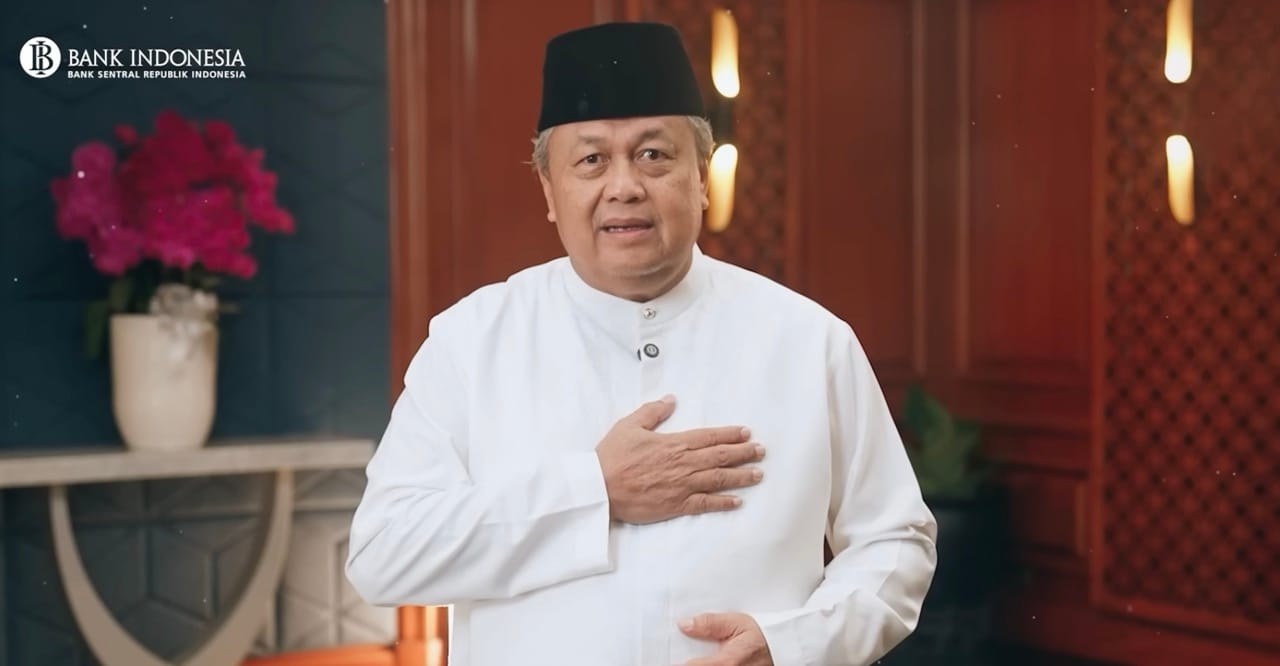
JAKARTA, Jakartaweekly.com— Perry Warjiyo officially resigned two years before the end of his second term as Governor of Bank Indonesia (BI). His decision came as a surprise to many, particularly given his extensive track record in leading Indonesia’s central bank.
According to various sources, Perry Warjiyo is widely recognized for steering Indonesia’s economy through the COVID-19 crisis while maintaining macroeconomic and financial market stability. One of his most notable policies was the burden-sharing scheme, a collaboration between Bank Indonesia and the government aimed at safeguarding the country’s economic stability during the pandemic.
During his tenure, Perry also introduced the policy mix framework, which integrates monetary policy, macroprudential measures, payment systems, and money market deepening into a comprehensive policy approach. This framework laid the foundation for Indonesia’s widely adopted digital payment platforms, including QRIS (Quick Response Code Indonesian Standard) and BI-FAST.
Throughout his leadership, Perry was also a strong advocate for the development of Indonesia’s Islamic finance and sharia economy.
Policy Mix and Burden Sharing During the COVID-19 Pandemic
In 2022, Perry Warjiyo received the Hamengku Buwono IX Award from Universitas Gadjah Mada (UGM). He was recognized as a national figure whose dedication to the country and humanity made him deserving of the prestigious honor.
According to UGM Rector Prof. Ova Emilia, Perry demonstrated an unwavering commitment to formulating and implementing Indonesia’s economic policies.
During his acceptance speech, Perry outlined the principles that guided his leadership: consistency, innovation, and synergy. He emphasized the importance of carrying out public responsibilities with integrity and consistency, free from political influence.
He also stressed that solving complex challenges requires continuous innovation while remaining grounded in academic rigor and evidence-based policymaking.
These principles were put to the test during the COVID-19 crisis in 2020. Perry recalled that global investors panicked as the pandemic spread, triggering capital outflows of approximately US$11 billion (around Rp175 trillion) from Indonesia within just two weeks.
As a result, the rupiah depreciated sharply to nearly Rp17,000 per US dollar, while several banks faced mounting pressure that raised concerns over financial stability.
To address the crisis, Bank Indonesia cut its benchmark interest rate to a record low of 3.5%. The central bank also launched a large-scale quantitative easing program, injecting Rp200–300 trillion to stabilize the rupiah and expanding liquidity by Rp805.5 trillion to ensure the banking sector continued to function smoothly.
Another landmark initiative was the burden-sharing scheme between Bank Indonesia and the government. The program provided the government with additional fiscal space to finance pandemic response measures, reduced borrowing costs, and helped maintain stability in the government bond market.
Through the burden-sharing arrangement, the Indonesian government was able to save approximately Rp29–30 trillion in annual interest payments. Between 2020 and 2023, Bank Indonesia purchased Rp1,104.85 trillion worth of government bonds (Surat Berharga Negara/SBN) under the scheme while assuming part of the associated interest costs.
Although the policy was not without criticism, the combination of monetary easing, liquidity support, and fiscal coordination proved effective in maintaining Indonesia’s economic stability throughout the pandemic. Compared with the 1998 Asian financial crisis, the economic downturn during the COVID-19 pandemic was significantly less severe.
Indonesia’s economy contracted by 2.07% in 2020, a much milder decline than the 13% contraction recorded during the 1998 crisis. It also outperformed several neighboring economies, including Singapore (-4.1%), Malaysia (-5.7%), Thailand (-6.2%), and the Philippines (-9.6%). By 2021, Indonesia had returned to positive growth, with the economy expanding by 3.69%.
Indonesia also managed to keep inflation low without falling into deflation. Annual inflation stood at 1.68% in 2020, comparing favorably with Singapore (0.4%), Malaysia (-1.4%), Thailand (-0.3%), and the Philippines (3.5%).
Bank Indonesia also succeeded in restoring stability to the rupiah after its sharp depreciation, with the exchange rate recovering to around Rp14,400 per US dollar and remaining relatively stable throughout the 2021–2022 recovery period.
The central bank further maintained a resilient banking sector by preserving strong capital buffers, containing non-performing loans (NPLs)—which rose to 3.6% in 2020—and supporting a recovery in bank lending, which rebounded to 5.24% growth in 2021 after contracting by 2.41% in 2020. These measures helped Indonesia avoid a systemic banking crisis.
The Architect of QRIS
During his tenure, Perry also spearheaded the development of QRIS (Quick Response Code Indonesian Standard), Indonesia’s unified QR code payment system. Since its launch, QRIS has expanded rapidly in terms of users, merchants, transaction volume, and cross-border payment connectivity.
The number of QRIS merchants increased from 5.8 million in 2020 to 43.06 million by January 2026. Meanwhile, the number of users grew from around 5 million in 2020 to 60.77 million as of February 2026.
Transaction volumes also surged. In 2021, QRIS recorded approximately 375 million transactions. By 2025, that figure had reached 15.51 billion transactions, with a total transaction value of Rp1,420.66 trillion, representing 115.27% year-on-year growth.
QRIS has also expanded beyond Indonesia, enabling cross-border payments in Thailand, Malaysia, Singapore, and South Korea. In 2025, Bank Indonesia introduced QRIS Tap, a contactless payment service powered by Near Field Communication (NFC) technology, allowing users to make payments simply by tapping their smartphones.
Who Is Perry Warjiyo?
Perry Warjiyo served as Governor of Bank Indonesia (BI) from 2018 to 2026. A native of Solo, Central Java, he earned a bachelor’s degree in economics from Universitas Gadjah Mada (UGM) before obtaining both a master’s degree and a Ph.D. in economics from Iowa State University in the United States.
Perry began his career at Bank Indonesia in 1984 as a staff member in the central bank’s economic research and monetary policy division. Between 2007 and 2009, he served as Executive Director at the International Monetary Fund (IMF), representing 13 member countries of the South-East Asia Voting Group.
After returning to Bank Indonesia, Perry held several senior leadership positions, including Assistant Governor overseeing monetary policy, macroprudential policy, and international affairs, as well as Executive Director of the Economic and Monetary Policy Department. He was later appointed Deputy Governor before assuming the role of Governor of Bank Indonesia in 2018.
During Perry’s tenure, Bank Indonesia received numerous international accolades in recognition of its policy achievements and institutional performance. These included the Best Central Bank of the Year Award from the Global Islamic Finance Awards (GIFA) in 2018 and 2022, the Best Systemic and Prudential Regulator in Asia Pacific Award from The Asian Banker in 2021, and the Best Macroeconomic Regulator in Asia Pacific Award from The Asian Banker in 2020.
Discover more