Anticipating Fuel Prices Increases in 2027
JAKARTA. Jakartaweekly.com – Modernizing public transportation should not be viewed as a fiscal burden, but rather as a fulfillment of the state’s obligation and a strategic long-term investment. This step forms a crucial foundation for enhancing economic productivity and ensuring more equitable mobility for citizens.
The planned increase in subsidized fuel prices in January 2027 risks triggering mass protests if people are not provided with affordable transportation alternatives. As a preventive measure, the government needs to immediately allocate Rp10 trillion to initiate the development of modern public transportation in 200 cities through a Presidential Instruction (Inpres). This would ensure that residents in both small and large cities can access reliable public transport.
For context, the 2023 budget allocation for the Buy The Service (BTS) program under the Directorate General of Land Transportation, amounting to Rp582 billion, has successfully supported public transportation operations in 10 metropolitan and major cities. This demonstrates that with measured allocation, the government can deliver wide-reaching and high-quality urban mobility services.
With a Rp10 trillion allocation, services could even be made free for students, university students, and workers to help ease potential social unrest. This policy would be far more efficient and impactful compared to the Ministry of Industry’s plan to allocate Rp30 trillion for electric motorcycle subsidies, where Rp5 million is provided per unit.
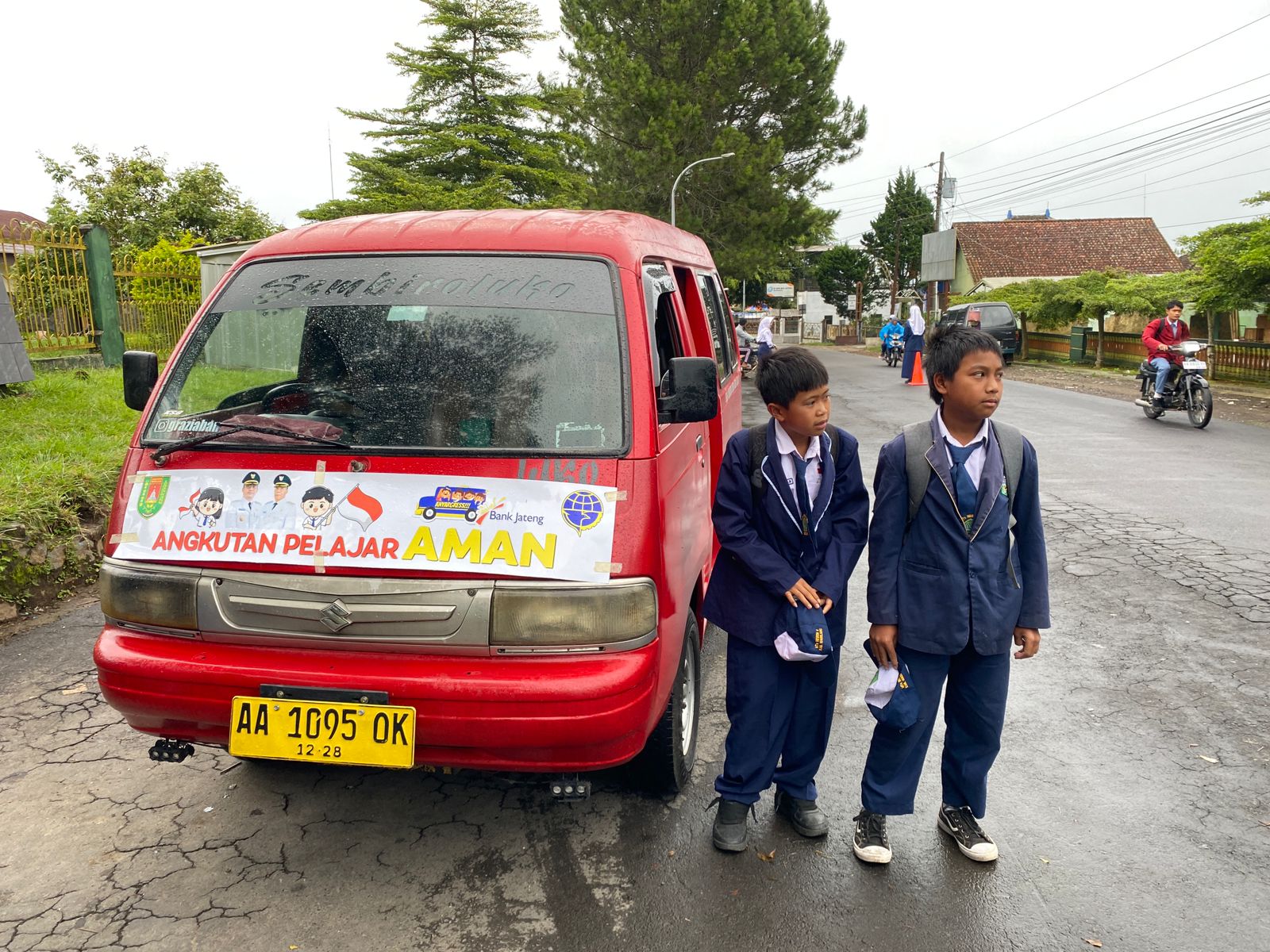
Empowering local public transport at the regional level can serve as an effective solution without starting from scratch, as demonstrated in Magelang Regency and Semarang Regency. By utilizing 10% of the Motor Vehicle Tax (PKB) revenue-sharing—amounting to Rp6.1 billion—Magelang Regency allocated Rp2.5 billion specifically as incentives for rural transport (Angkudes). With incentives of Rp135,000 per operational school day, 78 Angkudes units in 2026 were able to serve around 900 students daily for free. This initiative not only ensures access to education but also sustains the livelihoods of local transport operators.
From both benefit and budget efficiency perspectives, strengthening public transportation is clearly the more rational choice.
An allocation of Rp10 trillion for improving public transport in regional areas (through Inpres schemes or BTS subsidies) would generate multiplier effects across economic, social, and safety dimensions. The strategic benefits include:
1. As an economic safety net
Rising energy costs, such as fuel price hikes, often trigger inflation and reduce purchasing power. Affordable or free public transport for students, workers, and low-income communities acts as a targeted “direct subsidy.” This Rp10 trillion allocation would significantly reduce household expenditure burdens compared to subsidies for private vehicles.
2. Fiscal and budget efficiency.
Numerically, Rp10 trillion is far more efficient than allocating Rp30 trillion for private electric vehicle subsidies, which provide individual benefits. A Rp10 trillion investment could reach approximately 200 cities with modern transport systems. It would also reduce the government’s long-term fuel subsidy burden by encouraging a shift from private vehicles to mass transit.
3. Mitigating social risks and protests.
Public transportation is a sensitive grassroots issue. Providing adequate transport before adjusting fuel prices can help ease social tensions. People are more likely to accept energy policy changes when affordable and reliable mobility alternatives are available.
4. Improving transport safety.
Many traffic accidents in regional areas involve students riding motorcycles due to a lack of alternatives. With integrated school transport systems (as seen in Magelang), accident rates among young people can be significantly reduced.
5. Equitable development and regional connectivity.
This funding can support:
(1) fleet modernization—replacing outdated vehicles with safer, air-conditioned units;
(2) empowerment of local operators—integrating existing transport providers into formal systems with standardized services; and
(3) digitalization—implementing cashless payments and real-time vehicle tracking in smaller and mid-sized cities.
Discover more