Home Sweet Loan The Musical: A Journey from Finding a Home to Finding Yourself
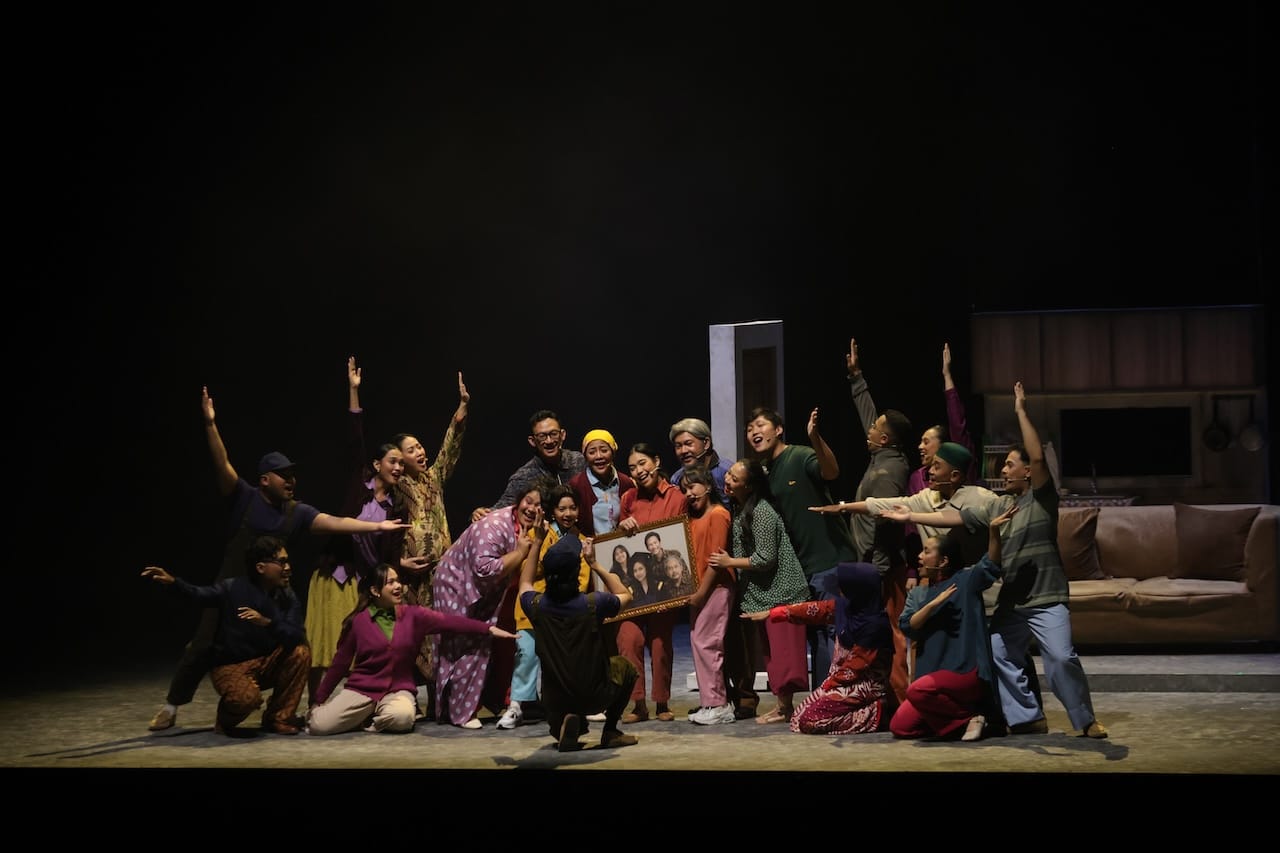
JAKARTA, Jakartaweekly.com — The stage lights come on. Slowly, Kaluna’s life takes shape on the stage of Graha Bhakti Budaya at Taman Ismail Marzuki, Jakarta.
More than a story about someone longing to own a home of her own, Home Sweet Loan The Musical draws audiences into something more intimate: family, the pressures of everyday life, responsibility, and the desire to have a space that truly feels like one’s own.
Presented by Visinema in collaboration with Indonesia Kaya and Jakarta Art House, the musical opened on September 30, 2026. A story first known through Almira Bastari’s novel and later adapted into a film, Home Sweet Loan now takes on a new form through musical theatre.
The shift in medium matters because Kaluna’s journey is not told through dialogue alone. Music, choreography, lighting, set design, props, costumes, and a live orchestra all become part of the storytelling.
The stage itself is never confined to a single setting. The set is designed to represent the different spaces that shape Kaluna’s life, from her family home and bedroom to her workplace and the places she encounters as she searches for a space of her own.
These changing spaces become part of Kaluna’s emotional journey. A room is not merely a backdrop for a scene; its meaning changes as Kaluna’s understanding of her life and the choices before her begins to shift.
This is where Home Sweet Loan The Musical takes Kaluna’s story into more personal territory.
At first, owning a home appears to be the dream she is determined to achieve. But as her journey unfolds, the question of owning a home gradually becomes a question about what it actually means to come home.
Kaluna begins to find the courage to distance herself from a home that has long been a source of pressure. Ironically, when the opportunity to own her dream home finally arrives, it does not automatically resolve the struggles she faces.
A home, it turns out, does not always mean coming home.
Kalya Islamadina, who plays Kaluna, portrays her as someone who initially believes that having a home of her own will finally give her a place to feel safe. Her journey, however, gradually changes that belief.
“For me, Kaluna initially believes that once she has a home of her own, she will finally have a place where she feels safe. But what she goes through makes her realize that the feeling of coming home is not as simple as having a place,” Kalya said.
A different interpretation comes through Chintana Jo, who plays the alternate Kaluna. For her, the experience of coming home does not have a single definition that applies to everyone.
“I feel that everyone has their own definition of home,” Chintana said.
That perspective becomes one of the story’s strengths on stage. Audiences are not simply invited to follow whether Kaluna eventually gets her own home. They are also encouraged to reconsider what home means to them.
Music then becomes one of the production’s primary storytelling languages.
Eighteen songs accompany Kaluna’s journey, including “Kembali Pulang,” “Kapan Pulang,” “Memang Milikku,” “Berakhir di Aku,” and “Rumah dalam Ingatan.”
The music allows Kaluna’s journey to move beyond conversations between characters. Her emotions and changing perspectives are expressed through song, while choreography by El Haq Latief and Nudiandra Sarasvati brings the rhythm of Jakarta and the pressures of urban life into movement on stage.
“Tepuk Waras” and the movement sequences in “Riuh Jakarta” form part of this physical language.
Behind the experience on stage is a sizeable creative team. The production features 37 performers, comprising two actors playing Kaluna, 11 other performers, and 24 ensemble members. More than 50 creative professionals also work behind the scenes.
The scale of the production makes clear that Kaluna’s journey in musical form is not the work of just one or two people. A seemingly simple story about wanting a home of one’s own is translated into a stage production through the work of talents from different creative disciplines.
Director Lisa Reideka brings these elements together as a unified whole.
“We designed the changes in space, choreography, lighting, music, and the actors’ performances to follow the rhythm of Kaluna’s journey, from her pressured everyday life to the moments when she begins to see her life and choices differently,” Lisa said.
In the end, what stays with the audience after Home Sweet Loan The Musical is not simply the question of whether Kaluna succeeds in owning a home.
A bigger question emerges from the journey: once you have a home, does that automatically mean you have somewhere to come home to?
The production does not offer a single definition as an answer. Instead, Kaluna’s journey leaves audiences to find their own.
For some, coming home may mean returning to family. For others, it may mean having a space of their own. It may even mean being somewhere they no longer feel the need to hide who they are.
That is why Kaluna’s search for a home gradually becomes a journey toward understanding herself.
And as the story reaches its conclusion on stage, “home” no longer sounds like a destination. It becomes something to be discovered—in a place, in other people, and ultimately, within oneself.
Discover more