INACA Releases Indonesia Aviation Outlook 2026, Highlights Long-Term Opportunities and Challenges for the Aviation Industry
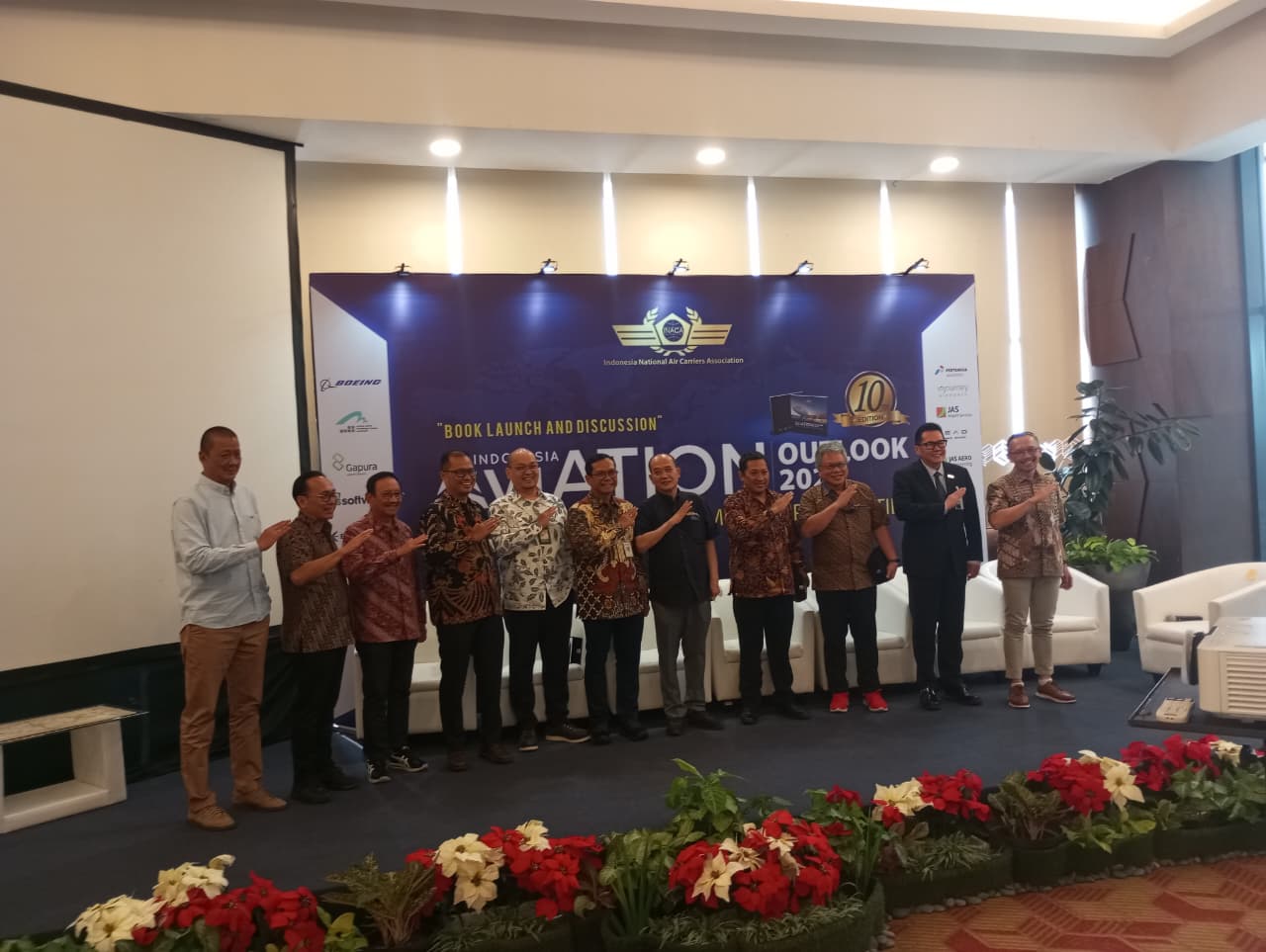
JAKARTA, Jakartaweekly.com —The Indonesia National Air Carriers Association (INACA) has launched the Indonesia Aviation Outlook 2026 in Jakarta on Wednesday (June 3, 2026). The annual publication contains projections, analyses, and recommendations regarding the development of Indonesia’s aviation industry and the challenges the sector is expected to face in the years ahead.
INACA Chairman Denon Prawiraatmadja said the Indonesia Aviation Outlook has become a regular publication eagerly awaited by aviation industry stakeholders at both the national and international levels.
According to him, the book serves not only as a reference for airlines but is also used by the government, airport operators, airlines, and international aviation organizations in formulating strategies for the development of the aviation sector.
“This has become something of an annual ritual that stakeholders always look forward to, including IATA and the Ministry of Transportation,” he said in Jakarta on Wednesday, June 3, 2026.
He explained that the Outlook serves as a benchmark for aviation industry stakeholders in assessing future collaboration and development concepts for the sector.
According to Denon, the Indonesia Aviation Outlook 2026 provides an overview of the current state of the national aviation industry while emphasizing the importance of aviation governance that involves all stakeholders.
Indonesia, he noted, has enormous market potential, with a population of more than 200 million people and a domestic air travel market of approximately 190 million passengers. Before the COVID-19 pandemic, around 80 percent of the country’s air traffic was supported by the domestic market.
The size of the market, he added, makes Indonesia one of the most attractive destinations for business expansion by both domestic and international airlines.
“Indonesia is viewed as a major market opportunity that can continue to be developed by the aviation industry. Therefore, industry governance cannot be carried out by INACA alone. It must involve all stakeholders, including airlines, airports, regulators, and supporting businesses,” he said.
Denon added that INACA has consistently encouraged the strengthening of the national aviation ecosystem through cross-sector collaboration.
According to him, Indonesia already possesses various supporting factors needed to build a healthy, competitive aviation industry capable of contributing to national economic growth.
He emphasized that the aviation industry plays a strategic role as a connector between regions and as a driver of economic activity, trade, tourism, and investment across the country. Therefore, discussions about the future of the aviation industry should not focus solely on solving short-term issues.
He argued that all stakeholders need to begin considering the challenges that will arise over the next 10 to 20 years.
“What we need to discuss is not only how to solve today’s problems, but also how to address the challenges of the next 10 to 20 years. Strong cooperation among stakeholders will determine whether the aviation industry can truly become a key pillar supporting Indonesia’s economic growth,” Denon said.
Discover more