
Indonesian Pharma Giant is Giving Away 2,000 Free Health Checks for its 50th Anniversary
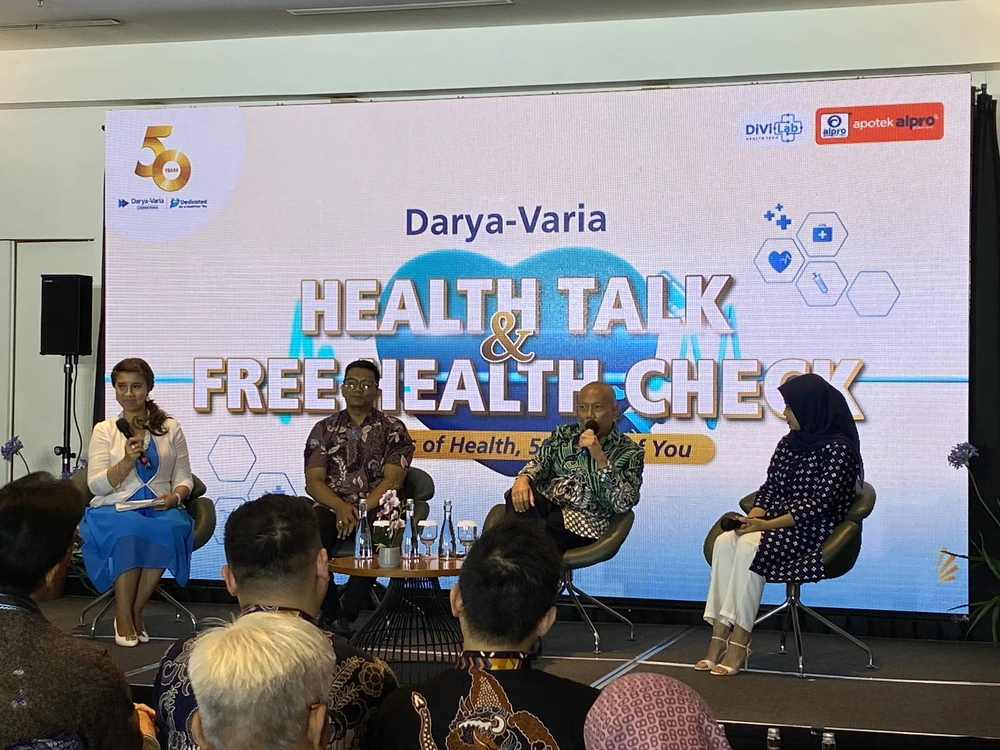
JAKARTA, Indonesia (JakartaWeekly.com) – In an era where “wellness” is often sold as a luxury, one of Indonesia’s oldest pharmaceutical players is betting on a different strategy: radical transparency and free access.
To mark its half-century milestone, PT Darya-Varia Laboratoria Tbk has launched a massive public health blitz, offering free medical screenings to 2,000 citizens across Java. The initiative, titled “50 Years of Health, 50 Years of You,” is timed to coincide with World Health Day on April 7, signaling a pivot from a traditional medicine manufacturer to what the company calls an “integrated healthcare solution provider.”
A Strategic Partnership for Accessibility
Recognizing that the “last mile” of healthcare is often the hardest to reach, Darya-Varia has bypassed traditional hospital routes. Instead, the company is leveraging the retail footprint of Apotek Alpro and Apotek Viva, turning neighborhood pharmacies into temporary diagnostic hubs.
The program utilizes mobile clinics and pop-up units to provide essential screenings—including blood sugar, cholesterol, uric acid, and blood pressure. However, the value proposition goes beyond the data. Each check-up is paired with a consultation from a professional pharmacist, aimed at debunking the “wellness myths” that often flood social media feeds.
“At 50, Darya-Varia is not just celebrating the company’s journey, but strengthening our commitment to expanding healthcare access,” said Dr. Ian Kloer, President Director of Darya-Varia. “We want to encourage a society that is more proactive in monitoring their health as an initial step of prevention.”
The AI-Powered Future of Self-Screening
Perhaps the most significant revelation from the anniversary campaign is the “soft launch” of DiViLab. As part of its transformation, Darya-Varia is moving into the Internet of Things (IoT) and Artificial Intelligence (AI) space.
DiViLab is positioned as Indonesia’s first integrated multi-functional device capable of measuring both blood pressure and GCU (Glucose, Cholesterol, Uric Acid) in a single system. By integrating AI and IoT, the company aims to empower Indonesians to conduct medical-grade checks at home, feeding into a national ecosystem of “preventive healthcare.”
Scaling the “Thunderbolt” of Prevention
The geographic spread of the initiative covers high-density urban zones including Jakarta, Bogor, Tangerang, and Bandung, with extended reach into Semarang, Sleman, and Malang. This move comes at a time when the Indonesian government is increasingly pushing for a more “patient-centric” and digital-first health infrastructure.
Darya-Varia’s shift also includes grassroots community empowerment, such as the “Generasi Sehat, Komunitas Berdaya” program in Bogor and the renovation of public health facilities (Puskesmas) in West Java.
As global health trends shift toward longevity and prevention, Indonesia’s legacy pharma players are realizing that the next 50 years won’t be defined by how many pills they sell, but by how many hospital visits they can help their customers avoid
Where to Get Screened
For those looking to utilize the remaining dates of the campaign, screenings will be held at the following locations:
| Date | Location Highlights |
| April 11, 2026 | Apotek Alpro Permata Buana (West Jakarta) & Apotek Viva Karangrejo (Semarang) |
| April 12, 2026 | Apotek Alpro PIK (North Jakarta) & Apotek Alpro Golden Vienna (BSD, Tangerang) |
| April 25, 2026 | Apotek Viva Mustokorejo (Sleman, Yogyakarta) |
| May 9, 2026 | Apotek Viva Candi Panggung (Malang) |
Why Your “TikTok Cures” Might Be Risking Your Health
The anniversary celebrations also featured a high-level talk show, which took a sharp aim at the “noise” of unverified health information flooding social media.
Panellists delivered a sobering reality check: Indonesia currently ranks second globally for measles outbreaks and tuberculosis, and third for leprosy and rabies. The consensus among experts was clear—the most dangerous threat to Indonesian health in 2026 isn’t just the viruses, but the misinformation surrounding them.
Evidence Over “Noise”
Prof. Dr. Tjandra Yoga Aditama, a professor of pulmonology and respiratory medicine, emphasized that health decisions must be guided by scientific evidence rather than digital trends. He outlined a three-pillar strategy for valid health information: consulting healthcare professionals, reading official government sources, and trusting only reputable mass media.
“Health decisions must be guided by evidence, not noise,” Prof. Dr. Tjandra remarked, noting that many preventable diseases, like measles, are surging simply because people ignore decades of proven vaccine safety. He categorized illnesses into two fronts: infectious (caused by bacteria, viruses, parasites, and fungi) and non-communicable, noting that for both, “being healthy is about the active maintenance of wellness, not just the absence of disease.”
The Supplement Trap
Addressing the “pill-for-everything” culture, Nazhif Gifari, nutritionist and lecturer at Esa Unggul University, also a speaker at the event, warned that supplements are not a substitute for a diverse diet. “You cannot survive on supplements alone; vegetables and fruit contain nutrients that capsules simply do not have,” he explained.
The panel urged a return to the “long-term investment” of balanced eating—specifically limiting salt, sugar, and fat. “Consume a variety of foods because it is a long-term investment. We must start noticing our eating patterns now,” he added.
The Dangers of “Online” Medicine
Apotek Alpro’s Chief Category Officer, Rupa Lesty, highlighted the growing trend of dangerous self-diagnosis. She noted that consumers often walk into pharmacies with half-empty medicine strips or “kram” in their necks, demanding uric acid supplements without a test—only to find out the issue is entirely unrelated.
Her biggest concern, however, was the rise of unverified online medicine purchases. “People search for ‘Medicine A’ on apps, but the authenticity cannot be guaranteed,” Lesti warned. She stressed three golden rules for drug safety:
- Licensed Sources: Only buy from licensed pharmacies where professional consultation is available.
- Storage Matters: Improper storage—like freezing cough syrup in the fridge—can destroy a drug’s efficacy.
- Timing is Everything: Ignoring the “3×1” dosage instruction leads to sub-optimal efficacy.
“If you want to buy supplements, vitamins, or medicine, go to a licensed place,” Lesty concluded. The session served as a reminder that in the age of AI-driven health tools like DiViLab, the human element of professional expertise remains the ultimate safety net.
Discover more