OJK Said High Interest Rate Era Likely to Continue Through 2027
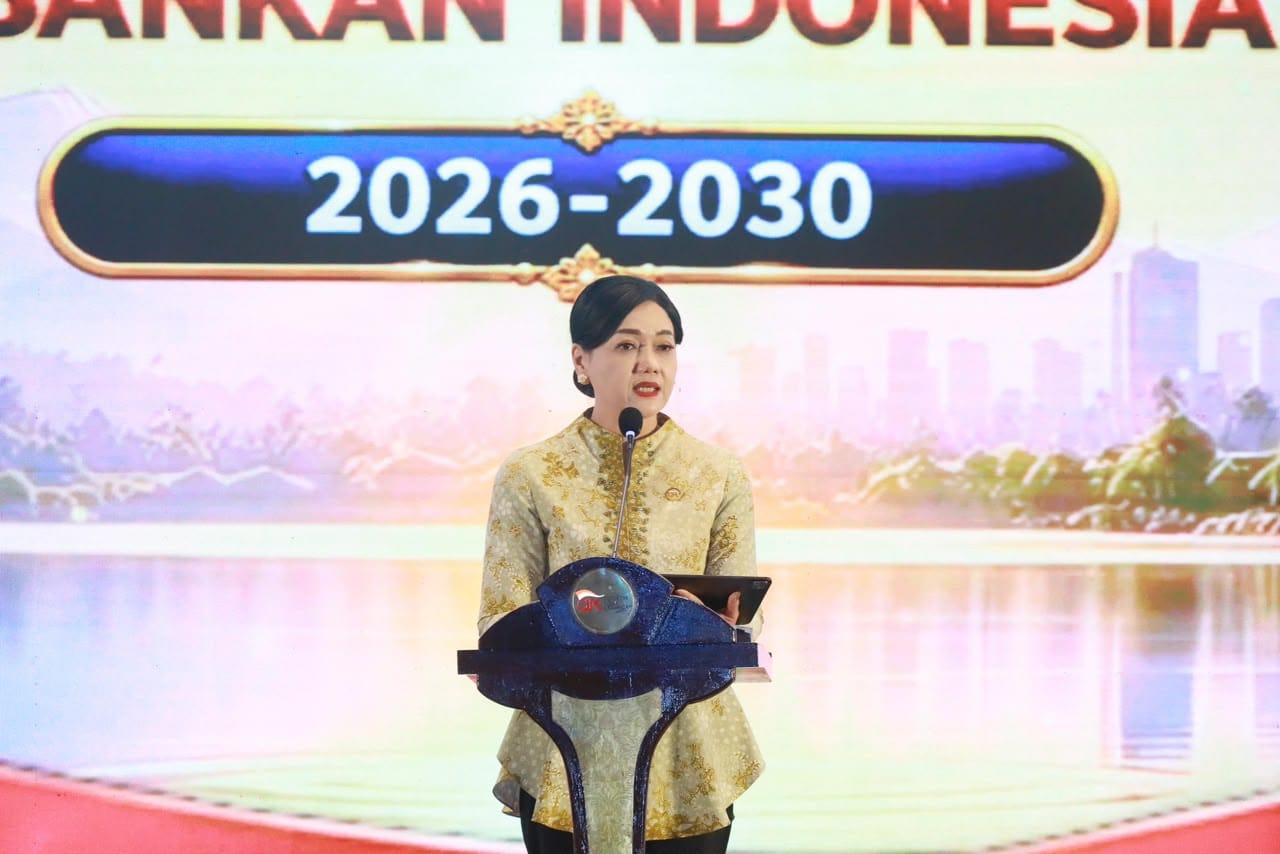
JAKARTA, Jakartaweekly.com—The Indonesia Financial Services Authority (OJK) said that the era of high interest rates is likely to continue, marked by rising policy rates in the United States (US), Europe, and Japan.
OJK Chairman of the Board of Commissioners Friderica Widyasari Dewi said rising inflation has prompted global central banks to maintain a ‘higher for longer’ interest rate policy. She explained that markets still expect interest rate hikes toward the end of 2026, with trend continuing into 2027.
Government bond yields have also reached their highest levels in decades. Government bond yields in the US and Europe have returned to levels seen before 2008, while Japan’s yield have returned to levels seen before 1997.
As of October 6, 2026, the 10-year US Treasury yield stood at around 5.311%. Meanwhile, Japans’s 10-year government bond yield stood at around 3.108% as of 08:00 a.m WIB.
“The increase has also been driven by high government financing needs and increased issuance of long-term bonds by hyperscalers for AI-related investments,” Friderica said at a press conference on Monday, October 5, 2026.
Furthermore, Friderica explained that increased investment and trade related to AI development have also supported global economic growth. However, global economic growth in 2026 is still expected to be lower than in 2025.
The sustainability of global economic growth momentum continues to face challenges from rising global inflation due to escalating geopolitical conflicts, which have pushed oil prices higher. In addition, a very strong El Niño could potentially drive up food and agricultural commodity prices.
“Domestically, recent indicators show that the economy remains relatively stable, with inflation still within the government’s target range despite rising global inflation,” she said.
According to Friderica, contained inflation has helped sustain domestic demand and household consumption, supporting national economic growth.
In line with this, the OECD raised its projection for Indonesia’s economic growth in 2026 by 0.5 percentage points, reflecting global confidence in the resilience of the Indonesian economy amid high global uncertainty.
The positive developments have been supported by the financial sector, which continues to contribute to economic growth, while financial sector stability remains well maintained, supported by solid fundamentals across the financial services industry.
For context, the OECD’s Interim Economic Outlook raised its projection for Indonesia’s 2026 economic growth from 4.7% to 5.2%. The OECD said the revision was supported by an improvement in Indonesia’s trade balance, which in turn is expected to encourage further investment growth.
However, the OECD projects Indonesia’s economic growth to moderate to 5.1% in 2027.
AIeconomic outlookFriderica Widyasari Dewiglobal economic growthhigh interest rate eraIndonesiainterest rate policyOECDOJKUS treasury
Discover more