SW Indonesia CEO: “Everything Needs Accountants”: A Film about Auditor Life
JAKARTA — Jakartaweekly.com. Becoming a global accountant requires more than an international qualification, knowledge of global standards or experience across jurisdictions. It also requires professionals to uphold consistent judgment and ethical principles when commercial interests, personal ambitions and pressure from influential clients challenge professional independence.
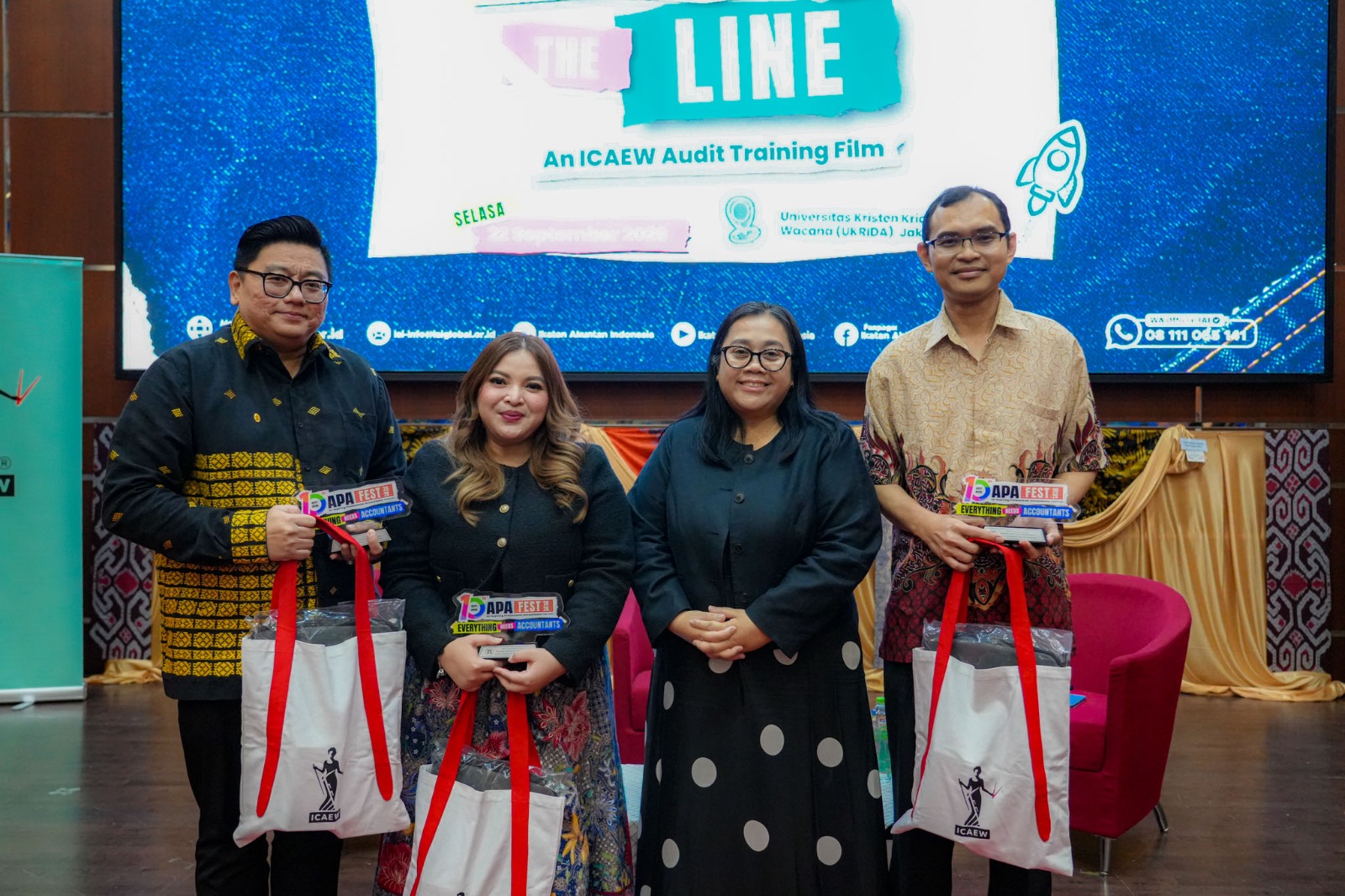
That message emerged from the screening of Crossing the Line, a UK audit training film developed by the Institute of Chartered Accountants in England and Wales (ICAEW). The event was jointly organized by the Institute of Indonesia Chartered Accountants (IAI), ICAEW and Universitas Kristen Krida Wacana (UKRIDA) as part of the 2026 Aspiring Professional Accountants Festival (APAFest).
Held at the Auditorium of UKRIDA Campus II in West Jakarta, the event brought together more than 100 participants from universities. Through an audiovisual learning experience, students and aspiring professional accountants were introduced to situations that can be difficult to capture through textbooks, auditing standards and classroom discussions alone.
The film follows two interconnected audit teams dealing with aggressive financial reporting, corporate transactions, limited resources, conflicts of interest and the financial pressures surrounding a professional football club. Although the story is set in the United Kingdom, its ethical dilemmas are relevant across jurisdictions.
Auditors can face demanding clients, unrealistic reporting deadlines, commercial pressures, promotion expectations and senior executives who resist professional challenge.
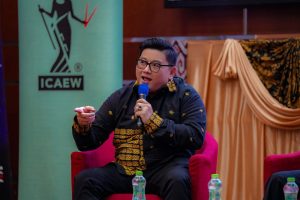
The post-screening discussion featured Michell Suharli, Member of the IAI Ethics Board, CEO of SW Indonesia and Founding Partner of KAP Suharli, Sugiharto & Rekan, alongside Septian Bayu Kristanto, an accounting lecturer and audit practitioner at UKRIDA. The session was moderated by Monika Nabillya, Manager of Corporate Secretary at IAI.
“Global best practice is not achieved simply by importing standards or procedures developed in another country. It is achieved when accountants can apply universal principles: integrity, objectivity, professional competence and due care, confidentiality, and professional behaviour, consistently across different markets, cultures, and commercial pressures,” Michell said.
According to Michell, Crossing the Line offers an important lesson for accounting firms and universities seeking to develop globally competitive professionals. Technical standards establish the procedures auditors should perform, but ethical principles guide how they respond when evidence is incomplete, management explanations are inconsistent or commercial interests begin to influence professional judgment.
The film demonstrates how ethical failures can develop through small compromises: accepting an explanation without sufficient evidence, overlooking an unusual transaction, allowing deadlines to weaken professional skepticism or remaining silent because challenging a senior colleague could affect one’s career.
While mistakes can be corrected, concealing them through misleading or backdated documentation can turn a professional problem into a serious breach of integrity.
“A global accountant must be prepared to enter any boardroom without leaving ethical principles outside the door. Regulations may vary and business cultures may differ, but the accountant’s responsibility to protect the quality of information and maintain public trust must remain constant,” Michell added.
Building a Strong Speak-Up Culture
The film also illustrates that audit quality cannot depend solely on the personal courage of an individual auditor. Strong professional practice requires an institutional environment that supports consultation, independent review, sufficient resources, appropriate supervision and timely escalation.
Junior auditors need credible channels to raise concerns, while engagement leaders need to ensure that professional challenge is treated as a contribution to audit quality rather than an act of disloyalty.
A strong speak-up culture is therefore an important part of professional quality. When junior team members identify warning signs but remain silent because of hierarchy or fear of retaliation, organizations can lose information that may be critical to an audit conclusion.
Conversely, when leaders actively invite different views, document disagreements and respond objectively, professional skepticism becomes part of an organization’s culture rather than the responsibility of one individual.
The Expanding Role of Accountants
The APAFest 2026 theme, “Everything Needs Accountants,” reflects the profession’s expanding role across business, government, technology, capital markets and sustainability.
Reliable information is required whenever an organization raises capital, acquires another business, measures performance, evaluates risk, reports environmental commitments or accounts for public resources.
That wider relevance also brings greater responsibility. As accountants become increasingly involved in corporate strategy, digital transformation, sustainability reporting and complex transactions, their professional judgment can affect stakeholders beyond the organizations that directly employ them.
Investors, creditors, regulators, employees and the wider public rely on information whose credibility often depends on the work of accountants and auditors.
For Michell, the lessons from Crossing the Line extend beyond the audit profession. They point to the importance of maintaining professional integrity when working across different markets and business environments.
A global accountant, he argued, is not defined only by international mobility or technical credentials, but also by the standards of integrity carried into every assignment, decision and market in which the professional serves.
Discover more