Rupiah Weakens to Rp17,326 per U.S. Dollar, Government Policies Among Contributing Factors

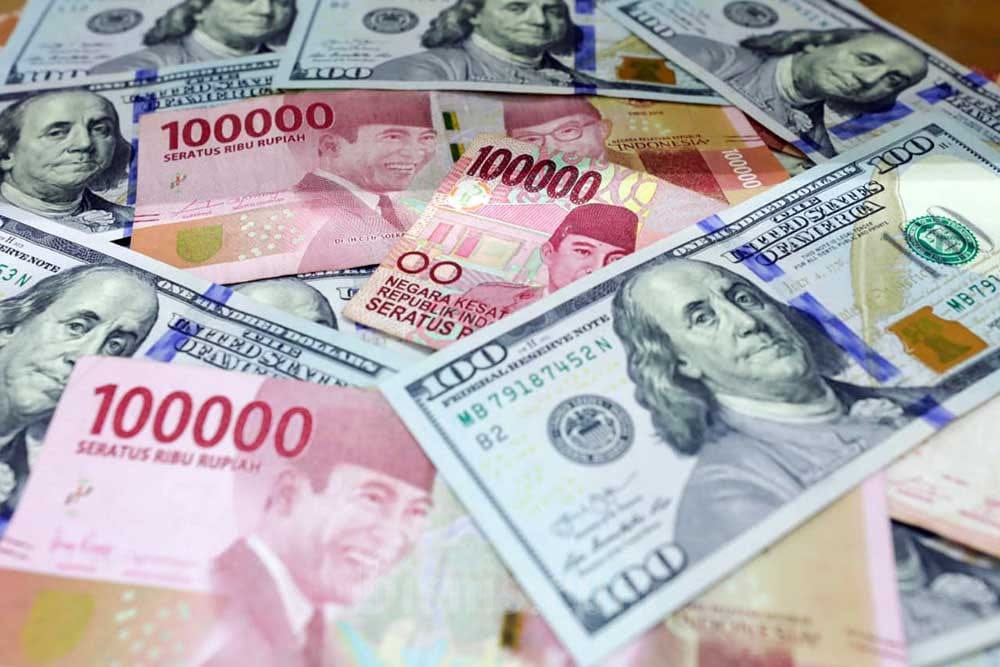
JAKARTA, Jakartaweekly.com — The rupiah closed weaker against the U.S. dollar in Wednesday (April 29, 2026) trading, pressured by a stronger dollar index, rising global uncertainty, and domestic policy factors.
Money market analyst Ibrahim Assuaibi said the rupiah fell 83 points to Rp17,326 per U.S. dollar, from the previous close of Rp17,243.
“During the trading session, the rupiah at one point weakened by as much as 95 points before trimming part of its losses,” he said in a statement on Wednesday, April 29, 2026.
He noted that the rupiah’s depreciation was driven not only by external factors but also by domestic conditions. Indonesia’s economic growth, which has stagnated at around 5%, is not merely structural but also reflects policy choices that allow criminalization risks to persist.
According to him, Indonesia’s target of achieving up to 8% economic growth will be difficult to reach as long as the risk of criminalization in public policymaking remains. The resulting legal uncertainty has led decision-makers to act with excessive caution, or even refrain from taking action.
“The risk of criminalization erodes the willingness and creativity of public officials in making strategic decisions, particularly those related to business,” he said.
He added that business decisions inherently involve risk. However, when such risks carry potential criminal liability, government officials tend to avoid decision-making altogether.
Another factor weighing on the rupiah, he said, is concerns flagged by Fitch Ratings regarding Danantara — a key issue cited when the agency revised Indonesia’s sovereign credit outlook from stable to negative in March 2026.
“Some of the potential issues include governance concerns and a tendency toward concentrated reporting, as Danantara reports directly to the president,” he said.
He added that there are also concerns that Danantara could be used to finance government programs, particularly when there is a gap between the state budget and spending needs.
He said Fitch evaluates the clarity of Danantara’s position as a sovereign wealth fund. If an entity claims to be fully commercial but operates otherwise, expectations may be misaligned. This could lead to surprises, as investment decisions may be influenced by political considerations rather than purely returns.
Externally, markets are assessing the impact of the United Arab Emirates’ decision to leave the OPEC producers’ group. The UAE’s exit — set to take effect on Friday — marks a significant blow to the oil-producing bloc amid ongoing disruptions stemming from the Iran war. The UAE said the move is intended to focus more on its “national interests.”
Meanwhile, the United States is set to extend its blockade of Iranian ports, likely prolonging supply disruptions from the key Middle Eastern oil-producing region.
Ibrahim said U.S. President Donald Trump has reportedly instructed his aides to prepare for an extension of the Iran blockade, signaling continued pressure on Iran’s economy and oil exports by restricting shipments to and from its ports.
Despite a ceasefire in the U.S.-Israel conflict with Iran, the situation remains at an impasse as both sides seek a formal resolution. Iran has restricted shipping flows through the Strait of Hormuz — a route for roughly 20% of global oil and liquefied natural gas supply — while the U.S. maintains its blockade of Iranian ports.
Washington is pushing for an end to what it claims is Iran’s nuclear weapons program, while Tehran is demanding compensation for the latest phase of the conflict, easing of economic sanctions, and some degree of control over the Strait of Hormuz.
Markets are also awaiting the Federal Reserve’s key interest rate decision, due early Thursday at 01:00 a.m. Jakarta time. The U.S. central bank is widely expected to hold the federal funds rate steady at 3.50%–3.75%, marking a third consecutive meeting without changes.
“This meeting could be the last for Jerome Powell, with Kevin Warsh expected to succeed him,” he said.
Ibrahim added that traders will look for further cues from the Fed’s press conference on how policymakers interpret the impact of higher energy costs and whether this alters their longer-term interest rate outlook.
(Read Jakartaweekly.com news on Google News)
Discover more