Vehicle Safety Technology Alone Is Not Enough, KNKT Highlights User Habits
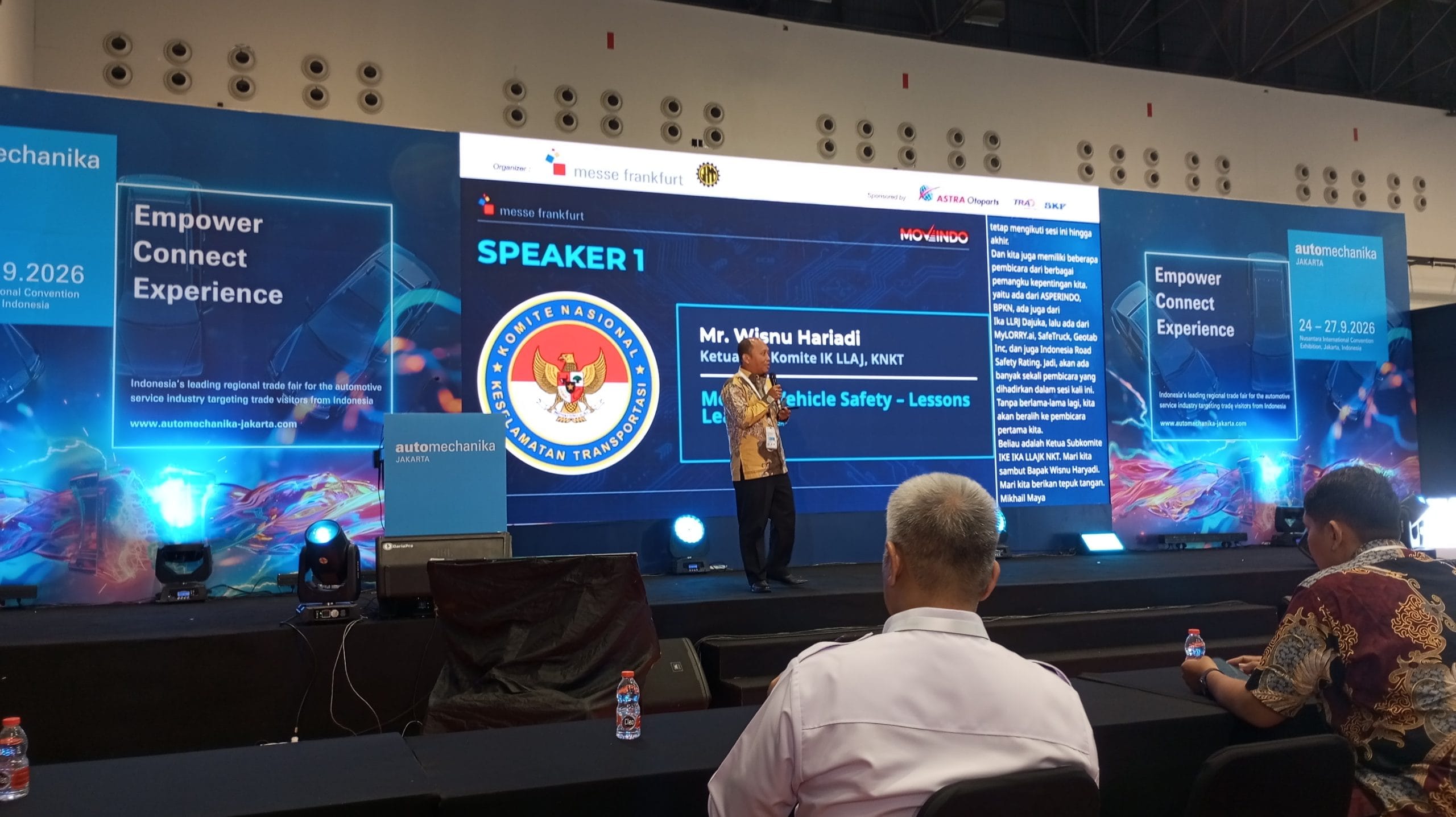
TANGERANG, Jakartaweekly.com – National Transportation Safety Committee (KNKT) member Wisnu Hariadi has highlighted how the use of vehicle safety technology is not always accompanied by sufficient understanding and proper operating habits among users.
Wisnu said modern vehicles are equipped with various safety technologies, including both active and passive safety systems. Active safety technologies include automatic braking systems, adaptive brake control, and blind spot detection, while passive safety features include seat belts, crumple zones, and airbags.
However, he said these technologies may not function as intended when users turn them off or do not understand how to use them.
“Technology can’t wait if human can’t operate it,” Wisnu said in Tangerang on Saturday, September 26, 2026.
He cited the lane departure warning feature as an example. The system produces an alert when a vehicle leaves its lane. Some users find the sound disruptive and eventually turn the feature off.
“They end up turning it off. Once it is turned off, the blind spot detection doesn’t work,” he said.
Wisnu said people are also often “forced” to rely on technology to stay safe while driving. On motorcycles, one example is the Automatic Side Stand Switch.
The feature prevents a motorcycle from being started when the side stand is still down. According to Wisnu, the technology was designed to prevent riders from forgetting to retract the side stand before riding.
Wisnu also cited the application of technology to motorcycle lighting systems. Since 2009, he said, motorcycles have been equipped with Automatic Light On technology, which automatically turns on the headlights.
He then referred to research on motorcycle visibility and its relationship to riders. According to Wisnu, using lights in combination with stickers can increase the visibility distance of motorcycle users compared with relying solely on lights.
However, he said user habits can once again reduce the benefits of the technology.
“The sticker gets replaced, and the keyhole on the vehicle is covered. So what happens? The visibility level goes down again,” Wisnu said.
Safety and vehicle choice
Wisnu also highlighted the importance of safety information when consumers choose a vehicle. He cited ASEAN NCAP as one system that can provide information about vehicle safety levels.
According to Wisnu, consumers often focus more on their ability to pay monthly installments when purchasing a vehicle.
“As long as the installment price is right and the monthly payment is affordable, we buy it,” he said.
He questioned whether consumers also consider the safety rating of the vehicle they purchase.
Risks of using navigation apps
In his presentation, Wisnu also emphasized the importance of understanding technology when using navigation applications. He said navigation apps can provide routes based on travel time, but users still need to consider the condition of their vehicles and the routes suggested by the applications.
Wisnu said navigation applications currently distinguish between options such as motorcycles, walking, and cars. However, he noted that heavy vehicles were not included among the options in the example he presented.
According to Wisnu, large vehicles have different characteristics from smaller vehicles, including their size and braking capabilities. Therefore, heavy-vehicle drivers need to reassess the routes suggested by navigation applications.
Electric vehicles and fire response
Wisnu then discussed electric vehicles (EVs). He said EV adoption continues to increase, supported by incentives for buyers. At the same time, there are risks that need to be taken into consideration.
He referred to EVs being transported on ferries. According to Wisnu, the battery’s state of charge needs to be considered, and he said the battery charge level should be below 50%.
He also said EVs would be positioned near the ship’s doors or hatches to facilitate handling if a fire occurs.
“Because right now, there is no one who is capable of putting it out when it catches fire, especially on a ship,” he said.
Wisnu also referred to cases of EVs catching fire while parked in garages. Such incidents, he said, show that people do not pay sufficient attention to the risks involved.
He then discussed EV fire response. According to Wisnu, water is still used in large quantities to deal with EV fires, but there are challenges related to the availability of equipment and infrastructure.
“When an electric car catches fire, where does the water come from? What about the infrastructure? That has not been explained yet,” he said.
He also questioned who would serve as the first and second responders when an EV emergency occurs.
According to Wisnu, not all firefighters have the equipment required to handle such situations.
Owner’s manuals and user understanding
Wisnu also highlighted the habit of users not reading their vehicle owner’s manuals.
“I’m sure everyone here, when we buy a motorcycle or a car, we don’t read the owner’s manual,” he said.
According to him, when problems occur with a vehicle, users are more likely to look for solutions on the internet or YouTube.
“So our ability to understand the technology is based on what people say, our habits, and watching YouTube,” Wisnu said.
Therefore, he said vehicle manufacturers need to provide consumers with information about the technologies used in their vehicles. The information should cover the technology itself, its benefits, its limitations, and how to operate it when a malfunction occurs.
“Don’t forget to deliver the information. What is the technology? What are its benefits? What are its pros and cons? And what should we do when something malfunctions in the technology?” Wisnu said.
Wisnu stressed that technological advancement will continue and that technology will change human habits. According to him, such changes can be driven through technological intervention, but users still need to be educated about the technologies they use.
“Like it or not, we have to embrace technological progress,” he said.
Discover more