Korea-Indonesia AI Partnership Reaches Universities
Discover more
JAKARTA — Jakartaweekly.com. The artificial intelligence (AI) partnership established between South Korea and Indonesia is entering a new phase, extending beyond government cooperation into higher education.
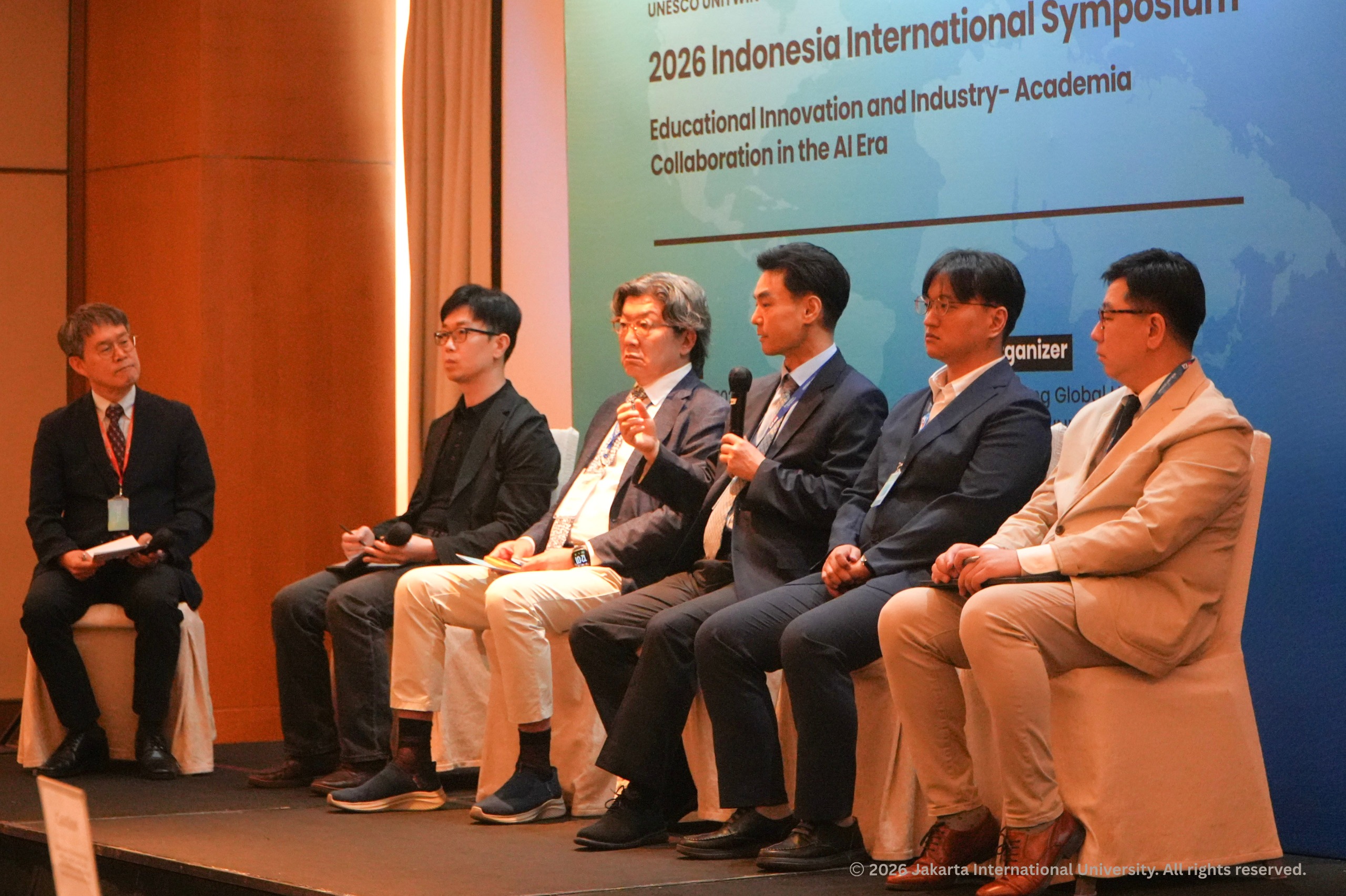
Leading universities from both countries gathered in Jakarta on Wednesday for the first international symposium on AI collaboration, highlighting the growing role of universities in preparing talent and accelerating innovation in the AI era.
Hosted by Universitas Indonesia (UI) and Jakarta International University (JIU), the symposium, themed “Educational Innovation and Industry-Academia Collaboration in the AI Era,” was held at The Westin Jakarta under the framework of UNESCO’s UNITWIN network.
The event brought together university leaders, researchers, policymakers, and business representatives from both countries to discuss how academic institutions can work more closely with industry in developing AI technologies and preparing future workforces.
The symposium follows the AI cooperation initiative agreed upon during the Korea-Indonesia summit on April 1, marking one of the first academic-level implementations of the bilateral agreement.
South Korean Ambassador to Indonesia Yoon Soon-gu opened the event by emphasizing the importance of stronger collaboration between universities and industry.
He said universities should become environments where businesses can contribute real-world data and practical challenges, while academic institutions provide access to cutting-edge research and technology infrastructure.
According to the ambassador, such cooperation would help transform classrooms from places where AI is viewed with uncertainty into centers of AI-driven innovation.
Representing Jakarta International University, Rector Dr. Agus Hartadi joined Dr. Chairul Hudaya, Director of Innovation and High-Impact Research at Universitas Indonesia.
The symposium also attracted representatives from several Indonesian universities, including Pelita Harapan University, Parahyangan Catholic University, Duta Wacana Christian University, Satya Wacana Christian University, Atma Jaya Catholic University of Indonesia, Matana University, and Krida Wacana Christian University.
From South Korea, Handong Global University President Seong Jin Park delivered the keynote address, arguing that universities must fundamentally transform in response to AI.
“In an era where both design and execution are increasingly shifting from humans to AI, universities must evolve into platform-based ecosystems,” he said.
The symposium also featured presentations from AI experts and academics from both countries.
Professor Yongjune Kim of Sungkyunkwan University outlined practical strategies for implementing the AI initiatives agreed upon by the two governments at the university level.
Meanwhile, Jung Wha Han, Chairman of the Korea Entrepreneurship Foundation, together with Dr. Young-Dall Lee from the New York Institute of Entrepreneurship and Technology, discussed how universities should develop entrepreneurial talent capable of thriving in an AI-powered economy.
Other speakers included Dr. Gyeong-geon Lee of Nanyang Technological University, Dr. Doo-Hee Chung of Handong Global University and CEO of ImpactiveAI, Dr. Sang-Wha Lee of Handong Global University, and Prof. Seop-Hyeong Park of Jakarta International University, who presented strategies for strengthening industry-academia collaboration in the emerging era of agentic AI.
Participants noted that the symposium represents one of the first concrete outcomes of the AI partnership announced by the two governments earlier this year.
Beyond knowledge sharing, organizers expect the initiative to pave the way for joint research projects, faculty collaboration, student exchanges, and future AI innovation programs between Indonesian and South Korean universities.
As both countries accelerate their national AI strategies, higher education institutions are expected to play an increasingly important role in producing skilled talent, fostering innovation, and supporting the broader digital transformation of their economies.