Jakarta Seeks Rp1,064 Trillion to Fund Its Global City Vision

JAKARTA, Jakartaweekly.com — Jakarta will require approximately Rp1,064 trillion (around US$65 billion) in development funding over the next five years as it accelerates its ambition of becoming one of the world’s leading cities, Governor Pramono Anung said on Tuesday.
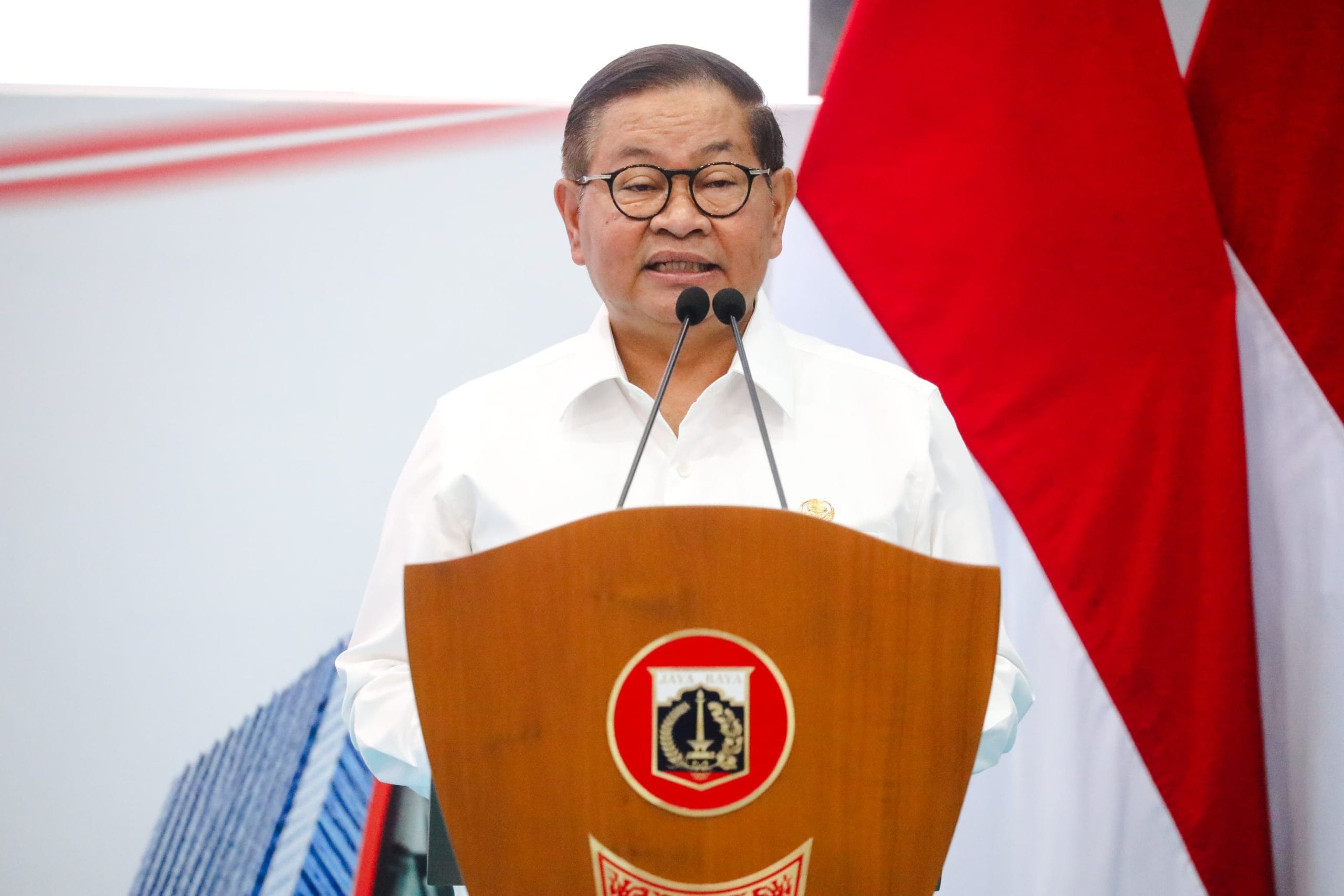
Speaking at the Investor Daily Roundtable at the Indonesia Stock Exchange (IDX) in South Jakarta, Pramono said the Jakarta Provincial Government could no longer depend solely on the regional budget (APBD) to finance the capital’s long-term transformation.
“Our goal is for Jakarta to rank among the Top 50 Global Cities by 2030 and the Top 20 Global Cities by 2045,” Pramono said. “Achieving this vision requires around Rp1,064 trillion in development financing over the next five years. Given the magnitude of the investment needed, we must open up new sources of funding to ensure development continues sustainably.”
As Indonesia’s political capital gradually shifts to Nusantara, Jakarta is positioning itself as the country’s primary center for business, finance, investment, and innovation. Pramono said this transformation requires not only maintaining essential public services but also investing in major infrastructure projects that will strengthen the city’s competitiveness on the global stage.
Among the city’s long-term priorities are 14 strategic projects valued at around Rp657 trillion, including the expansion of the Jakarta Sewerage System, the development of an additional 62.1 kilometers of MRT lines, 57.8 kilometers of LRT routes, and more than one hundred initiatives designed to support Jakarta’s transition into a global city.
To finance these projects, the provincial government is reshaping the role of the regional budget, treating it not merely as a source of public spending but as a catalyst to attract broader investment. The city is developing a diversified financing strategy that includes municipal bonds, public-private partnerships, naming rights, climate finance, optimization of public assets, investments through regional state-owned enterprises, private sector participation, corporate social responsibility programs, and innovative land-use financing schemes.
One of the key initiatives is the planned establishment of the Jakarta Collaboration Fund, which Pramono described as a financial hub that will connect investors, financial institutions, businesses, and development partners through a single collaborative ecosystem.
Pramono also warned that Jakarta must become increasingly financially independent as transfers from the central government continue to decline. Regional transfers for Jakarta are expected to fall by approximately Rp16 trillion, or nearly 60 percent, in 2026, decreasing from Rp27.5 trillion to Rp11.15 trillion.
Despite tighter fiscal conditions, he stressed that major public projects—including MRT and LRT expansion, the Transjabodetabek transportation network, flood mitigation programs, public housing, and essential public services—would remain government priorities.
To support future financing, the Jakarta administration is preparing to issue Rp3.5 trillion in municipal bonds as part of its 2027 Regional Government Work Plan. The proceeds will be used to finance projects that directly improve residents’ quality of life, including transportation infrastructure, hospitals, schools, public housing, water management facilities, flood control systems, and government buildings.
Pramono emphasized that all financing mechanisms would be implemented with strong governance, transparency, and accountability to maintain investor confidence.
He added that Jakarta’s economic fundamentals remain solid. The city’s economy expanded 5.59 percent year-on-year during the first quarter of 2026, contributing 16.67 percent to Indonesia’s national economy. Jakarta has also received an unqualified audit opinion from Indonesia’s Supreme Audit Agency (BPK) for nine consecutive years, reflecting consistent financial governance.
“Every financing instrument we develop will be managed transparently and responsibly,” Pramono said. “Our commitment is to accelerate Jakarta’s transformation into a globally competitive city while ensuring that essential public services continue to improve for all residents.”
Discover more