
IEA: Indonesia’s Thermal Coal Exports to Fall Further to Around 495Mt in 2026
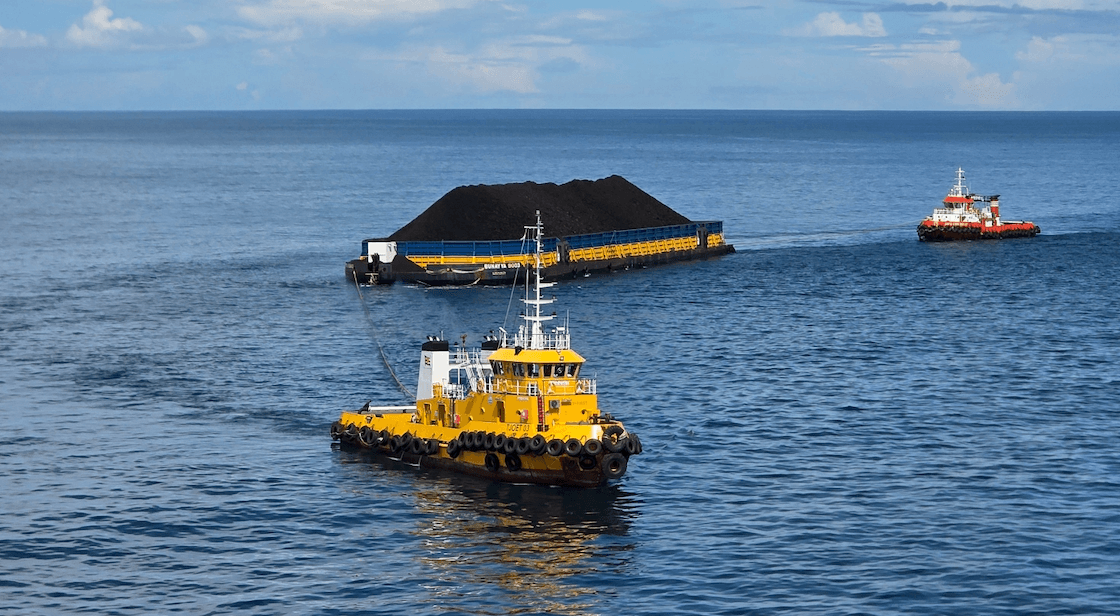
JAKARTA, Jakartaweekly.com–The International Energy Agency (IEA) expects Indonesia’s thermal coal exports to decline further in 2026 and record the largest drop among major exporters in 2027.
In its Coal Mid-Year Update 2026, released in September 2026, the IEA projects Indonesia’s thermal coal exports to fall sharply from 517 Mt in 2025 to around 495 Mt in 2026.
The decline is driven by weaker demand in key markets, which is weighing on shipment volumes. Indonesian export flows also remain subject to uncertainty over production targets, export policies and regulatory changes.
This includes the planned transition to a new state-owned company, Danantara Sumberdaya Indonesia (DSI), which will eventually oversee all coal exports. The system entered an experimental phase in June and is scheduled to become fully operational in September, according to the IEA.
In 2027, Indonesia is expected to record the largest decline in thermal coal shipments among major exporters. The decline reflects weaker demand from key Asian buyers as well as rising domestic consumption.
Meanwhile, global trade in metallurgical coal is expected to see a significant increase in 2026. Seaborne demand for metallurgical coal is projected to rise by 16 Mt from 304 Mt in 2025, reflecting stronger demand from India and Indonesia, which is expected to offset weaker seaborne imports by China and softer demand in Japan, Korea and Chinese Taipei.
Indonesia’s coking coal imports are expected to surge by 38% as the country ramps up coke exports. As a result, Indonesia is expected to overtake China to become the world’s largest coke exporter.
Meanwhile, domestic coal demand in Indonesia remains relatively strong. The IEA said Indonesia is the largest coal consumer in ASEAN, with coal remaining the backbone of its electricity system, particularly for captive power plants serving energy-intensive industries such as nickel, cement and, increasingly, aluminium production.
The IEA expects coal demand across ASEAN to continue growing in 2026, reaching around 574 Mt, driven mainly by the power sector in Indonesia and Viet Nam.
Indonesia’s Coal Production
In Indonesia, coal production is expected to continue its decline in 2026 after supply outpaced consumption in 2025 and coal prices fell. However, stronger-than-expected export demand has prompted the IEA to slightly raise its production forecast compared with its December 2025 report.
Indonesia is expected to make the largest supply adjustment among the world’s major coal producers in 2026, with output projected to fall by more than 12 Mt, or 1.5%. The Indonesian government has lowered its coal production target to 641 Mt, well below the previous year’s reported production of 817.48 Mt, according to Indonesia’s Ministry of Energy and Mineral Resources (ESDM).
The lower production target creates fresh uncertainty for both producers and international buyers. At the same time, weaker demand from key Asian importers and higher domestic market obligations (DMO), which require more coal to be sold domestically at regulated prices, have reduced incentives to increase production.
The IEA also noted that ongoing policy discussions over export taxes, revenue-sharing arrangements, mining permits and the possible centralisation of exports through a state-controlled entity have added further uncertainty to the market.
However, increasing demand linked to the Middle East crisis has improved Indonesia’s export outlook. As the largest flexible supplier of thermal coal to Asian markets, any reduction in Indonesia’s output or export availability could have significant implications for seaborne coal supply.
Global Coal Demand Outlook in 2026
Global coal demand is set to increase by 1.2% in 2026 to reach 8.94 Bt.The increase is mainly driven by the crisis in the Middle East and an unusually strong El Niño weather pattern.
Although shipping disruptions in the Strait of Hormuz do not directly affect coal markets, tighter natural gas supply has pushed up gas prices, prompting some electricity systems to switch from gas to coal. Temporary measures allowing greater use of coal-fired generation in some countries have also supported coal demand.
Higher cooling demand and lower hydropower output linked to El Niño have also contributed to higher coal consumption.
China’s coal demand is expected to increase by 1% in 2026 to 5 Bt. Coal-fired generation continues to be shaped by growth in electricity demand, hydropower availability and the rapid expansion of solar and wind capacity. Strong electricity demand, weak wind generation and higher liquefied natural gas (LNG) prices have supported coal use in the power sector.
Meanwhile, higher oil prices have boosted coal-to-chemicals production, although the effect has been limited because many plants were already operating at high load factors. Steel and cement production, which peaked in 2020, are expected to continue declining in 2026.
Coal demand in India is expected to return to its historical growth trend in 2026, increasing by 4.2% to reach 1,353 Mt.Rising electricity demand will continue to support coal use in the power sector despite the rapid expansion of renewable capacity. El Niño conditions could increase cooling needs while reducing hydropower availability, providing a further boost to coal consumption.
Industrial demand also remains strong, supported by growth in pig iron, direct reduction of iron (DRI) and cement production, the three largest coal-consuming sectors in India.
Coal demand in Japan is expected to decline slightly by 1% in 2026 to 161 Mt, as weaker industrial consumption is partially offset by modest growth in power generation. Although nuclear and renewable generation are expected to increase, driven by solar photovoltaic (PV) expansion, higher natural gas prices linked to the Middle East crisis have supported coal-fired generation beyond what would otherwise have been expected.
In Korea, coal demand is now expected to rise by 6% to 119 Mt, reversing previous expectations of a decline. Low nuclear availability and higher natural gas prices have boosted coal-fired generation, which jumped 30% year-on-year in the first quarter of 2026. However, the restart of nuclear reactors later in the year could slow this trend by reducing reliance on coal-fired power generation.
In Chinese Taipei, coal demand remains constrained by gas-fired generation and the transition towards low-carbon energy. However, the end of nuclear power generation has heightened concerns over energy security.
Coal demand in the United States is expected to decline by 7% in 2026, reversing the temporary increase in 2025. Even so, demand will remain above its 2024 level. Policy support from the current Administration, including emergency orders and the postponement of plant retirements, has slowed the pace of decline. At the same time, concerns about system reliability and rising electricity demand, including from data centres, have helped keep coal-fired plants in operation.
However, coal-fired generation remains under pressure from cheap natural gas and the expansion of renewable capacity, and coal’s share of electricity generation is expected to shrink further in 2026.
In the European Union, coal demand is set to continue its structural decline, although the fall is now expected to be less pronounced than previously anticipated. Total annual coal demand is expected to reach 276 Mt in 2026. Higher gas prices have reduced the expected decline in countries such as Germany and Poland, where gas generation and spare coal capacity remain available. Weather-related events, such as cold spells, could also temporarily increase coal use.
Nevertheless, the expansion of renewable capacity, growing nuclear availability in some markets, policies to phase out coal and weakening industrial demand are expected to reduce coal consumption over the longer term.
Global demand for coking coal is expected to remain broadly stable in 2026, as contrasting regional trends offset one another. India will remain the primary source of growth in metallurgical coal demand, driven by rising pig iron production to meet stronger steel demand.
If tensions in the Middle East ease, global coal demand is expected to fall by 0.4% in 2027 to 8.91 Bt, although this would still be above 2025 levels. Some of the factors that supported increased coal use in 2026 are expected to fade. The natural gas price premium that encouraged gas-to-coal switching in several power markets should narrow, while expanding renewable generation and cheaper LNG are expected to put renewed pressure on coal-fired power generation.
As a result, coal-fired generation is expected to decline, while growth in some sectors, particularly coal-to-chemicals production in China, is not expected to be enough to offset the decline.
Discover more