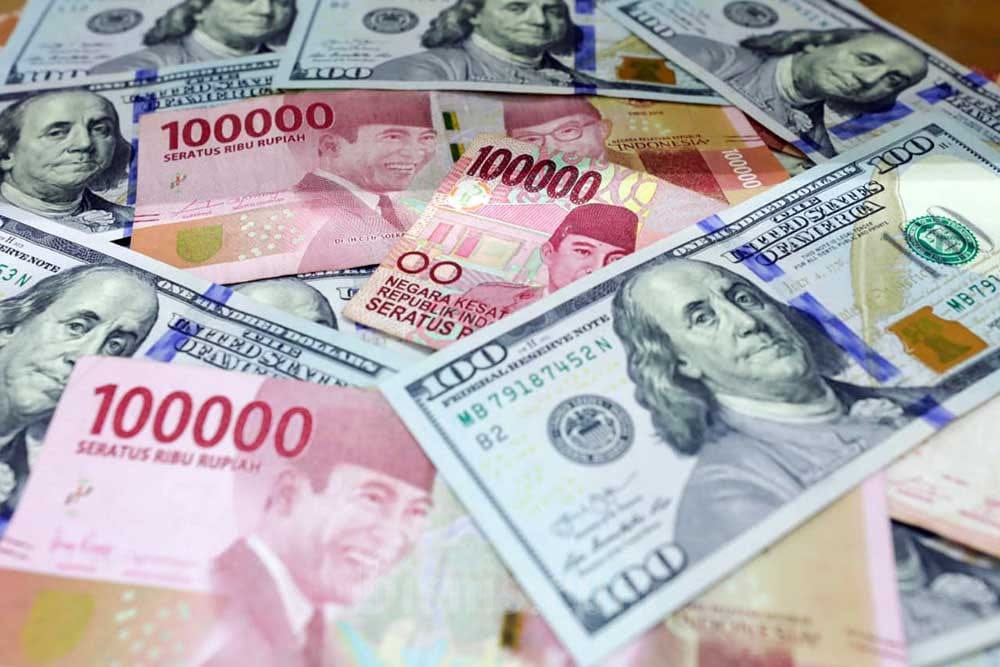
After Surpassing Rp18,000, Rupiah Could Reach Rp25,000 per U.S. Dollar

JAKARTA, Jakartaweekly.com—After breaking through the Rp18,000 per U.S. dollar level, the Indonesian rupiah could weaken further to Rp19,000 and may even reach Rp25,000 by the end of the year if the government fails to exercise caution.
Economist, Currency, and Commodities Analyst Ibrahim Assuaibi said the rupiah’s depreciation against the U.S. dollar is the result of fiscal policy mistakes made by the government.
“It should be remembered that the main reason the rupiah has weakened and may even move toward the Rp19,000 level is not Bank Indonesia. The primary problem lies in fiscal policy,” he said in Jakarta on Thursday, June 4, 2026.
He argued that Indonesia’s current fiscal situation is highly concerning because several government programs are not being implemented as intended, including the Makan Bergizi Gratis (MBG) program and the Koperasi Merah Putih initiative.
“What we know is that there have been many unusual incidents involving these two programs,” he said.
According to Ibrahim, under current circumstances, the government should reevaluate both the MBG program and the Koperasi Merah Putih initiative, as they are not aligned with the increasingly challenging global economic environment.
He said the government must be willing to take decisive action to improve economic conditions, particularly to address the continuing depreciation of the rupiah.
In addition to reviewing several government programs, Ibrahim outlined measures that could help strengthen the rupiah against the U.S. dollar. First, he said, the government should once again raise subsidized fuel prices.
He warned that the rupiah could reach Rp25,000 per U.S. dollar if subsidized fuel prices are maintained through the end of the year, given that geopolitical tensions in the Middle East are unlikely to be resolved anytime soon.
Second, he suggested that the government could seek loans from the International Monetary Fund (IMF) or the World Bank. Such financing, he said, would help normalize money circulation in the economy and support a stronger rupiah. He added that both institutions are currently open to assisting Indonesia.
Ibrahim also highlighted the negative assessment received by Danantara from Moody’s despite the institution being relatively new. According to him, the assessment reflects concerns over governance and policy implementation.
He further noted that MSCI had previously taken action involving several Indonesian stocks, while a number of other government policies, including those related to exports, have also come under international scrutiny.
According to Ibrahim, further rating downgrades cannot be ruled out. Therefore, he said, the government needs to be more cautious when formulating policies.
He added that misguided policies could provide international rating agencies with grounds to downgrade Indonesia’s ratings, potentially placing additional pressure on the rupiah.
The weakening of the rupiah against the U.S. dollar, he said, will have significant consequences for lower- and middle-income groups. One example, according to him, is the rise in criminal activity.
“Nowadays, crime occurs not only at night but also during the daytime. That is one of the impacts of the weakening rupiah,” he said.
He added that a weaker rupiah would also likely lead to large-scale layoffs in labor-intensive industries.
Discover more