Destry Damayanti, from Economist to Indonesia’s First Female BI Governor
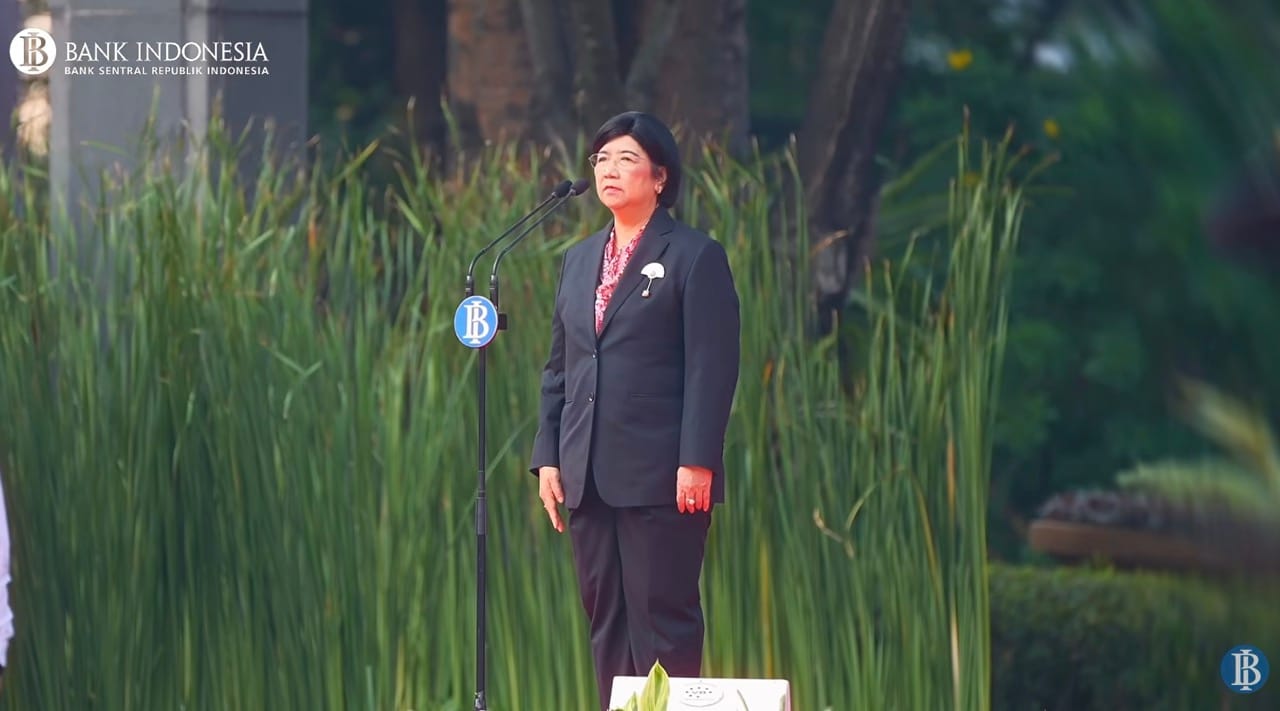
JAKARTA, Jakartaweekly.com—Indonesia’s House of Representatives (DPR RI) has approved President Prabowo’s nomination of Destry Damayanti as the sole candidate for Governor of Bank Indonesia (BI). Destry underwent a fit and proper test with DPR’s Commission XI on Wednesday, August 26, 2026.
Commission XI Chairman Mukhamad Misbakhun announced the results of the deliberations on Thursday, August 27, 2026, confirming that the commission had approved and appointed Destry Damayanti as the candidate for BI Governor for the 2026-2031 term, replacing Perry Warjiyo.
Destry will become the first woman to lead Bank Indonesia for a five-year term. So, who is Destry Damayanti and what is her background? Also, what has she accomplished throughout her career?
Introducing the “Sinergi Merah Putih” Concept
During her fit and proper test, Destry Damayanti introduced the “Sinergi Merah Putih” concept, which emphasizes inter-institutional coordination to maintain economic stability while promoting sustainable economic growth.
Destry explained that the concept means bringing together strengths, complementing one another and moving in the same direction to achieve better outcomes. However, she also stressed that stronger coordination would not undermine the credibility or independence of the central bank.
Under this framework, Bank Indonesia would focus on maintaining a conducive economic environment by safeguarding monetary stability, supporting strong supply and demand growth, and ensuring the availability of financing. These efforts would be carried out through a policy mix covering monetary policy, macroprudential policy, payment systems, and supporting policies.
One of these supporting policies is the deepening of the money and foreign exchange markets. According to Destry, deeper financial markets are crucial for strengthening rupiah stability while providing additional sources of financing for the economy.
She said this could be one of the measures BI could take to support the government’s 8% economic growth target, which would require substantial financing.
One measure under the money and foreign exchange market deepening agenda would be to provide incentives and reduce hedging costs to encourage capital inflows. Destry said this could encourage funds to flow into Bank Indonesia Rupiah Securities (SRBI) and government bonds (SBN), ultimately increasing the supply of foreign exchange in the market.
During the fit and proper test, Destry also explained that SRBI policy would be refocused on strengthening interest rate transmission and helping stabilize market conditions. Previously, SRBI had been used to attract foreign funds into Indonesia.
However, during her tenure as Acting Governor of Bank Indonesia, Destry began reducing SRBI issuance to ensure that liquidity in the financial market remained adequate.
During the fit and proper test, Destry also introduced three missions and five strategic initiatives to address economic challenges and fulfill Bank Indonesia’s mandate.
In addition to Sinergi Merah Putih, the other two missions are to maintain stability as a foundation for sustainable economic growth and to contribute to sustainable economic growth.
Destry’s strategic initiatives include strengthening BI’s policy mix to respond to pressures from the external sector, the exchange rate and inflation, thereby creating a conducive economic environment and supporting price stability to promote economic growth.
The second strategic initiative focuses on foreign exchange traffic (LLD) policies. Destry plans to refocus and revitalize LLD policies, particularly through digital-based supervision and supervisory technology (suptech) to curb potential under-invoicing.
Destry will also focus on financial and Islamic finance inclusion to support the 8% economic growth target. She plans to strengthen inclusive financing through enhanced macroprudential policies.
She also plans to improve sustainable finance policies by introducing emissions and carbon calculation methodologies to be used by corporations and banks.
The fourth initiative focuses on institutional governance innovation.
Finally, Sinergi Merah Putih will serve as the overarching framework connecting all of these policies.
Destry Damayanti Previously Served as Senior Deputy Governor of Bank Indonesia
Destry has been part of Bank Indonesia’s leadership since 2019. Under Presidential Decree No. 74/P of 2019, she was officially appointed Senior Deputy Governor of Bank Indonesia on August 7, 2019, replacing Mirza Adityaswara.
She was subsequently reappointed as Senior Deputy Governor for a second term beginning August 7, 2024, under Presidential Decree No. 74/P of 2024.
During her tenure as Senior Deputy Governor, Destry focused on monetary stability and financial market deepening.
When she was first appointed Senior Deputy Governor, making her the second-highest-ranking official at BI, Destry said she wanted to transform the central bank into a more adaptive and innovative institution.
At the time, she also sought to develop new financial instruments as part of efforts to deepen financial markets, including instruments that could support infrastructure financing.
As Senior Deputy Governor, Destry was not only responsible for financial market deepening but also oversaw asset management functions, including foreign exchange reserve management.
In September 2019, Destry also shared her views on foreign capital flows. She said she preferred market-based policies to prevent foreign funds from leaving Indonesia too quickly.
Rather than restricting capital outflows, Destry argued that Indonesia should create a conducive macroeconomic environment for foreign investors. This could include providing incentives rather than intervening directly to limit foreign capital outflows.
A Background Spanning Fiscal and Monetary Policy
Destry began her career as a researcher and lecturer at the Faculty of Economics at the University of Indonesia from 1987 to 1990. She then worked at the Ministry of Finance from 1992 to 1997 before joining Citibank, where she worked from 1997 to 2000.
She subsequently served as Senior Economic Adviser to the British Ambassador to Indonesia from 2000 to 2003.
Destry returned to academia as a researcher and lecturer at the Faculty of Economics at the University of Indonesia from 2005 to 2006, while also serving as Chief Economist at Mandiri Sekuritas from 2005 to 2011.
Her career in monetary and financial economics continued when she became Chief Economist at Bank Mandiri, a position she held from 2011 to 2015. In 2014, she was also appointed Chair of the Economic Task Force at the Ministry of State-Owned Enterprises.
Destry subsequently served as a member of the Board of Commissioners of the Indonesia Deposit Insurance Corporation (LPS) from 2015 to 2019.
Toward the end of her tenure at LPS, Destry was tasked with developing a banking restructuring program.
A Cornell University Graduate
Born in 1963, Destry holds a Bachelor’s degree in Economics from the University of Indonesia and a Master of Science in Regional Science from Cornell University in New York, United States.
While studying economics, Destry developed a particular interest in monetary economics, especially money and banking.
During her studies at Cornell, she focused on financial economics, including issues related to financing urban and regional development.
Her academic background and interests influenced her work at the Ministry of Finance, where she was assigned to the Monetary Policy Analysis Agency (Badan Analisa Kebijakan Moneter/BAKM), now known as the Fiscal Policy Agency (BKF), to analyze regional financing.
Later, while working at Citibank, Destry also developed an interest in macroeconomics.
This combination of academic training and professional experience has given Destry extensive expertise in macroeconomics, particularly in areas related to finance, banking and capital markets.
Discover more