Economist: Fiscal Discipline Needed to Reinforce BI Rate Increase
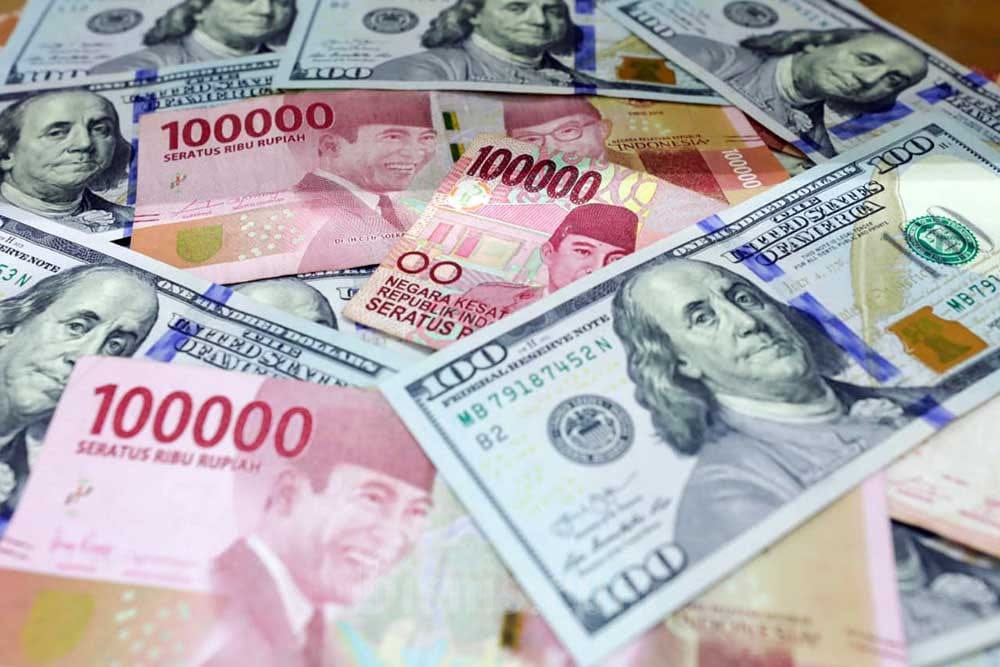
JAKARTA, Jakartaweekly.com—An economist warned that Bank Indonesia’s (BI) interest rate hikes will only have a temporary impact unless they are accompanied by credible and firm fiscal disciplines.
BI raised its BI rate by 25 basis points (bps) to 5,5% during a weekly Board of Governors Meeting (RDG) on Tuesday, June 9, 2026. The central bank also increased the Deposit Facility rate to 4,5% and the Lending Facility rate to 6,25%.
BI has now raised its BI rate twice in 2026. The central bank previously increased the BI Rate by 50 bps to 5,25% in May 2026.
Permata Bank Chief Economist Josua Pardede said the latest rate hike was understandable given the pressure on the Rupiah, which has weakened beyond levels considered comfortable for economic stability. However, he emphasized that monetary tightening alone would not be sufficient.
“Nevertheless, I continue to believe that Rupiah stability will not be sustainable if the sources of investor concerns regarding the state budget are not addressed convincingly,” Josua told Jakarta Weekly on Tuesday, June 9, 2026.
According to him, higher interest rates can buy time, but they cannot substitute for fiscal discipline. Investors are not only looking at the attractiveness of Rupiah-denominated assets. They are also assessing whether the state budget deficit remains credible, government spending is productive, energy subsidies are under control, debt financing remains manageable, and whether government policies are consistent.
“If these questions remain unanswered, pressure on the Rupiah could re-emerge even after interest rates have been raised,” he said.
Josua argued that BI’s policy should be supported by stronger fiscal measures. The government, he said, needs to maintain a credible budget deficit and postpone non-essential spending. Also, strengthen expenditures that directly improve productivity, and provide greater clarity regarding fiscal risks associated with major government programs, state-owned enterprises, Danantara, and export-related policies.
He further noted that the move signals BI’s determination to prevent rupiah weakness from escalating into broader pressures on inflation, the government bond market, and investor confidence.
The decision was made outside the central bank’s regular monthly policy meeting, sending a strong message that BI does not want to fall behind market pressures.
In the short term, higher interest rates could help stabilize Rupiah, improve attractiveness of Rupiah-denominated assets, and encourage foreign investors to return to government bonds (SBN) and Bank Indonesia Rupiah Securities (SRBI). However, the impact on the stock market is likely to be mixed.
A more stable Rupiah could help calm market sentiment. At the same time, higher interest rates may weigh on equity valuations, particularly in sectors sensitive to funding costs, such as property, automotive, certain banking segments, and consumer industries that rely heavily on credit financing.
For the broader economy, the effects are expected to emerge gradually. Higher interest rates will increase banks’ funding costs, limit room for further lending-rate reductions, and potentially slow consumption and investment.
Josua believes BI is attempting to mitigate these negative effects by maintaining adequate banking liquidity through supporting instruments. In other words, the central bank is seeking to strengthen the Rupiah without draining domestic liquidity. This is important to ensure that currency stabilization does not come at the expense of credit growth and real economic activity.
On the positive side, recent state budget data showing a relatively low deficit and an emerging primary surplus could help ease market concerns. However, Josua cautioned that these figures alone may not be sufficient if investors perceive the improvement as temporary, for examples because government spending has yet to be fully realized or because hidden fiscal risk remain.
Therefore, the government needs to provide more detailed explanations regarding the quality of revenue collection, spending efficiency, subsidy risks, and financing strategies through the end of the year. Markets require evidence of discipline, not merely assurances that the budget remains safe.
He also stressed that while coordination between BI and the government is important, each institution must maintain its respective mandate. BI is responsible for maintaining exchange-rate and inflation stability, while the government must safeguard fiscal credibility and policy certainty.
In conclusion, Josua said the latest rate hike could be effective in easing short-term market volatility, but it is unlikely to restore confidence permanently on its own. The rupiah will be more stable if markets see firm monetary policy accompanied by credible fiscal discipline.
“If the sources of fiscal concerns are left unaddressed, BI will continue to bear a growing stabilization burden, which could ultimately weigh on economic growth, lending rates, and household purchasing power,” he said.
BI’s Policy Direction
In its official statement, Bank Indonesia said the rate hike represents a continuation of efforts to strengthen rupiah stabilization amid heightened global volatility stemming from the conflict in the Middle East. The move is also intended as a pre-emptive measure to keep inflation within the government’s target range of 2.5% during 2026–2027.
“The policy is also aimed at increasing returns to attract greater foreign portfolio investment inflows into Indonesia,” BI Governor Perry Warjiyo said in a statement on Tuesday, June 9, 2026.
In addition to raising the BI Rate, the central bank announced several measures to strengthen rupiah stability by enhancing returns and providing additional incentives for foreign investors.
First, BI increased the yield structure of Bank Indonesia Rupiah Securities (SRBI) across all maturities of six, nine, and twelve months. Second, it reduced hedging swap costs for foreign investors by 10%.
Third, the central bank reopened repurchase agreement (repo) auction windows with tenors of three, six, nine, and twelve months for banks to ensure adequate liquidity in the money market and banking system, while maintaining primary money growth above 10%.
Fourth, BI will conduct SRBI auctions twice a week and intensify intervention in the foreign exchange market through spot transactions, Domestic Non-Deliverable Forwards (DNDF), and offshore Non-Deliverable Forwards (NDF).
Discover more