MSCI Keeps Freeze on Indonesian Stocks, Emerging Market Status Remains Safe
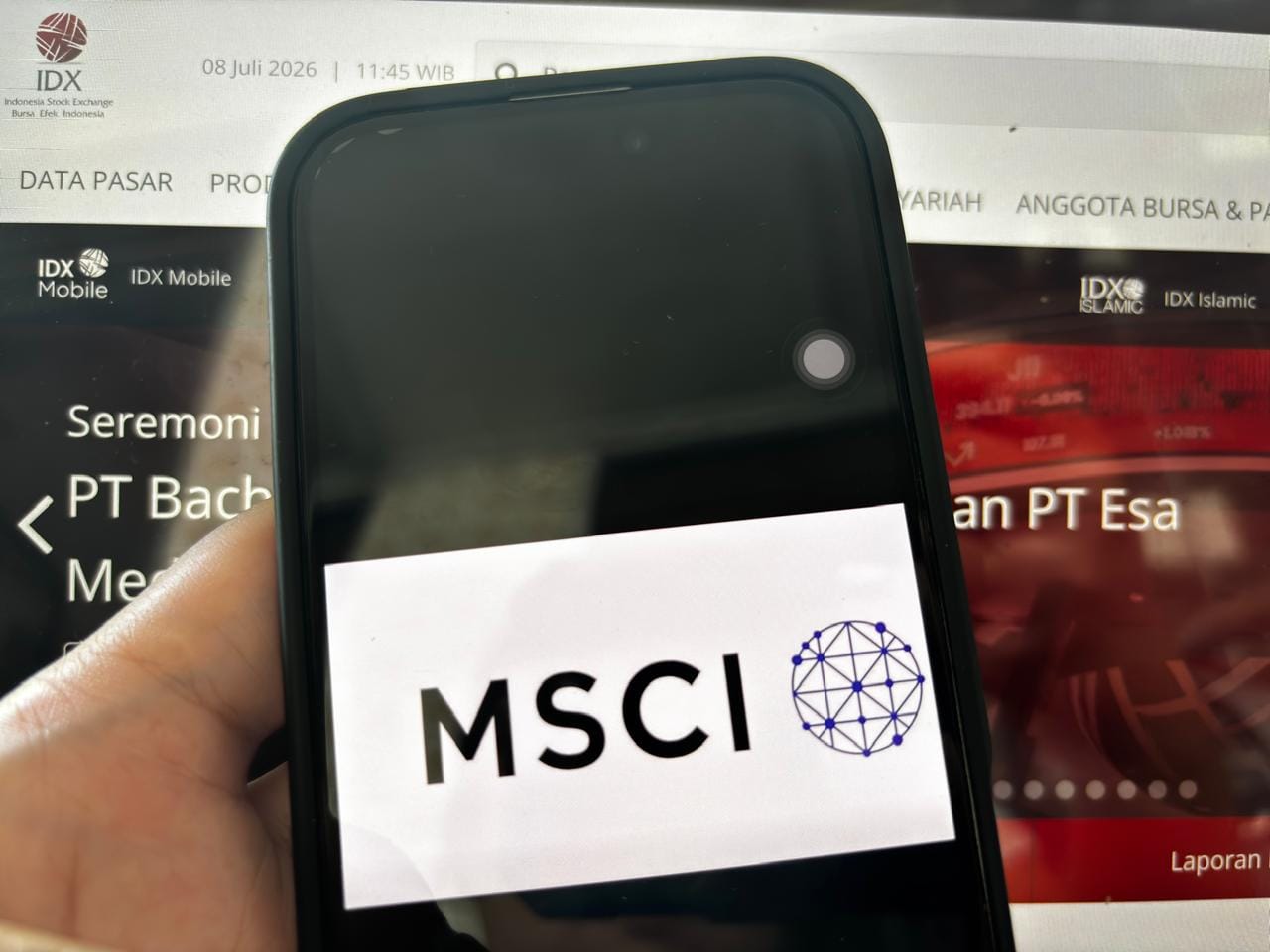
JAKARTA, Jakartaweekly.com— Global index provider MSCI has maintained its freeze on Indonesian equities in the MSCI Global Investable Market Indexes (GIMI) for the August 2026 Index Review. Despite the decision, analysts remain optimistic that Indonesia will retain its Emerging Market status and is unlikely to be downgraded to Frontier Market.
In its announcement, MSCI said it will continue to freeze all increases to Foreign Inclusion Factors (FIF) and Number of Shares (NOS) for Indonesian securities. In addition, the index provider will not implement any additions to the MSCI Investable Market Indexes, nor implement any upward migration across size-segment indexes, including from the Small Cap Index to the Standard Index.
Furthermore, MSCI will continue to remove securities identified by the Indonesian authorities under the High Shareholding Concentration (HSC) framework. The firm will also continue using 1% shareholder disclosure data to adjust free-float estimates where appropriate.
PasaRDana co-founder and capital market analyst Hans Kwee believes MSCI has maintained the freeze because it still requires time to incorporate Indonesia’s newly enhanced market data into its index methodology.
“MSCI certainly needs time to implement Indonesia’s new data, which is now more comprehensive and transparent. The HSC data, the expansion of investor classifications from nine to 39 categories, and shareholder ownership data above the 1% threshold will undoubtedly improve MSCI’s analysis,” Hans Kwee told Jakarta Weekly on Wednesday, July 8, 2026.
Hans also believes the latest announcement confirms that MSCI continues to classify Indonesia as an Emerging Market, making a downgrade to Frontier Market highly unlikely.
He explained that MSCI requires at least three eligible stocks for a market to retain its Emerging Market classification. To qualify, companies must meet several criteria. First, they must have a minimum full market capitalization of US$3.937 billion. Second, their free-float-adjusted market capitalization, based on the FIF, must be at least US$1.969 billion.
Third, from a liquidity perspective, stocks must record an Annualized Traded Value Ratio (ATVR) of at least 15%. ATVR measures how actively a stock is traded over a one-year period relative to its free-float market capitalization rather than its total shares outstanding.
According to Hans, 11 Indonesian stocks currently meet all three requirements. “Even if several Indonesian stocks are removed during the August 2026 review, the number of eligible stocks would still remain well above the minimum requirement of three. Therefore, claims that Indonesia is at risk of being downgraded to Frontier Market are not well-founded,” he said.
Hans further noted that Indonesia’s stock market has started to recover following the easing of geopolitical tensions after negotiations involving the United States and Iran, as well as the reopening of the Strait of Hormuz. These developments have restored global oil supplies, contributing to a decline in international crude oil prices.
As supply conditions improved, the oil market structure shifted from backwardation to contango, signaling that market expectations of short-term supply shortages have eased. As a result, Indonesia’s overall market risk has declined.
Indonesia remains a net oil importer and continues to subsidize Pertalite fuel. When global oil prices were elevated and the market remained in backwardation, investors feared that Indonesia’s economy would come under pressure due to a widening fiscal deficit, a prolonged trade deficit, and higher prices for non-subsidized fuels, all of which could weigh on middle-class purchasing power.
“As global oil prices continue to decline, Indonesia’s risk profile has improved, reducing pressure on the country’s stock market,” Hans concluded.
MSCI has kept Indonesian equities under a freeze on rebalancing and weight increases since January 2026, citing structural concerns over the country’s equity market. These include a limited supply of free-float shares available for trading, as well as issues related to market governance and the transparency of publicly available information.
Emerging MarketForeign InvestorsFree FloatFrontier MarketHans KweeHigh Shareholding ConcentrationIDXIndonesia Capital MarketIndonesia stock marketIndonesian EquitiesIndonesian StocksMSCIMSCI Emerging MarketsMSCI GIMIPasaRDana
Discover more