Fighting Hidden Hunger: Indonesia’s Push for Mass-Market Fortified Rice
JAKARTA — Jakartaweekly.com, A silent emergency known as hidden hunger is undermining public health across the Indonesian archipelago. This crisis is driven by chronic iron deficiencies that have fueled surging rates of anemia among the population. However, public health experts point out that the most strategic weapon to combat this nutritional crisis is already sitting on nearly every dinner table in the country: rice.
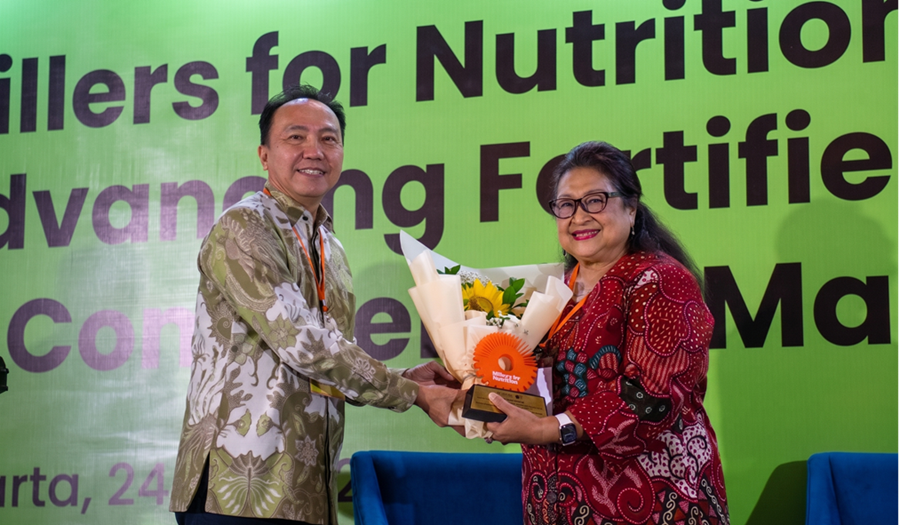
To weaponize this staple food against nationwide malnutrition, the Millers for Nutrition initiative recently hosted a multi-stakeholder forum in Jakarta titled “Millers for Nutrition: Advancing Fortified Rice in the Commercial Market.” Powered by TechnoServe and funded by the Gates Foundation, the event aimed to build a powerful private-sector coalition to make fortified rice affordable and accessible in the open market for wider society.
In her keynote speech, Nina Sarjunani, Director of the Yayasan Kegizian Pengembangan Fortifikasi Pangan Indonesia, argued that intervening through the nation’s primary staple is the most viable path forward. Historically, efforts to eradicate micronutrient deficiencies have relied on three primary levers. The first is food diversification, which encourages households to eat a wider variety of carbohydrates, vegetables, and proteins. While ideal, shifting diets remains economically out of reach for lower-income families who cannot afford a diverse basket of nutritious foods. The second approach, supplementation, is straightforward but chronically plagued by low public adherence.
Consequently, Ms. Sarjunani emphasized that fortification stands as the most cost-effective and low-friction approach available. Indonesia has already successfully mandated the fortification of iodized salt, cooking oil with vitamin A, and wheat flour with iron and zinc. However, wheat flour is not the bedrock of the Indonesian diet. To truly move the needle on public health, the focus must shift to rice, a commodity consumed by 95 percent of the domestic population.
Fortifying rice bypasses the difficult hurdle of behavioral change because citizens continue to cook and eat their meals exactly as before, while receiving a massive boost in iron and essential micronutrients. Best of all, this substantial nutrition gain comes at a marginal cost inflation of just IDR 1,000, or about six cents, per kilogram.
Despite these clear benefits, scaling fortified rice presents steep operational challenges. Budianto Wijaya, an advisory member for Millers for Nutrition, noted that unlike the highly centralized wheat industry, Indonesia’s rice milling sector is deeply fragmented, spanning thousands of operators from massive industrial facilities to tiny, rural mills. This fragmentation makes regulatory alignment, standardized quality control, and uniform distribution a complex logistical puzzle.
Currently, fortified rice remains a niche luxury item purchased almost exclusively by affluent urban consumers. To alter nationwide public health trends, experts agree the strategy must pivot toward social safety nets and government pipelines, such as maternal health interventions and the government’s high-profile Free Nutritious Meal school program. Social safety nets offer the fastest pipeline to reach vulnerable families, and advocates have already begun negotiations to integrate fortified rice into these school meals, where the salt and cooking oil used are already fortified.
Beyond logistics, the strategy faces an uphill battle against public perception and market positioning. Public awareness remains low, leaving consumers vulnerable to disinformation, such as past viral hoaxes regarding plastic rice that derailed consumer trust. Furthermore, because fortified rice is currently treated as a premium product made from top-tier grains, prices remain prohibitively high for the masses.
To bridge these gaps, industry stakeholders are calling for the rapid development of a domestic Fortified Rice Kernel industry to strengthen rice mills and pave the way for commercial distribution. Evelyn Djuwidja, Program Manager for TechnoServe Indonesia, views the Jakarta forum as a vital first step toward long-term success. She concluded that the forum has opened up great opportunities for fellow Rice Milling Units and modern retail to collaborate with one another, and affirmed that Millers for Nutrition is committed to continuously assisting rice mills in maintaining quality, aiding production efficiency, and facilitating healthy business relations.
Discover more