Indo Intertex 2026: Boosting Indonesia Textile Exports
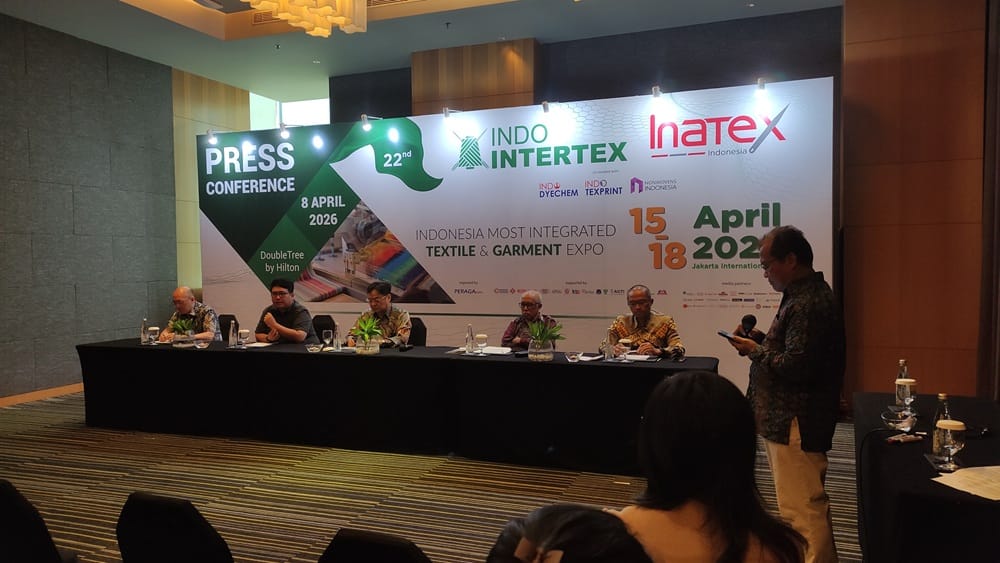
Indo Intertex & Inatex, recognized as Southeast Asia’s largest and most comprehensive textile and garment exhibition, is scheduled to return to JIExpo Kemayoran, Jakarta, from April 15 to 18, 2026. Marking its 22nd edition, the event continues to solidify its position as a crucial platform for driving innovation and collaboration within the national and international textile sectors.
As the only exhibition in Indonesia that encompasses the entire industry value chain—ranging from machinery and textile products to printing technology and textile chemicals—it plays a strategic role in accelerating the growth and transformation of the industry.
Unprecedented Scale and Strategic Business Matching
Spanning an impressive area of over 35,000 square meters, the 2026 expo will feature more than 800 exhibitors representing 1,500 global brands. The event is projected to attract over 35,000 professional visitors from 29 countries.
During a press conference in Jakarta on Wednesday, April 8, 2026, Paul Kingsen, Director of PT Peraga Expo, emphasized the event’s practical approach. “We present Indo Intertex and Inatex to answer industry needs concretely, starting from presenting relevant suppliers to displaying reliable technology,” he stated.
The expo aims to do more than just showcase products. Kingsen explained that it plays an active role in strengthening the national textile industry ecosystem through a dedicated business matching program, designed to open direct avenues for cooperation and business transactions. Furthermore, the exhibition encourages investments and the adoption of the latest technologies to enhance production efficiency, product quality, supply chain resilience, and global market competitiveness.
“We also see the quality of participation continuing to increase, in line with the market’s focus on efficiency, innovation, and sustainable manufacturing,” Kingsen added.
Policy Tailwinds and Export Ambitions
This year’s exhibition aligns perfectly with robust government policies designed to foster local industry growth. In addition to cracking down on illegal clothing importers, the Indonesian government recently signed the Agreement on Reciprocal Trade (ART) with the United States.
This landmark agreement provides a zero percent import tariff facility for Indonesian textile and garment products through a tariff-rate quota (TRQ) scheme. This move is expected to significantly boost the competitiveness of national products in the lucrative US market, potentially creating 4 million jobs and delivering economic benefits to up to 20 million Indonesians. Currently boasting an export value of approximately USD 4 billion, the national textile industry is targeting a massive tenfold growth over the next decade. Ultimately, Indo Intertex & Inatex 2026 aims to foster a business ecosystem that supports industry players in making faster, more informed decisions.
Focus on Sustainability and Global Standards
Industry associations are actively leveraging the expo to prepare local players for evolving global demands. Jemmy Kartiwa Sastraatmadja, Chairman of the Indonesian Textile Association (API), affirmed that the association is ready to host discussions on strategic issues like sustainability and the utilization of new technologies to boost the domestic industry.
To help local entrepreneurs penetrate international markets, API is inviting foreign guest speakers to share vital insights. “In the future, foreign buyers will be increasingly critical. So we must be ready with regulations that will encourage this. The discussions held are certainly expected so that industry players can also attend, listen directly, and ask questions directly to experts from abroad to gain new perspectives,” Jemmy noted.
Similarly, Farhan Aqil Syauqi, Secretary-General of the Indonesian Filament Yarn & Fiber Producers Association (APSyFI), emphasized that sustainability is inextricably linked to the textile industry’s future. Syauqi welcomed the government’s international partnerships, hoping they will also boost national textile exports to Europe.
“Because this agreement is quite important, especially for ready-to-wear clothing. And, of course, related to the supply chain, there are several conditions that must be adjusted by the domestic industry,” Syauqi explained. He stressed the importance of strengthening the domestic ecosystem to ensure product competitiveness, noting that APSyFI wants the domestic industry strengthened by safeguarding raw and intermediate materials.
Engaging Programs and Creative Showcases
Beyond the main exhibition floor, Indo Intertex & Inatex 2026 offers a variety of featured programs designed to enrich industry insights and provide added value. Highlights include:
- Interactive seminars and workshops featuring experts and practitioners discussing current trends, strategies, and challenges within the textile and garment industry.
- A dedicated focus on sustainability and textile circularity, encouraging industry players to understand and implement sustainable practices that are increasingly required in the global market.
- A Trunk Show showcasing the creative works of designers from the Indonesian Fashion Chamber (IFC), providing both inspiration and entertainment that reflects the dynamic growth of the national fashion industry.
By integrating exhibitions, educational programs, and creative showcases into a single, unified platform, Indo Intertex & Inatex 2026 delivers a comprehensive industry experience. The event not only unlocks concrete business opportunities but also broadens horizons, empowering industry players to adapt, innovate, and elevate their competitiveness amidst the dynamics of the global market.
Discover more