KALOG Express Records 27% Growth in Q1 2026, KAI Logistik to Add 70 Service Points
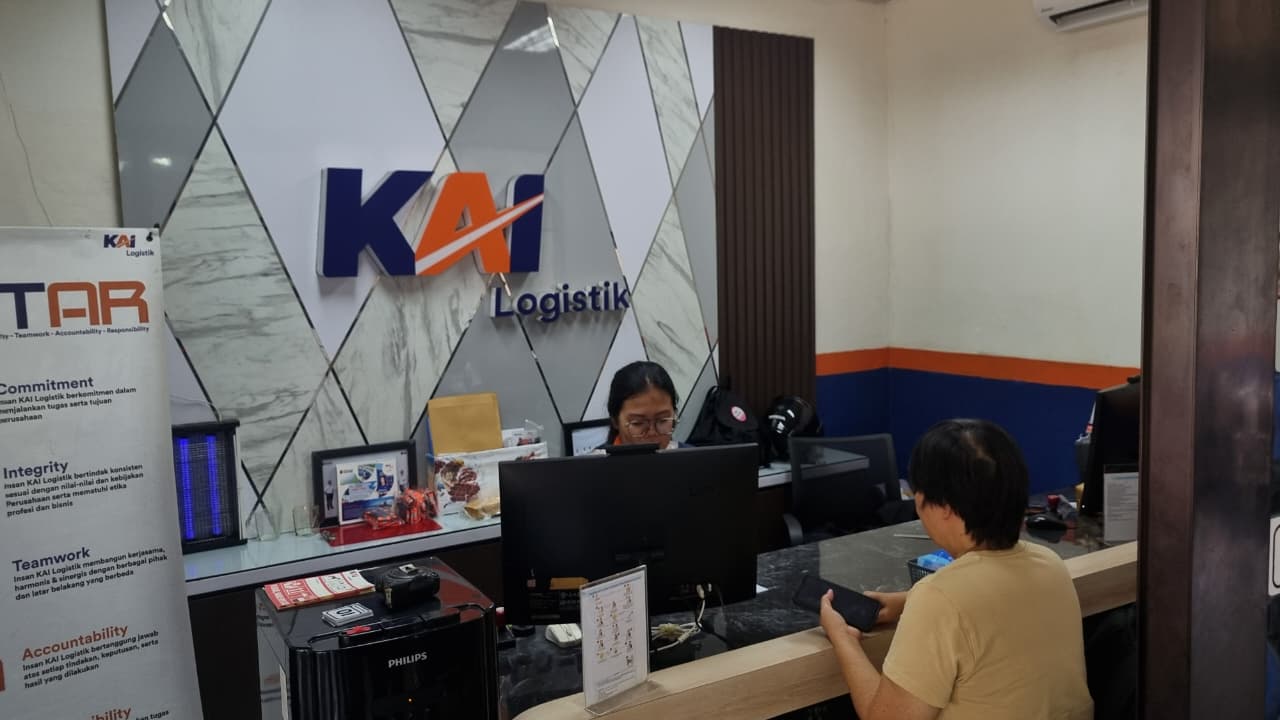
JAKARTA, Jakartaweekly.com – The retail logistics sector of KAI Logistik recorded positive performance at the beginning of the year. Its KALOG Express service handled a shipment volume of 18.671 tons in the first quarter of 2026. This figure grew by 27% compared to the same period in 2025, which reached only 14.649 tons.
KAI Logistik’s Director of Business Development, Aniek Dwi Deviyanti, said that this achievement reflects the consistency of the company’s strategy throughout 2025.
“The growth at the start of this year shows that the transformation steps we have taken are on the right track,” she said in a statement on Thursday, April 9, 2026.
She explained that the growth in retail shipment volume through the KALOG Express service was driven by several factors, including service quality improvements ranging from optimizing transport capacity to strengthening the digital ecosystem through the KAI Logistik TRAX application.
In addition, the presence of 284 KALOG Express Service Points across Java, Bali, and Sumatra has become a key foundation for the company to respond to market needs more broadly, quickly, and efficiently.
As a result, Aniek revealed a target to add 70 new service points, which will focus on improving accessibility in various strategic regions.
She added that the expansion strategy will prioritize inclusive collaboration. In addition to developing company-owned branch offices, the addition of new service points will also involve local businesses and agents.
“We are committed to empowering partners through standardized, high-quality services, so that the presence of KALOG Express can help drive economic growth in every operational area,” she added.
In line with this effort, KAI Logistik has introduced a partnership scheme for opening outlets that is easily accessible to the public and MSMEs. Prospective partners only need to meet simple administrative requirements such as an ID card, tax identification number (NPWP), and bank account, as well as pay a registration fee of Rp1.250.000 and a deposit of Rp500.000.
Meanwhile, operationally, partners only need to prepare a business location with a minimum area of 8 square meters and basic equipment such as a printer, weighing scale, signage or neon box, and a two-wheeled vehicle to support services.
She emphasized that this network expansion is designed to strengthen interregional logistics connectivity. With the addition of service points, retail goods distribution is expected to become smoother, reduce access barriers in previously hard-to-reach areas, and improve national logistics cost efficiency.
This initiative also reflects the strong interest of business players in joining the growing KAI Logistik ecosystem, which continues to move toward transparent and accountable digital services.
Going forward, she said, KAI Logistik will continue to strengthen its role as a provider of integrated and sustainable logistics solutions.
Through service innovation, network expansion, and collaboration with various stakeholders, the company is optimistic that it can deliver increasingly reliable, affordable, and inclusive logistics services—while contributing to national economic growth and more equitable connectivity across regions.
KAIKAI LogisticKAI LogistikKALOG Expresslogistics expansion Indonesiaservice points KALOG Expressshipment volume growth
Discover more