VKTR Builds Indonesia’s Electric Vehicle Industry Ecosystem from Central Java
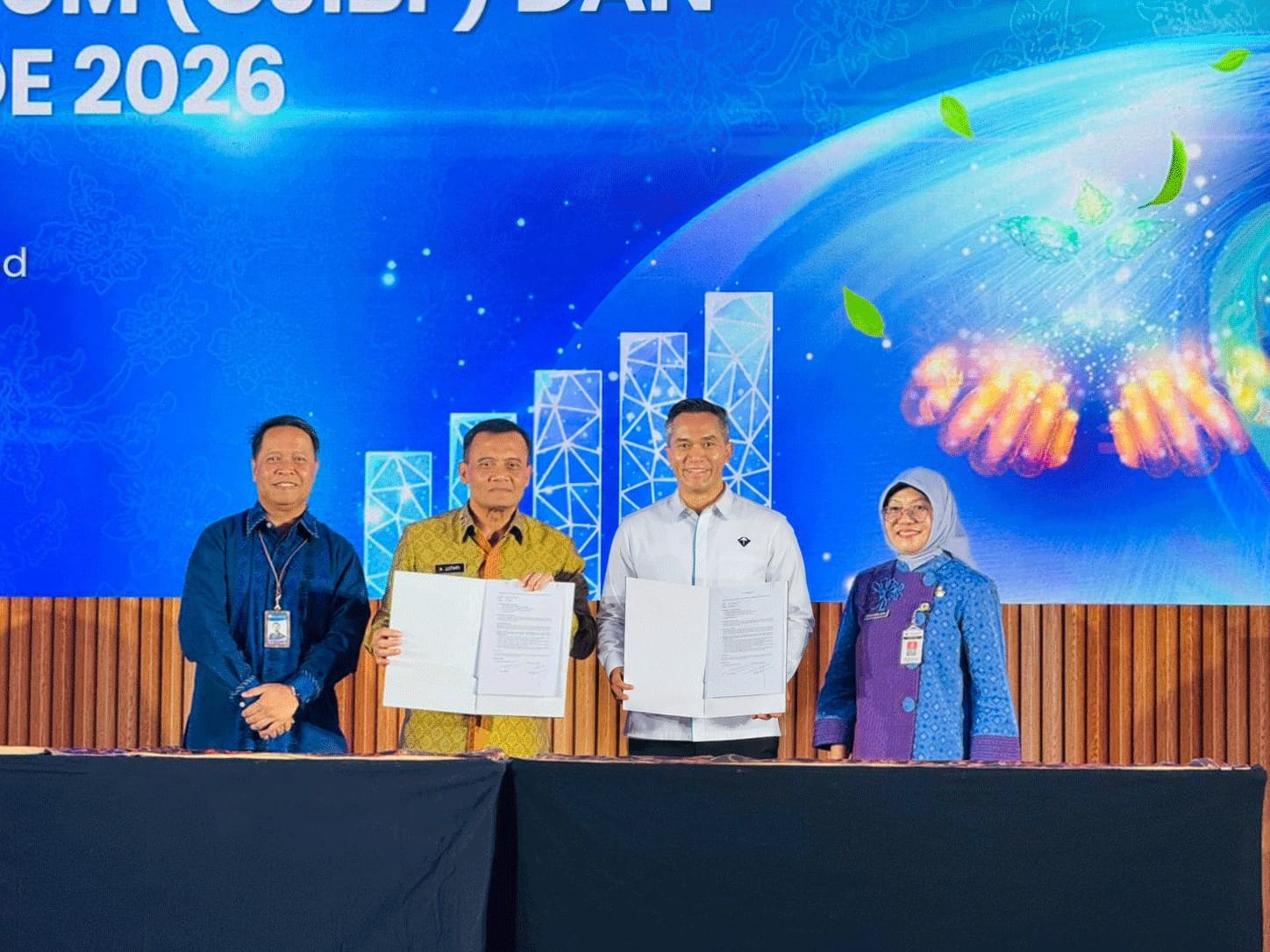
Semarang, Jakartaweekly.com — Indonesia’s ambition to build an independent electric vehicle (EV) industry is gaining momentum from Central Java. PT VKTR Teknologi Mobilitas Tbk (“VKTR”) reaffirmed its role as a pioneer in the localization of Indonesia’s electric commercial vehicle industry through its participation in the Central Java Investment Business Forum (CJIBF) 2026, held on Monday in Semarang.
During the forum, VKTR presented its investment and industrial development journey in Central Java through a talk show titled “Success Story in Investing and Expanding Business in Central Java.” The session featured VKTR President Commissioner Anindya N. Bakrie alongside Hassan Wirajuda and representatives from the Central Java Provincial Government. The discussion highlighted how investment can serve as a catalyst for building Indonesia’s future industrial ecosystem.
VKTR sees Central Java not merely as an investment destination, but as a strategic foundation for developing an integrated national electric commercial vehicle value chain — spanning manufacturing, supply chains, and operations.
“Central Java is not only an investment location for VKTR, but also a strategic foundation for building Indonesia’s localized electric vehicle industry,” said Anindya N. Bakrie. “With a well-prepared supply chain, especially in the coachbuilding industry, and strong support from the regional government, we see enormous potential to develop an integrated and sustainable commercial EV ecosystem built by Indonesia, for Indonesia.”
Beyond its participation at CJIBF, VKTR also signed a cooperation agreement with the Central Java Provincial Government focused on environmentally sustainable development and energy resilience. The partnership includes the preparation of a roadmap for the development of an integrated EV and green industry ecosystem in Central Java, aimed at increasing investment, strengthening domestic supply chains, enhancing local industrial capacity, and generating sustainable economic impact both regionally and nationally.
Central Java Governor Ahmad Luthfi welcomed VKTR’s commitment, stating that the company’s presence demonstrates growing investor confidence in Central Java as a progressive and future-oriented investment destination.
“With the spirit of collaboration, the Central Java Provincial Government encourages all stakeholders to prioritize the use of local products,” he said. “This effort not only drives economic growth, but also creates tangible impacts for Central Java — from expanding job opportunities and strengthening local industries to building a more competitive domestic supply chain.”
Central Java as the Starting Point for EV Industry Localization
One of Central Java’s key advantages lies in its mature coachbuilding supply chain, particularly in Magelang and surrounding areas, which have long been recognized as one of Indonesia’s major automotive body manufacturing hubs.
VKTR has partnered with Karoseri Tri Sakti to integrate electric commercial vehicle production, acknowledging that in the bus industry, chassis and body manufacturing form an inseparable product ecosystem.
Through a Completely Knocked Down (CKD) manufacturing approach, VKTR combines global EV platforms with local manufacturing capabilities. The company’s 12-meter and 8-meter electric buses have already achieved Domestic Component Level (TKDN) certification exceeding 40% from Indonesia’s Ministry of Industry, while its electric truck products have surpassed 30% TKDN based on self-assessment.
VKTR is targeting TKDN levels above 60%, with ambitions to reach 80% by 2030 as part of its long-term commitment to national industrial independence.
Addressing Indonesia’s EV Market Gap
Indonesia’s commercial vehicle market presents enormous growth potential, with more than six million trucks and 300,000 buses currently in operation, while electrification rates remain below 0.1%.
To address this market gap, VKTR has established an assembly facility in Magelang, Central Java, with an annual production capacity of up to 3,000 electric buses and trucks. The company plans to expand this capacity to 10,000 units in the future.
Central Java’s location also offers significant logistical advantages, particularly for distribution across Java Island, Indonesia’s primary transportation and logistics market.
Building an Ecosystem Beyond Manufacturing
VKTR emphasized that successful investment extends beyond building factories. The company’s strategy focuses on developing a comprehensive EV ecosystem through strategic collaboration with global OEM principals, local coachbuilders, suppliers, and other stakeholders.
This ecosystem approach is designed to accelerate market penetration, encourage technology transfer, strengthen domestic industrial integration, and improve the competitiveness of Indonesia’s EV industry.
In parallel with expanding its assembly operations, VKTR is also strengthening local manufacturing capabilities, increasing domestic content utilization, and enhancing after-sales services. These services include predictive maintenance systems, 24/7 technical support, and faster domestic spare-part availability.
To support broader EV adoption, VKTR also offers leasing-based vehicle adoption schemes that allow customers to shift investment needs from capital expenditure (CAPEX) to operational expenditure (OPEX), making EV adoption more financially attractive.
Economic Impact for Central Java
VKTR’s investment has already contributed directly to the regional economy. The Magelang assembly facility has created hundreds of direct jobs, with the potential to generate thousands more indirectly across supporting industries such as coachbuilding, logistics, component suppliers, and after-sales services.
“This investment goes beyond building manufacturing facilities,” Anindya added. “It creates an ecosystem that includes job creation, local supply chain strengthening, and increased industrial value creation. This is a concrete step toward green economic transformation and national industrial independence.”
Through its participation in CJIBF 2026, VKTR demonstrated how collaboration between regional governments and industry players can create a strong foundation for sustainable investment growth. Central Java is now positioning itself not only as an investment destination, but also as a driving force behind the future of Indonesia’s electric vehicle industry.
Discover more