
What is the Difference between Kartu Kredit Indonesia (KKI), Visa and Mastercard?
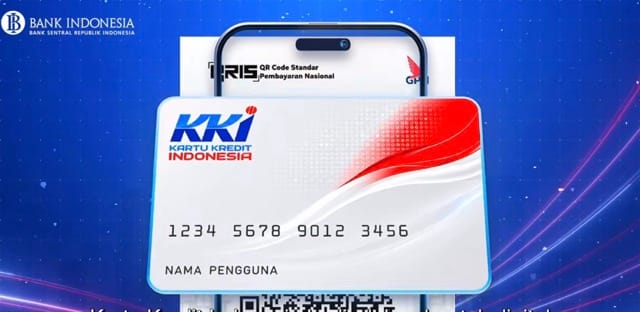
JAKARTA, Jakartaweekly.com—Kartu Kredit Indonesia (KKI) is one of the latest payment system alternatives introduced by Bank Indonesia (BI). Following its launch, several banks designated by BI immediately began issuing credit cards bearing the KKI logo. So, what exactly is the difference between credit cards bearing the KKI, Visa, and Mastercard logos?
BI explained that the launch of KKI is one of this institution’s efforts to strengthen Indonesia’s digital financial ecosystem by improving transaction efficiency, expanding inclusivity between participating banks and users, and enhancing business competitiveness.
In other words, BI wants Indonesia’s financial system to become more independent by reducing its reliance on international financial systems. To understand this further, there’s an explanation of the differences.
Kartu Kredit Indonesia (KKI)
Kartu Kredit Indonesia (KKI) is a payment instrument that provides deferred payment facilities and is processed domestically. This is the main difference between KKI, Visa, and Mastercard.
Visa and Mastercard, meanwhile, are payment networks whose transaction processing relies on the global networks operated by the two companies. KKI transactions, on the other hand, are processed through Indonesia’s National Payment System infrastructure.
To use KKI, users can apply for a KKI-branded credit card from eight banks: BCA, Mandiri, BNI, BRI, CIMB Niaga, Permata, Bank Mega, and BSI. Currently, KKI credit cards are only available in virtual form. However, BI plans to gradually introduce physical cards for offline transactions.
After applying for the card, users can use the KKI credit card as a funding source for QRIS transactions through the participating bank’s application. Users can use KKI-branded credit cards to make QRIS payments at merchants across Indonesia, as well as for cross-border transactions through the QRIS Cross-Border scheme in participating partner countries.
Visa
Visa is a U.S.-based payment technology company that operates its own global payment network. Credit card users in Indonesia commonly have cards bearing the Visa logo. This means that transactions made using Visa-branded credit cards are processed through Visa’s international network.
Visa’s biggest advantage is its global reach. Even if users only have a credit card issued by an Indonesian bank, they can use the card at merchants that accept Visa without needing to have an account with a bank in the country where the transaction takes place.
Mastercard
Mastercard is also a U.S.-based payment technology company that operates the Mastercard payment network. Therefore, when users have a Mastercard-branded credit card, their transactions are processed through the network provided by Mastercard.
When users make payments with a Mastercard-branded credit card at a merchant, the acquiring bank uses the Mastercard network to connect the card-issuing bank with the merchant-side bank or payment service provider, facilitating transaction information, authorization, clearing, and settlement between the parties involved.
Mastercard also has a global network, allowing credit card users whose cards are issued by Indonesian banks to use them in many countries, as long as the merchant accepts Mastercard.
Therefore, the main difference lies in the payment network used to process transactions. At present, KKI coexists with international payment networks, meaning users can continue to use Visa- or Mastercard-branded credit cards for domestic transactions. However, KKI cannot yet be used in many countries around the world. Its international use is currently limited to QRIS Cross-Border transactions with countries that have established partnerships with Indonesia.
Discover more