Bank Mandiri Q2 Profit Climbs 24.4% to Rp30.4T
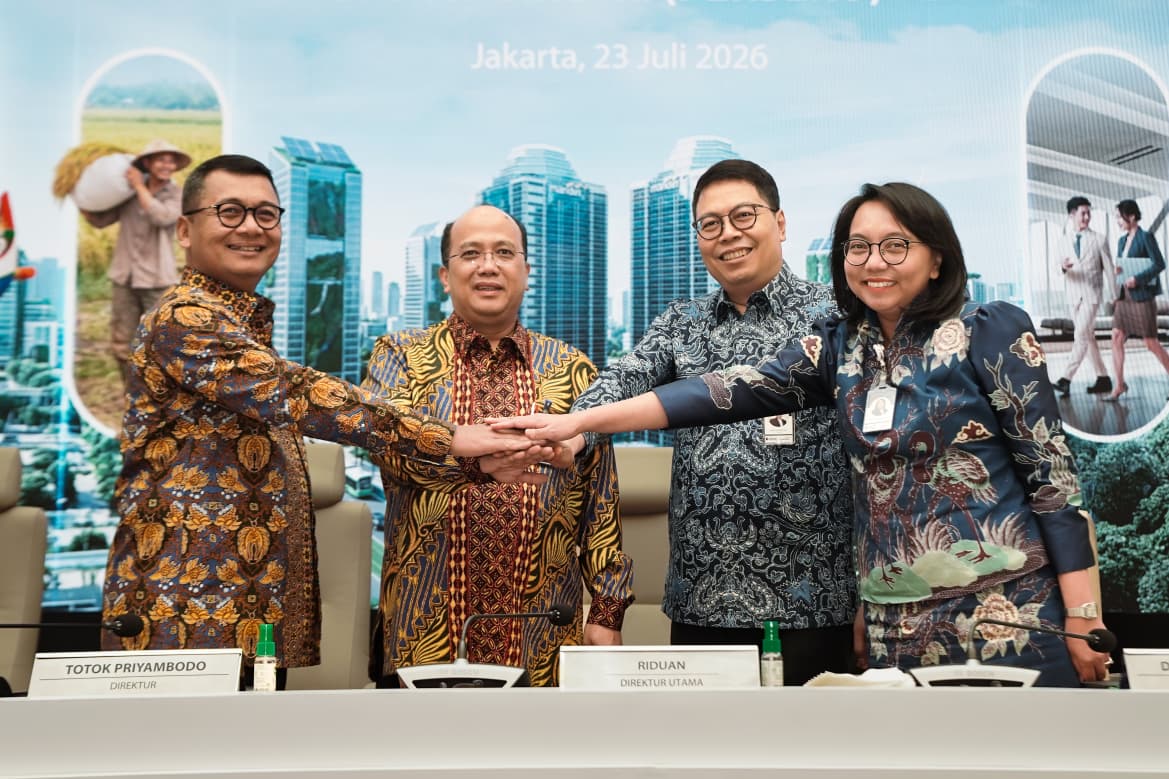
JAKARTA – Jakartaweekly.com. Bank Mandiri posted strong financial performance in the second quarter of 2026, reporting consolidated net profit of Rp30.4 trillion, up 24.4% year-on-year (YoY), supported by robust loan growth, healthy funding expansion, and sustained digital transformation.
Indonesia’s largest state-owned lender disbursed Rp1,592 trillion in bank-only loans as of June 2026, representing a 19.9% YoY increase, significantly outperforming Indonesia’s banking industry average loan growth of 12.7%, according to Bank Indonesia.
The expansion was backed by solid funding, with third-party funds (DPK) rising 17.1% YoY to Rp1,710 trillion, exceeding the industry’s 10.2% growth over the same period.
Bank Mandiri President Director Riduan said the bank continues to strengthen its role as a strategic partner in supporting Indonesia’s real economy through financing across multiple economic ecosystems.
“Our financing supports national priority programs ranging from strategic government projects and infrastructure development to improving business competitiveness and expanding financial access for MSMEs and communities. This reflects Bank Mandiri’s commitment to becoming an economic ecosystem enabler across Indonesia,” Riduan said during the bank’s Q2 2026 Public Expose on Thursday.
Financing to the government and state-owned enterprise ecosystem reached Rp489 trillion, surging 41.6% YoY, covering strategic infrastructure, energy, defense, and public service projects.
Meanwhile, micro-business lending increased 15.7% YoY to Rp31.3 trillion, broadening access to inclusive financing for individuals, productive communities, and micro, small and medium enterprises (MSMEs).
Commercial Lending Continues to Expand
Commercial Banking Director Totok Priyambodo said outstanding commercial loans grew 15.1% YoY to Rp343 trillion as Bank Mandiri continued prioritizing productive sectors with significant multiplier effects.
“We continue directing financing toward sectors such as plantations, downstream industries, transportation and logistics, energy, and other productive industries. Our objective is not only to support business expansion but also to strengthen Indonesia’s economic competitiveness,” Totok said.
The bank’s healthy lending expansion was accompanied by competitive lending rates, reflected in a Net Interest Margin (NIM) of 4.37% as of June 2026, compared with 4.63% a year earlier.
Supported by strong business growth, Bank Mandiri’s total revenue increased 10.3% YoY, contributing to its record first-half earnings.
Totok attributed the profit growth to disciplined lending focused on productive sectors that also generate employment.
“Our earnings growth is driven by quality credit expansion, with financing directed toward productive and labor-intensive sectors that create jobs across Indonesia,” he said.
Digital Platforms Drive Efficiency
Finance & Strategy Director Novita Widya Anggraini said the bank’s operational efficiency continued improving, with its bank-only operating expense-to-operating income (BOPO) ratio declining to 57.6%, an improvement of 6.2 percentage points from a year earlier.
She said digital transformation has become a key driver of productivity while enhancing customer experience.
Retail banking platform Livin’ by Mandiri reached approximately 41 million registered users, up 24.3% YoY, adding around 27,000 new users daily. New services introduced include Gold Personal Loans (KSM Emas), KA Deposits, Next-G, and Livin’ Call, a 24-hour toll-free customer service feature.
On the corporate side, Kopra by Mandiri expanded to around 354,000 registered users, growing 26.8% YoY, with approximately 84% of users consisting of MSMEs. New digital capabilities include DHE Tracker, e-Documents Trade & Bank Guarantee, and other integrated business solutions.
“Our digital platforms allow us to serve customers effectively and efficiently, including those in Indonesia’s most remote regions, while supporting inclusive economic growth,” Novita said.
Asset Quality Remains Strong
Bank Mandiri maintained healthy asset quality despite rapid business expansion.
Gross non-performing loans (NPL) improved to 0.98%, while the Cost of Credit (CoC) declined to 0.52%, reflecting prudent lending practices.
The bank also maintained an NPL Coverage Ratio of 242%, providing a strong buffer against future market uncertainties.
Risk Management Director Danis Subyantoro said every lending decision continues to follow strict risk management principles.
“We ensure loan growth always goes hand in hand with healthy asset quality. Prudent banking principles remain the foundation of sustainable business expansion,” Danis said.
ESG Financing Continues to Grow
Bank Mandiri also strengthened its Environmental, Social and Governance (ESG) strategy through sustainable financing, green operations, and financial inclusion initiatives.
Sustainable financing reached Rp327 trillion as of June 2026, increasing 7.5% YoY, comprising Rp173 trillion in green financing and Rp155 trillion in social financing.
During the quarter, the bank secured a US$750 million social loan guarantee from the Multilateral Investment Guarantee Agency (MIGA), part of the World Bank Group—the first MIGA-backed transaction involving a financial institution in ASEAN. The funding will support MSME financing, including People’s Business Credit (KUR), with a focus on women-owned businesses.
Bank Mandiri also continued reducing operational emissions through electric and hybrid vehicles, solar panel installations, green buildings, and EV charging stations, while expanding financial inclusion through Livin’ Merchant, where 63% of users are located in non-urban areas.
Riduan said the bank’s strong fundamentals position it well to continue expanding its ecosystem and supporting Indonesia’s economic development.
“With solid fundamentals, we remain optimistic that Bank Mandiri will continue strengthening its ecosystem, delivering comprehensive financial services, and supporting Indonesia’s economic growth while pursuing our vision of becoming the best financial institution in Southeast Asia,” he said.
Discover more