Post-IIMS 2026, Indonesia’s Electrification Path Gains Direction Through Technology Diversification
Jakartaweekly.com – Following Indonesia International Motor Show (IIMS) 2026, Indonesia’s electrification journey is entering a more defined phase, shaped not only by global momentum, but increasingly by domestic consumer preferences, infrastructure readiness, and portfolio strategy.
New findings from Inchcape’s Drivers of Change study, conducted in February 2025 across seven Asia Pacific markets, indicate sustained optimism toward New Energy Vehicles (NEVs). Across the region, 83% of respondents express positive views toward electrified vehicles, with 26% already owning or having driven an EV or hybrid, and 57% indicating intent to adopt in the future.
However, electrification remains a pragmatic decision. Cost (68%), battery durability (40%), and charging infrastructure availability (34%) continue to influence purchasing considerations. The data suggests that adoption across Asia Pacific is progressing through measured, market-led shifts rather than rapid structural disruption.
Indonesia: High Confidence, Measured Expansion
Indonesia stands out within the regional landscape for its strong consumer confidence. The study shows that 88% of Indonesian respondents view electrified vehicles positively, exceeding the regional average. Current ownership stands at 18%, reflecting an early but steadily expanding adoption phase.
“The survey confirms that Indonesian consumers are approaching electrification in a deliberate and contextual manner. An 88% positive sentiment demonstrates strong public confidence in the direction of electrification. At the same time, purchasing decisions remain anchored in affordability, infrastructure access, and everyday usability,” said Bagus Susanto, Interim Managing Director, Inchcape Indonesia.
Market performance in 2025 reinforces this trajectory. EV market share increased from approximately 5% to around 12%, while hybrid and plug-in hybrid models continued to record steady growth. The trend points to structured expansion aligned with consumer readiness and infrastructure development.
Technology Diversification as Strategic Alignment
Indonesia’s geographic spread and uneven infrastructure maturity underline the importance of a technology diversification (multi-pathway) strategy in supporting the transition.
Across Asia Pacific, 36% of respondents identify hybrid vehicles as offering the most balanced combination of sustainability and cost efficiency, highlighting the continued relevance of transitional technologies.
“Our strategy focuses on offering multiple technology options rather than prescribing a single pathway. A diversified approach allows electrification to evolve in line with infrastructure readiness and consumer preference,” Bagus said.
This reflects a broader industry shift toward portfolio balance, where internal combustion, hybrid, and battery-electric models coexist during the transition period.
IIMS 2026: Portfolio Expansion Reflects Market Demand
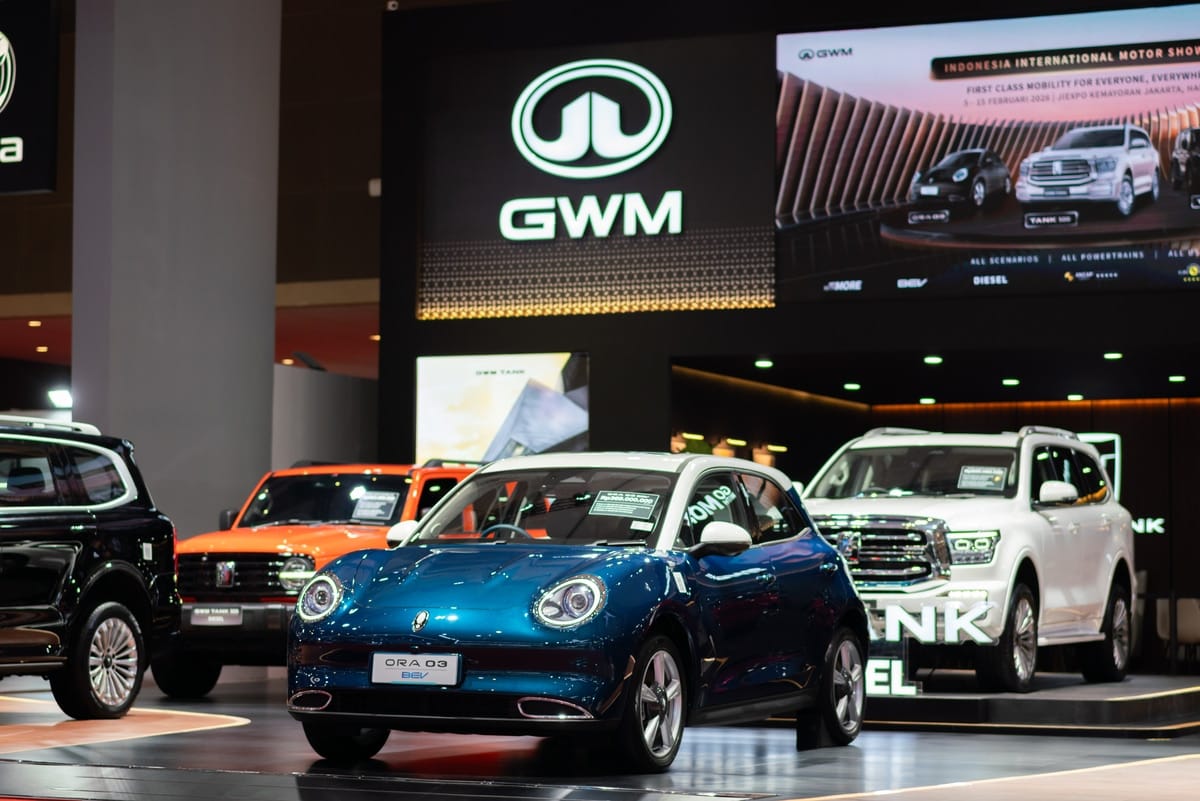
The relevance of diversification was evident at IIMS 2026, where Inchcape expanded its lineup with the introduction of the Tank 500 Diesel, complementing its existing hybrid and electric offerings.
The expansion aligns with GWM’s global philosophy, “All Scenarios, All Powertrains, All Users,” emphasizing differentiated mobility solutions across segments and use cases, from long-range diesel SUVs to urban-focused electric vehicles, delivered under a unified brand framework.
Market response in 2025 demonstrates traction. Inchcape recorded 1,628 wholesale units (up 105% year-on-year) and 1,449 retail units (up 115% year-on-year). Newly introduced models contributed significantly: ORA 03 accounted for 24% of wholesale volume, followed by Tank 300 Diesel 4×4 (22%), Tank 300 Hybrid (15%), and Tank 300 Diesel 4×2 (14%).
“The Tank 500 Diesel was positioned as a premium SUV designed to balance comfort, efficiency, and advanced technology for everyday use. Our objective is to expand access to high-quality mobility through a portfolio that reflects diverse consumer realities,” Bagus added.
Structured Transition Supported by Ecosystem Alignment
Electrification growth in Indonesia continues within established regulatory frameworks covering vehicle safety, emissions standards, and consumer protection. Industry development remains closely aligned with national policy objectives and infrastructure planning.
“Electrification progresses through ecosystem alignment. Manufacturers advance innovation, policymakers provide regulatory clarity and incentives, distributors strengthen retail and service readiness, and consumers ultimately determine adoption pace,” Bagus said.
Towards the 2030 electrification target, sustainable growth will be driven by infrastructure expansion, strong product quality standards, robust distribution and service networks, and a sustainable ownership experience.
Post-IIMS 2026, the trajectory is increasingly clear. Indonesia’s electrification transition is gaining direction through alignment between consumer demand, diversified product strategy, and regulatory frameworks, reinforcing a pathway defined by adaptability, balance, and long-term market sustainability.
Discover more