Jakarta Battle Against a Rising Tide of Waste Management
JAKARTA, Jakartaweekly.com – In the sweltering heat of late March 2026, Jakarta finds itself at a crossroads with its own refuse. For a city that breathes through its bustling markets and flows through a network of historic rivers, the sheer volume of waste has become an inescapable reality. Every single day, the Indonesian capital churns out between 8,664 and 9,000 tons of trash—a mountain of over 3 million tons annually, dominated by a relentless tide of plastic.
While over half of this waste (56.67%) originates in the quiet bins of residential kitchens, the crisis often boils over in the city’s most vital public spaces, revealing the fragile nature of its logistics.
The Stagnation at Kramat Jati
Nowhere was this burden more visible than at the Kramat Jati Central Market. By Saturday, March 28, the air around the market hung heavy with the scent of organic decay. A technical breakdown in transport logistics that began on March 9 had transformed a bustling trade hub into a makeshift wasteland. An estimated 6,970 tons of garbage—the equivalent of 410 massive tronton trucks—lay in stagnant piles, threatening the livelihoods of vendors and the health of visitors.
In a desperate sprint to reclaim the market, Perumda Pasar Jaya Manager Topik Hidayatulloh deployed a fleet of 33 heavy-duty trucks over the weekend. “We are coordinating intensely to ensure every last scrap is moved,” he noted, offering a rare apology for a backlog that had become a viral sensation on social media. To prevent a repeat of this “trash-pocalypse,” the market operator is moving toward independence, procuring its own fleet of high-capacity trucks and eyeing thermal hydrolysis technology to process waste on-site rather than letting it sit.
Closing the Gates at Tanah Kusir
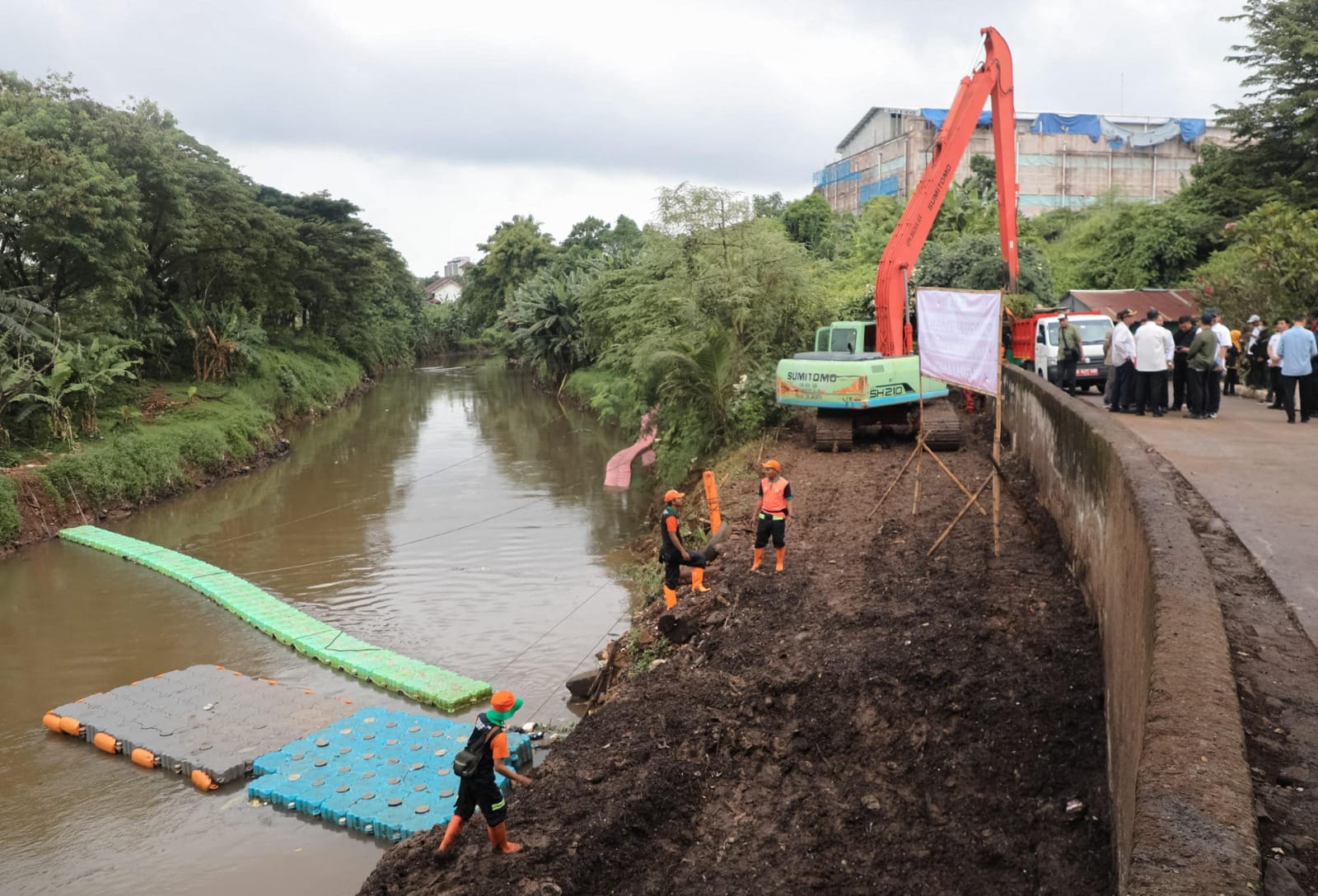
While the market fought to clear its grounds, the Jakarta Environment Agency (DLH) was busy closing a controversial chapter in the city’s river management. Since 2014, a temporary transit point (emplasement) near the Tanah Kusir Cemetery had served as a catch-all for debris pulled from the Pesanggrahan and Kebayoran rivers.
On Friday, March 27, DLH Head Asep Kuswanto officially shut down the site. The move was a symbolic shift in strategy: instead of letting river waste sit in open-air riverside pits where it risked sliding back into the water, the city is now rerouting it to the more sophisticated TB Simatupang filtration facility. This transition ensures that the sludge and plastic pulled from Jakarta’s veins are processed with modern technology rather than primitive stockpiling.
The Long Road to Bantar Gebang
Despite these local victories, the “elephant in the room” remains the Bantar Gebang Landfill. Currently, Jakarta still funnels 7,354 tons of waste every day to this overstretched site.
The recent incidents at Kramat Jati and Tanah Kusir have served as a wake-up call. The city is no longer just looking for more trucks; it is looking for an exit strategy. From the implementation of the MASARO (Zero Waste Management) system to the push for household-level sorting, Jakarta is attempting to decouple its growth from its garbage.
As the sun sets over the newly cleared corridors of Kramat Jati, the message from city officials is clear: in a city of millions, “out of sight, out of mind” is no longer a sustainable policy.
Read also: Jakarta’s “Big Three” Malls: Where Shoppers Flocked During Ramadan
Discover more