Indonesia Manufacturing Slump Deepens as PMI Falls to 46.9,

JAKARTA — Jakartaweekly.com. Indonesia manufacturing sector deteriorated further in June 2026 as the country’s Purchasing Managers’ Index (PMI) fell to 46.9, signaling a deeper contraction in factory activity amid weakening demand, rising production costs, and mounting concerns over employment.
The latest data released by S&P Global showed Indonesia’s manufacturing sector experienced one of its sharpest deteriorations in the past year. A PMI reading below 50 indicates contraction, with June marking the fastest decline in new orders in twelve months and the steepest drop in production output since April 2025.
According to S&P Global, weakening demand for Indonesian manufactured goods was the primary driver behind the downturn.
“The main cause of the June decline was weaker demand for Indonesian manufactured goods. New orders fell for the first time in three months and at the fastest pace in a year,” S&P Global said in its report.
The manufacturing slowdown coincided with another concerning economic indicator. Indonesia’s Central Statistics Agency (BPS) announced that the country recorded a US$1.61 billion trade deficit in May 2026, ending an unprecedented 72 consecutive months of trade surplus.
The reversal was driven by imports rising 22.16% year-on-year to US$24.81 billion, outpacing exports, which fell 5.73% to US$23.20 billion. The deterioration was largely attributed to a widening deficit in oil and gas commodities.
Government: Manufacturing Remains Resilient Despite Headwinds
Despite the weaker PMI, Ministry of Industry Spokesperson Febri Hendri Antoni Arief said Indonesia’s manufacturing sector remains resilient, although business conditions became more challenging in June compared with the previous month.
“In June, the national manufacturing industry faced more complex challenges than in the previous month. The pressure came not only from production but also began to affect demand. Even so, the manufacturing sector continues to demonstrate strong resilience, with industrial activity remaining in expansion territory,” Febri said in a statement.
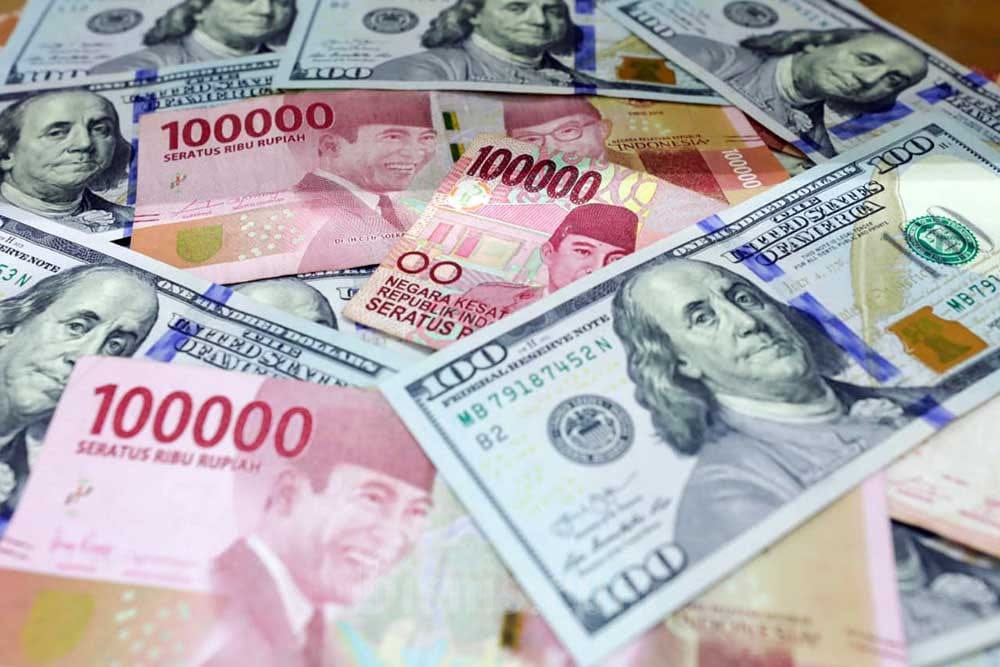
He explained that manufacturers continue to face higher imported raw material costs following geopolitical tensions in the Middle East, which have pushed up global energy prices. At the same time, the weakening rupiah has increased import costs, placing additional pressure on production expenses.
Several industrial estates also experienced electricity outages during June, disrupting manufacturing operations, particularly for factories heavily dependent on continuous power supplies.
“The power outages in several industrial zones forced some companies to temporarily halt production, affecting operational efficiency,” he said.
Manufacturers also faced higher industrial gas prices, particularly for regasified LNG. However, the Ministry welcomed efforts by Deputy Speaker of the House of Representatives Sufmi Dasco Ahmad, who helped secure a reduction in regasified LNG prices from US$23 per MMBTU to US$13 per MMBTU, easing part of the industry’s cost burden.
Layoff Risks Continue to Rise
Fendi Susiyanto, Founder and CEO of Finvesol Consulting, believes the falling PMI reflects mounting structural pressures across Indonesia’s manufacturing sector and warns that companies have already begun implementing aggressive cost-cutting measures.
According to Susiyanto, a PMI below 50 indicates businesses are responding to weaker market demand by reducing production, delaying expansion, and tightening operational spending.
“Companies are facing declining orders while production costs continue to increase due to higher raw material prices and the weakening rupiah. To protect their businesses, many manufacturers have begun reducing working hours, freezing recruitment, and carrying out layoffs,” he said.
He noted that slowing production has resulted in rising inventories, forcing manufacturers to reduce factory utilization rates.
At the same time, higher input costs—including imported raw materials—have squeezed corporate margins, making it increasingly difficult for companies to sustain normal operations.
As a result, labor efficiency has become a key focus.
According to Susiyanto, approximately 43,000 workers had been laid off by the end of June 2026, making it one of the highest levels of job losses in recent years.
“The wave of layoffs has begun because businesses are trying to survive amid shrinking margins and slowing demand,” he said, adding that policy support would be critical to restore business confidence.
With manufacturing activity contracting, exports weakening, and Indonesia recording its first monthly trade deficit in six years, economists say policymakers will face growing pressure to stimulate domestic demand while helping manufacturers navigate rising costs and an increasingly uncertain global economic environment.
Discover more