


Jakarta Marks First Year Under Pramono-Rano with Governance Reforms
Discover more

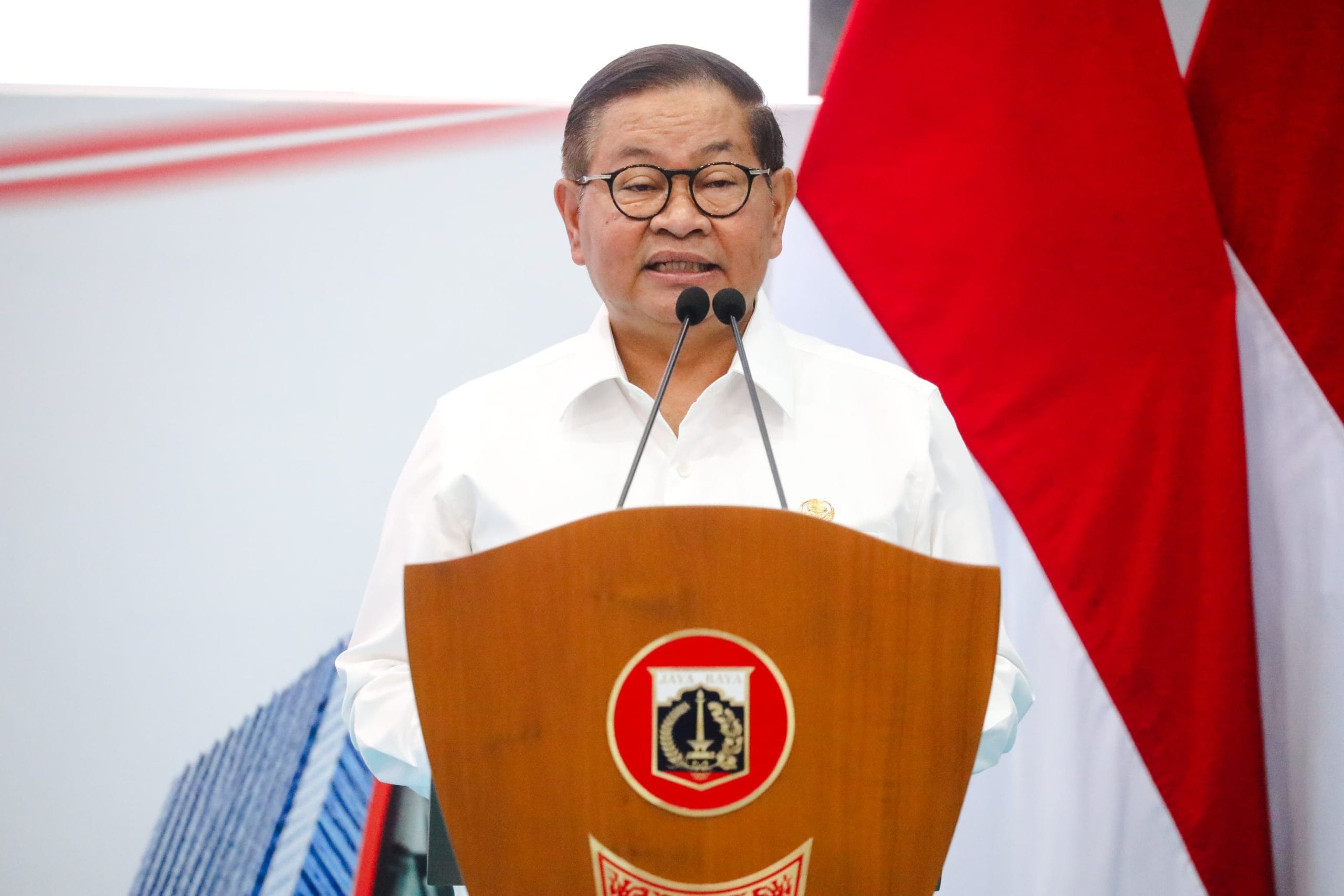

JAKARTA — Jakartaweekly.com. One year after taking office, Jakarta Governor Pramono Anung says his administration is laying the groundwork for a more transparent, efficient, and globally competitive capital, with the introduction of a new regulation designed to reform the city’s building permit system.
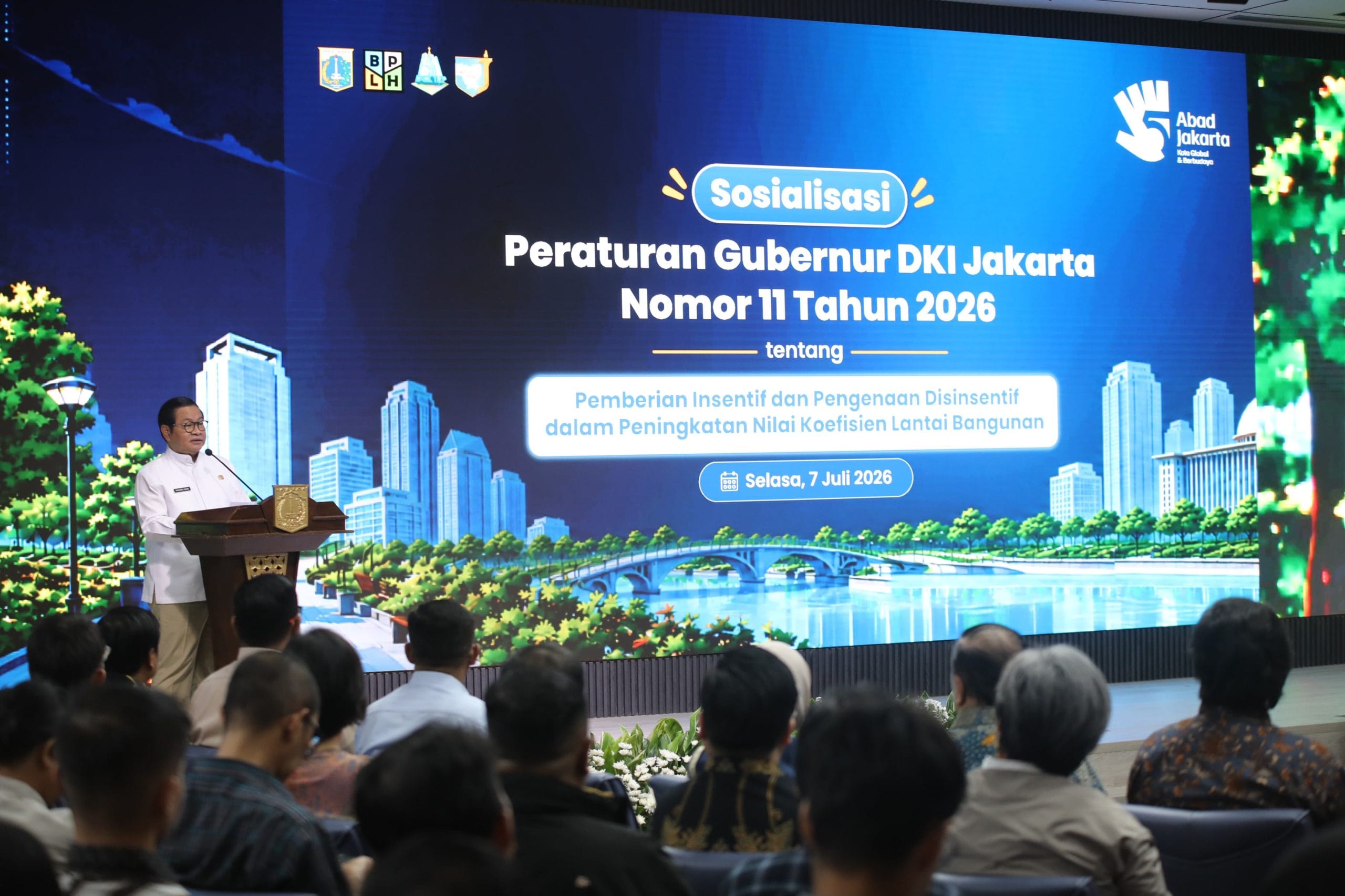
Speaking at Jakarta City Hall on Tuesday, Pramono officially introduced Governor Regulation (Pergub) No. 11 of 2026, which streamlines the process for obtaining higher Floor Area Ratio (FAR) incentives—known locally as Koefisien Lantai Bangunan (KLB)—along with other land development permits.
The regulation was drafted in response to concerns from businesses and the public over the transparency and predictability of permits related to increased building intensity and land development approvals. The process involved consultation with Indonesia’s Corruption Eradication Commission (KPK) and the Financial and Development Supervisory Agency (BPKP) to strengthen accountability and reduce opportunities for corruption.
“I want every licensing process to be transparent, open, and completed within a clear timeframe,” Pramono said.
“I have instructed that permit applications should be finalized within a maximum of 15 working days. This regulation is intended to provide legal certainty and better public services.”
Under the new policy, the provincial government will simplify permit procedures, expand transit-oriented development (TOD), and strengthen digital licensing services through the Jakarta Satu platform, which is expected to process applications within 15 working days, excluding payment procedures.
Pramono said transparent governance is essential if Jakarta is to achieve its long-term ambition of becoming a leading global city.
He noted that Jakarta climbed from 74th place in the Global City Index in 2024 to 71st in 2025, with the city aiming to enter the top 50 globally by 2029–2030.
Supporting that vision is a comprehensive urban planning strategy. Under Jakarta’s 2024–2044 Spatial Development Plan, the city aims for 70 percent of daily activities to take place around public transit hubs, while increasing the share of public transportation trips to 55 percent.
Jakarta has already achieved approximately 93 percent public transport connectivity through the integration of the MRT, LRT, TransJakarta, TransJabodetabek, commuter rail, Mikrotrans, and other transport services.
The governor also highlighted alternative financing as a key component of Jakarta’s future development strategy.
Since 2016, contributions generated through increased building intensity have produced around Rp2.8 trillion, while Transit-Oriented Development (TOD) projects have generated an additional Rp558 billion. The funds have been used to finance public projects including Taman Bendera Pusaka, the revitalization of the Bundaran HI area integrated with the MRT system, and Semanggi Park.
Pramono said the provincial government is also preparing to issue Rp3.5 trillion in municipal bonds to finance education, healthcare, housing, water infrastructure, flood control, and other public facilities.
“Jakarta’s development cannot rely solely on the regional budget. It also depends on public trust,” he said. “With that trust, mechanisms such as KLB, TOD, land development permits, and public-private partnerships can become important sources of financing.”
The introduction of the new regulation comes as Pramono Anung and Deputy Governor Rano Karno mark their first year in office since assuming leadership of Jakarta on February 20, 2025.
The administration says its first year has focused on addressing residents’ everyday needs while laying the foundation for Jakarta’s long-term transformation.
Among its flagship initiatives are the continued expansion of the Jakarta Smart Card Plus (KJP Plus) and Jakarta Superior Student Card (KJMU) programs, helping students from low-income families continue their education. The government has also launched a diploma legalization initiative, allowing residents to reclaim educational certificates previously withheld due to unpaid school fees.
In healthcare, the administration introduced the Pasukan Putih (White Brigade), a home-based healthcare service that provides medical assistance to elderly residents and people with limited mobility. It also launched JakCare, a mental health support program aimed at expanding access to psychological services.
The city has also accelerated urban renewal through the addition of new green open spaces and the expansion of 24-hour public parks. Long-delayed projects, including the Jakarta Planetarium and the abandoned monorail pillars, have also been revived through new planning efforts intended to deliver tangible public benefits.
Pramono acknowledged that one year is not enough to solve every challenge facing a city of more than 10 million people.
“Building a city as large and complex as Jakarta is a continuous process that cannot be completed overnight,” the administration said in a statement.
While significant challenges remain, officials described the first year as a critical foundation for ensuring that future policies remain consistent, measurable, and focused on improving the quality of life for Jakarta’s residents while supporting the city’s aspiration to become a globally competitive metropolis.